Ice Cream Man (2026)

 I’d say this movie was a disappointment but I didn’t really have high expectations for it in the first place so it’s hard to reach that conclusion. Basically this is a rip off of the concept from “Weapons” ,  and not a very good one at that. The idea of creepy kids being used to take retribution is a cross between a “Nightmare on Elm Street” and the film from last year where Amy Madigan played the part of an ice cream man, sorry I mean witch.

This film is told from the perspective of the young protagonist, a lactose intolerant lad who has been bullied by classmates and even a little bit by his friends,  but in the end, he stands up the firmest against the evil that is encroaching on his small town. The story doesn’t make much sense until we get a data dump in exposition from a local priest about 2/3 of the way through the movie. And if by any chance you’re suspicious of the priest and what he has to say, you will not be at all surprised at the twist that comes near the end.

This is an Eli Roth film, so no one’s expecting much subtlety. When the vicious killings occur, there’s not really a lot of cutting away, we’re going to see heads separated from bodies, faces smashed to smithereens, and dismemberment galore . Once in a while we get a sly joke inserted into the mayhem, unfortunately they don’t always land. I can say however, that there was one bit that landed for me. There is a very funny scene which is basically a takeoff on the playground scene from Alfred Hitchcock’s the birds. It builds in a form that mimics Hitchcock’s style of shooting in that scene, and the juxtaposition of antagonists is what makes it work.

The Ice Cream man depicted in the film never really talks. And in spite of the horrible things that occur, there is even a slight effort to make his character somewhat sympathetic. That doesn’t work, for the obvious reasons that innocent people are harmed in the process and that in the absence of any words of contrition from the victims, the Ice Cream man just continues to smile maliciously.

So the movie plays like the gore version of The Pied Piper of Hamlin, with indiscriminate victims, and innocent children turned into murderers. Ho hum. I guess I should have known when I saw that Osgood Perkins was a producer on the film. Let’s just say he’s gone zero for three with me, and I’m someone who appreciated that Eli Roth was directing this film,

Thief (1981) Re-visit Paramount Summer Classic Film Series

It felt a little like I was going to a James Caan Film Festival this last weekend, since he appeared in both the Saturday night and Sunday night films. His part in “Bottle Rocket” was barely more than a cameo, but he is clearly the star of Michael Mann’s “Thief”, the Sunday night experience and one of the best performances of Caan’s career. I saw this film when it was originally in theaters back in 1981. I think I may have seen it one more time on cable sometime in the late 80s. 

For a film that I hadn’t seen in more than 30 years and saw only a couple of times before that I remembered quite a bit. I also misremembered a few things, it seemed to me that Willie Nelson had a bigger part in the movie, but that was not true. He had two very brief scenes. Nevertheless the crime component is the main element of the movie and that I did remember. 

Caan plays a master Thief who’s used to operating on his own, but in a bid to rush his exit from the criminal world, he agrees to pull a job for a syndicate, and of course that leads to trouble. The movie is drenched in atmosphere, lit with the blues and blacks that characterize a lot of Michael Mann films. Once in a while there are splashes of color like the neon that would become emblematic of Miami Vice, but it was all a lot more subdued in this particular film. A layer of dread also hangs over the enterprise, created by the haunting music score from Tangerine Dream. It suggests constant suspense and danger, even when people are just sitting in a diner arguing over coffee. 

The central premise is that our Master Thief, Frank, is so autonomous that no one can control him. I find it frankly easy to believe that he might be the same character played by Robert De Niro in Michael Mann’s Heat 15 years later. Frank stands up to a brutal beating by corrupt cops who want a slice of the action, and he cleverly beats them at their own game so that he can carry out the main crime. As in most heist films, for some reason the audience usually identifies with the criminal, we want them to succeed and not be caught. It’s great when a plan plays out the way it’s supposed to, and no one gets hurt.

Of course if no one got hurt in the plan, and it was perfect, there wouldn’t be any drama in the story. That’s where the boss of the crime syndicate comes into play. Robert Protsky, plays a avuncular, seemingly reasonable gangster, who makes big promises, and comes through on some of them, but breaks the one rule that Frank sees as a red line. 

The conclusion of the film is really a test of Frank’s Independence. His willingness to fight back against the intrusion on his autonomy, is the main focus of the third act. Once again we may want Frank to succeed, but we’re not going to see him as a very good person, because of the sacrifices he’s willing to make in order to stay his own self. I don’t think however it could have gone any other way and felt authentic.

Bottle Rocket (1996) Re-Visit Paramount Summer Classic Film Series

Over the years I’ve become a fan of Wes Anderson films, “Bottle Rocket” was his first film, but it was not the first one that I saw. I’m pretty sure that “Rushmore” was my Gateway into Wiss Anderson filmography. It was after that film that I went and rented “Bottle Rocket” and watched it at home. I had virtually no memory of seeing it other than the memory of going to Blockbuster, putting it in the VCR,  and being done with it later and thinking that was a nice bit of nothing.

30 years later I’m pretty much in the same place. “Bottle Rocket” is a shaggy dog story, with the two brothers Owen and Luke Wilson playing off of one another as dimbulb characters whose lofty goal is to become master thieves. Or maybe that’s just the goal of Dignan, the delusional character played by Owen Wilson in full stoner mode. For some reason he’s the character who hasn’t been in a mental institution but clearly should have been. Anthony is the friend who has been self-committed for a time, played by Luke Wilson, as a character who’s only guile is fooling his friend and indulging his delusions. Otherwise he’s a pretty stand-up fellow.

The ridiculous 75-year plan to become Master criminals and live a life of ease is Dignan’s fantasy. It is however clear from the very beginning that these two guys, along with their friend Bob, are too inept to be successful as criminals. At best they would be small timers forever at worst they might get killed pulling off a job that would hardly be worth it. What pleasure is found in the movie is in seeing Anthony trying to make a connection with the maid at the hotel that they’re staying at, in spite of his inability to speak a language she understands. 

The sincerity of this Romance is put as a backdrop to Dignan’s plan to connect with Mr Henry, his former boss at Landscaping Company, who also happens to be a low-level criminal. If crime were all in the planning, then Dignan and Anthony would be at the top of the game. For them the problem is that crime is really in the execution, and they are frankly not capable of executing anything more complicated than opening a can of beer.

The story here is not deep, we kind of want the best for these idiots, but we also recognize that they deserve to go to jail for the activities that they are engaged in. At the same time we want Anthony and Inez to work it out. I did think there was one clever twist along the way concerning their plot, but it’s not one that benefits them at all. Mr Henry is the one who’s capable of planning and executing a crime, not these three dimwits. 

The offbeat humor and the thickness of the main characters are the traits that mark this as a Wes Anderson film. He will continue to mine these tropes for all of his future movies, but he will add a plot and additional characters to make those a little bit more absorbing. Meanwhile “Bottle Rocket” is a pleasant enough couple of hours, that you won’t mind having spent some time watching. You may however have trouble remembering why I was so pleasant.

Reservoir Dogs (1992) Re-Visit Paramount Summer Classic Film Series

My daughter and I are already in the middle of a rewatch of Quentin Tarantino’s filmography. The fact that “Reservoir Dogs” was playing at the summer classic film series is just pure coincidence, but a happy one, because I haven’t been able to see this film on the big screen since the first time I saw it at the Colorado theater in Pasadena in 1992.

This story is going to repeat itself on my page chronicling some movie visits with my late wife. I’ve been trying to do that sequentially, so this is a little out of order. This was Tarantino’s first film, and I had read about it in one of the national magazines and the splash that it was making at Sundance. I was anxious to see it and I brought my wife with me, and neither of us had any idea of what we were getting into. The film is pretty brutal, and the language is coarse, but for the most part that did not seem to be bothering her. Until the scene where Michael Madsen, while dancing to Steelers Wheels , cuts the ear off of a cop that he is torturing. It’s at that point that my wife leaned over to me and said in my ear “you owe me big time”.  She was apparently a little miffed that I had exposed her to something so savage.

Anyway the rest of the movie is almost as savage, the fact that Tim Roth spends the majority of his performance laying on his back screaming and moaning from a gunshot wound is only part of it. The characters, famously named after colors, which was inspired by “The Taking of Pelham One Two Three”, are all reprobates, that may have a gift for gab, but with whom you wouldn’t really want to be involved in a conversation. 

Speaking of conversations, it’s hard for me to believe that I actually showed the opening diner scene with  criminals sitting around the breakfast table arguing about tipping, in my argumentation classes. The vocabulary they use and the graphic way in which they describe their opinions, was not my focus, but rather the way they tried to parry one another’s points, and refute the claims being presented, while talking about an opinion that they differed on. I’m pretty sure that if I was showing this in my classes today, I wouldn’t be retired, I’d be unemployed.

Although there are a few scenes set outdoors, and a few other locations, this movie is the perfect scenario for a first-time screenwriter /director who has a limited budget. It’s almost like a piece set in a single scene, because so much of what is going on occurs in the warehouse, and everything else is just a flashback. This was our first opportunity to fully absorb the way Tarantino’s characters spoke. For the most part they are articulate, forceful, and vulgar. Actors exchanging his dialogue is nearly hypnotic, and this will be a trademark of all of Tarantino’s subsequent movies.

The pop soundtrack is another giveaway of future Tarantino trademarks. Heavy on ’70s film references, and the soul and pop songs of the era, it makes the squeamish elements more tolerable for those of us who know the tunes. The theater was packed, and everybody seemed to appreciate it when Mr Pink rubs his thumb and index finger together, playing the world’s smallest violin for all the waitresses in the world.

Fargo (1996) Re-Visit Paramount Suimmer Classic Film Series

Like a lot of film fans, if you ask me on any given day what my favorite movie is from a given director or actor, my opinion is likely to be influenced by the most recent film I’ve seen of theirs. For me I don’t think that’s the case with the Coen brothers. I really enjoy and love most of their films, but “Fargo” has always been my favorite. It features one of the greatest characters that they ever created in Marge Gunderson, the police chief of Brainerd, MN,  who heroically pursues malfeasance in her community. Frances McDormand has been a fixture in the Academy Awards process ever since Mississippi Burning, but this is the film that cemented her as the leading actress of our era.

“Fargo” starts off with a lie, one that most people don’t even realize has been passed off on them. An opening card says that the movie is based on true events. No it is not. The mischief that is created by this line is continued in the ongoing Fargo TV series which uses the same conceit, and tagline about how only the names have been changed in respect to the dead and to protect the living. Joel and Ethan Cohen created a mythos with that line which works to make the film that follows more epic than it really is

Francis McDormand is not the only outstanding performance in the film. There are two other actors whose contributions to Fargo make it one of the great dark comedies of all time, while simultaneously being a grim crime story. William H Macy plays Jerry Lundergaard, the hapless car salesman who has taken out a loan against the inventory on his Father-In-Laws car lot, in order to invest in a piece of property he thinks is going to turn a tidy profit down the road. Of course the problem is he needs more money than he can get, and his solution is to kidnap his own wife and to ransom her using his father-in-law’s money.  Macy presents a guileless persona in  Jerry, he’s a character so conniving and reprehensible, while at the same time being a simpleton and a pushover. You get a good example of his feckless success in the scene where he passively aggressively bullies a customer into paying for an undercoat for the new car he is buying. We get a chance to see how capable Jerry is of lying while still trying to look like a powerless fool. The fact that he is a powerless fool doesn’t hurt.

The third Ace in this hand is Steve Buscemi’s Carl Shoalwalter, a professional criminal nearly as feckless as Jerry is. His frustration with his lot in life builds up to a crescendo of violence rather than a shrug of powerlessness. Buscemi is smarmy and  belligerent, dangerously so when he confronts his own partner. No one in the story is reliable, but we can count on Buscemi to always make the worst choice possible and act as if he is the victim instead of the victimizer. Along with Mr Pink, his character and “Reservoir Dogs”, ShowWalter, establishes Buscemi as the weaseliest character actor of the 90s.

Just like Tarantino does, the Coen’s turned violence into grim humor, but unlike Tarantino, whose joke usually depends on the visual explosion of a handgun in someone’s face, the Coen’s make the situation the source of the humor. The violence is just the consequence of a particular situation. We don’t need to see Buscemi shoot the face off of an innocent ticket clerk in a parking structure, his frustration has already been set up, all we need is to see the consequence.

Chief Gunderson, has a couple of great scenes where her real sincerity is contrasted with the deceptiveness of the people she’s interacting with. Her kindness in regard to a former classmate, who clearly has emotional problems, and seems incapable of telling the truth, makes us see Marge as the decent woman she is in a tough job. In the two times she confronts the duplicitous Jerry Lundergaard, she is authoritative and polite up to the point, where Lundergaard’s rudeness demands that she step up. Her voiceless confrontation with Peter Stormare’s character, as he is disposing of his partner in the wood chipper, shows that she is also fearless, under that veneer of Minnesota nice. 

Even though the film plays out as a tragedy, with several senseless deaths, which occur under uncomfortably amusing circumstances, there’s still some hope. As Marge and her adoring husband lay in bed contemplating the future and their soon to be born child, we get a sense that the normal people in the world still have a chance. That’s about as hopeful as it gets.

Speed racer (2008) Revisit

27 years ago a cult grew up around the films of the Wachowski Brothers / sisters, with the release of”The Matrix”. It was a groundbreaking film that utilized special effects, clever camera tools and frankly brilliant framing and staging, to make a science fiction film a classic. The two sequels never lived up to the promise of that first film, because they got bogged down in a series of philosophical and existential musings.

How could they redeem the promise that they showed with that first Matrix film? For my money the answer is apparently the gloriously overstuffed “Speed Racer”. When this film came out it didn’t do any business that is worth writing home about, which always amazed me because it looks spectacular. It may be that I am just one of those people who’s willing to go along with the conceit of a filmmaker if it strikes me as being appropriate in the moment. For example, I love films like “Snakes on a Plane”, “The Adventures of Buckaroo Banzai across the 8th dimension”, and “Swiss Army Man”. “Big Trouble in Little China” may be the most enjoyable film that John Carpenter ever made but I know there are people who just can’t get into it, well I can. And “Speed Racer” is a movie that I’m willing to do the same for.

This movie looks like a cartoon, moves like a cartoon, and is acted like a cartoon, and that’s one of the things that makes it so much fun. When Warren Beatty made “Dick Tracy” back in 1990, he used a very specific color palette and lighting strategy to evoke the comics of the era that the character came from. The Wachowskis are doing the same thing with this movie. The colors are dazzling, oversaturated Neon hued, and they whack you over the head.

If you’ve never seen the movie it’s hard to describe what the experience is like. It’s very immersive, and very loud, and I’m surprised that anybody who suffers from motion sickness can get through a screening of this film without passing out or vomiting. I guess I’m lucky because mostly what I get is an Adrenaline Rush and the kind of brain stimulation that occurs when I drive down the strip in Las Vegas. This particular screening was even more so, because it featured a new 4D presentation of the film on the largest IMAX screen in the state of Texas. It was an assault on your senses that you voluntarily take on, in the hopes that it will get you a kind of psychedelic High without actually having to drop acid.

In the nearly 20 years since the film came out, it has acquired a cult status, which overcomes its initial failings. When I see people criticize the film because they object to the little brother and the chimpanzee, I know they have completely missed the vibe that I experience when I see the movie. Sure the kid is corny, and some of the jokes are obvious, but if you take a look around you’ll see that that’s true everywhere in the movie. That’s one of the pleasures of this film, it is exactly what it wants to be. This movie wants you to give in to the sensory stimulation and the artificial nature of the visuals. If you can accept the little boy and his chimpanzee smuggling themselves in the back of a race car, or engaging in hijinks on a private plane, or simply just being a nuisance, then it’s easy for you to accept the ridiculous car chases, race sequences, and comic book villains.

As a kid I never really watched Speed Racer, so I don’t have that nostalgia to fall back on as a reason for my love of this movie. My embrace of it is clearly based on the audacity of the concept and its execution. I have not been enthusiastic about other films from this duo, but along with “The Matrix”, “Speed Racer” has my respect for them as filmmakers.

Grease (1978) and High School Musical (2006)

Grease

I’m not sure it would ever feel like summer without a film like Greece on the big screen. For a Nostalgia junkie like me, seeing John Travolta and Olivia Newton-John sing and dance across the picnic tables and bleachers at Rydell High, is just the ticket to enjoying an afternoon in the theater on a bright summer day.

As usual it continues to amaze me how the many more adult references in the song lyrics and story moments get pushed into the subtext. This allows families to enjoy the movie in spite of the references to heavy petting, oral sex, and assorted deviant behaviors. Most of that gets lost between the songs which are bouncy and fun, and even when they slow down are more about teenage angst than just doing it.

We lost Olivia Newton John a few years ago, and watching this film it’s easy to remember how great she was, in spite of being cast outside of the age range for the character. She had a purity of voice, and a general innocent demeanor, which sold as a high school senior, in spite of the fact that she was nearly 30. The split screen duet near the beginning of the film, “Summer Loving”, was so cleverly choreographed and shot, that it feels almost as if Travolta and Newton-John were actually singing together.

The higher energy “Greased Lightning” sequence glosses over some crude references, with energy and visuals that distract from some of the language and implications. I know there’s still families out there that share this film with their pre-adolescent children, and don’t worry about the subtext because nobody’s going to see it with all of the dazzling pretty things moving on the screen. Let’s face it, it’s just fun.

High School Musical

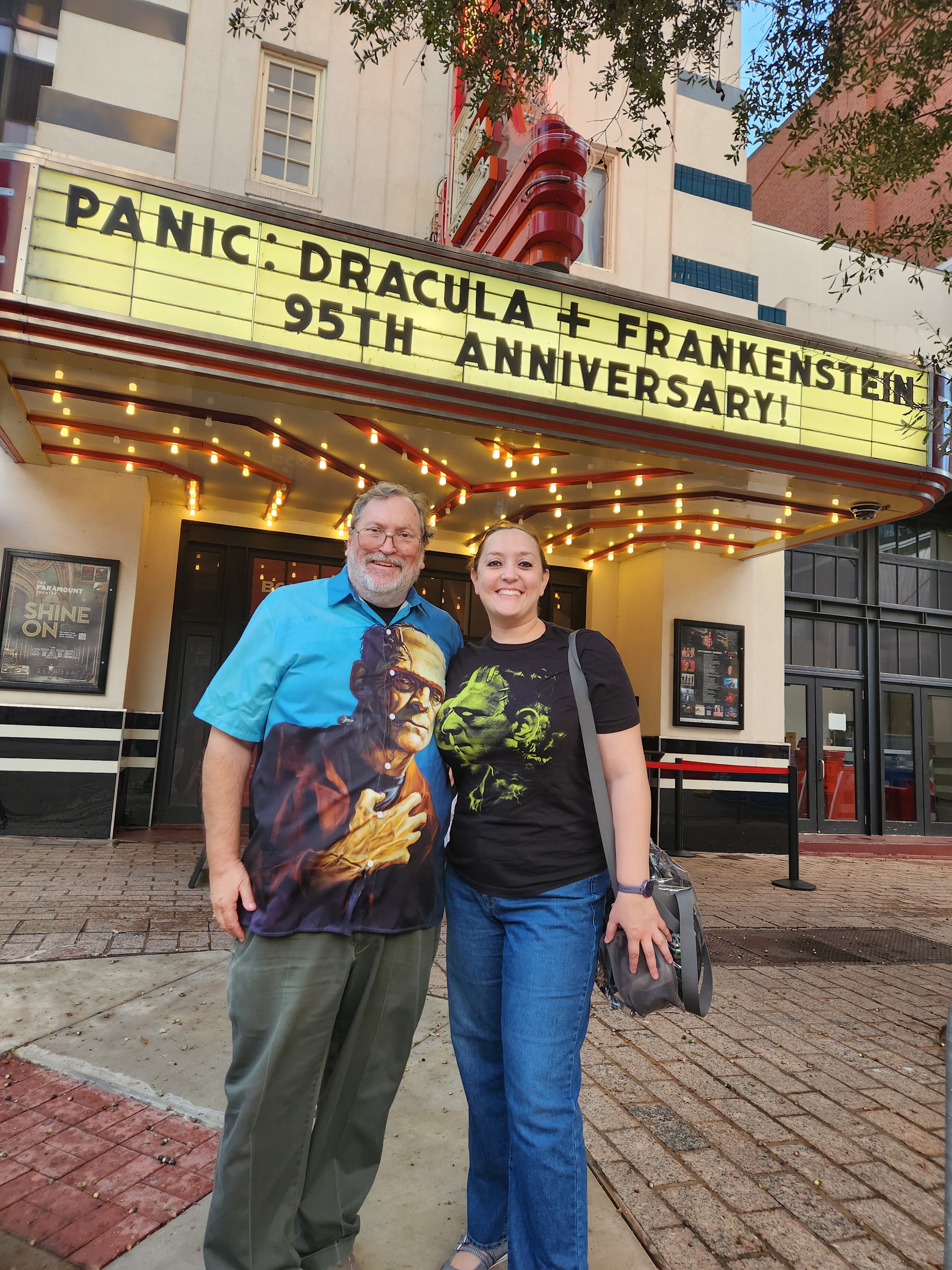
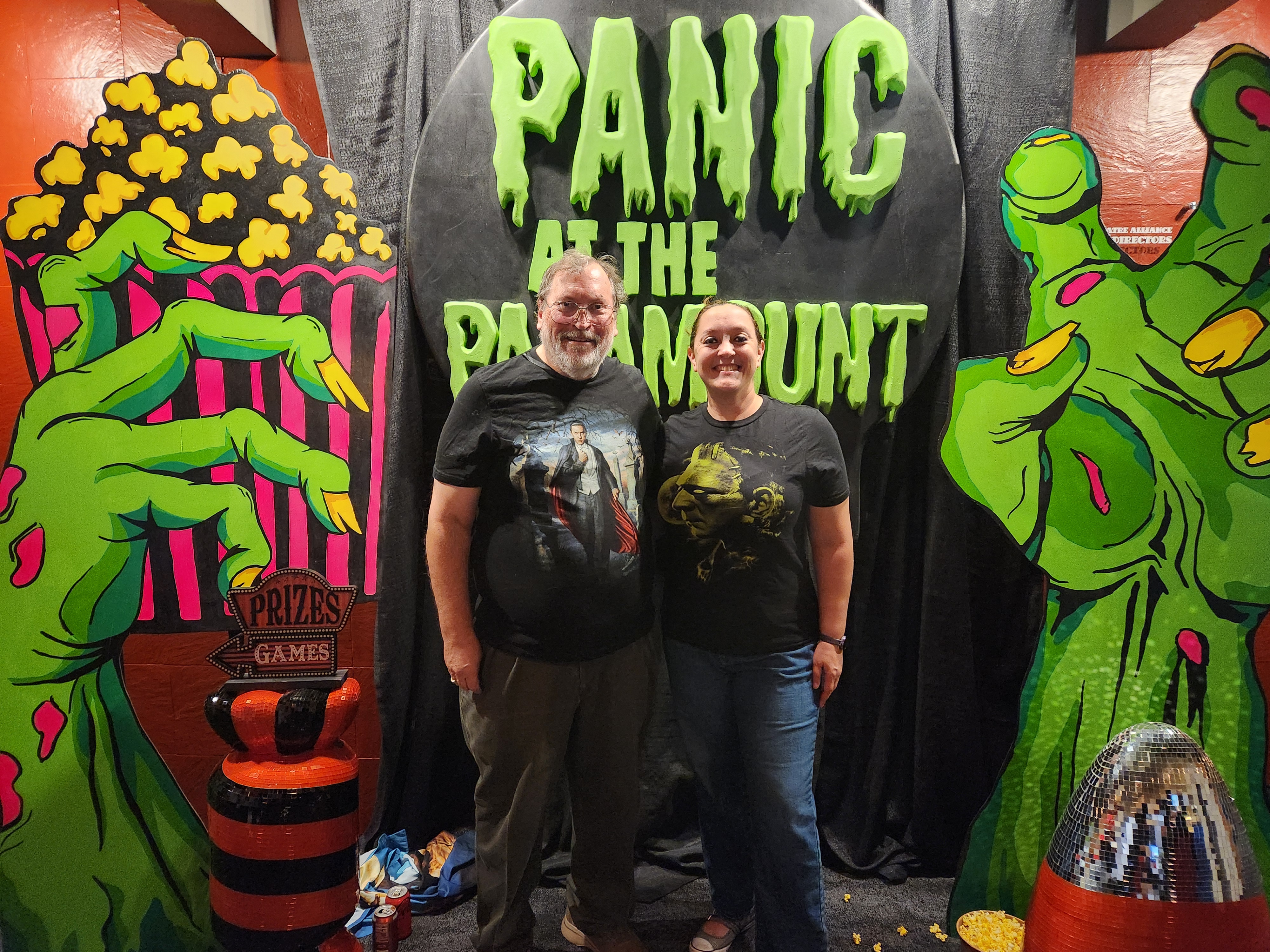
At the Paramount Summer Classic Film Series, “Grease” was paired with the Disney Channel Original film, “High School Musical”. I know I saw this when it was first shown on the Disney Channel, my kids watched it and I spent some time watching it with them, but I remembered almost nothing about the movie. Apparently I’m alone however, because the State Theater, where all the films are being screened this summer because the Paramount is under renovation, was filled with fans of this teenage film. You could hear them singing along with some of the songs and there were several adults, in their 30s, who were cheering and wooing at moments that they clearly recalled from their youth. The fact that some of it seemed coordinated, amused me to no end. I’m afraid I got more laughs from the audience’s reaction to the film than from anything that happened on screen.

There’s nothing wrong with High School Musical, it’s just that to me, pairing it with this ’70s film with two major Stars and a long history of nostalgia, it just doesn’t match up. Probably just an old man’s perspective on the thing, obviously the younger adults were pretty happy to be in a movie theater seeing something that they saw screening on their cable channels 20 to 25 years ago. 

I did appreciate the choreography of the basketball dancing scenes, I thought that the cheerleaders and players all did a fantastic job in working it out. But for me there wasn’t any song that stood out, any line that I would be quoting for years and years, and the comedic references just don’t have the same resonance.

Still I had a good time, and seeing both of the films in a double feature, on a Sunday afternoon evening in the summer, seemed like a good way to enjoy the season.

The Untouchables (1987) 2026 Re-Visit

This will be a perfunctory entry since I’ve written about seeing the film three times in the last 3 years. This is the fourth year in a row that we’ve had an opportunity to see The Untouchables on the big screen, like several other films that I love. I never miss an opportunity to see these movies in a theater with an audience. So much of this film works so well because it is designed as a crowd pleaser. The combination of the cast, the director and the screenwriter pretty much ensures that the movie is going to be solid.

Famously this was Sean Connery’s Academy award-winning performance, and every time I watch the movie I remember why. He’s great in this film. Connery however is not the only one who is terrific, Robert De Niro chews the scenery as Al Capone, Kevin Costner is in the process of turning himself into a movie star with this film, and Charles Martin Smith steals every scene that he is in. It really is a delightful film if you can use the word delightful to describe a gangster film featuring a variety of murders. In addition to the scene stealing Smith, Billy Drago plays Frank Nitty as a stone cold zombie murderer that everybody will be happy to see take a dive off the roof.

Obviously inspired by true events and just as obviously plotted by a screenwriter who needed to tell a story without being true to those events, David Mamet gives us a diverting buddy cop movie, with over the top bad guys, and a clever plot, that doesn’t quite hit the ending but at that point nobody cares. Ennio Moriconne, delivers one of his best scores for an American-made film.

I appreciate the fact that the high living gangsters could all afford Armani suits. The period detail when it comes to the automobiles is also quite excellent, and the production design of Eliot Ness’s home and the hotel rooms that Al Capone occupies is exquisite.

There are three fantastic action set pieces that illustrate mastery of the cinema. DePalma stages a western style raid on the border between Canada and the US, with mounties and gangsters on either side of a bridge. All of our four protagonists get an opportunity to shine in this sequence. The most famous scene in the movie, inspired by the “Battleship Potemkin”, is the shootout on the stairs of the train station. The tension builds with the woman trying to move her luggage and pram up the staircase as Eliot Ness looks on watching for his targets. DePalma goes into slow motion for the actual shootout, and that allows us to see how it all comes together brilliantly. Elliott Ness’s command to Stone” take him”, lets us know that the evolution of the crime fighter is complete.We get one last great piece with Ness chasing Frank Nitty up to the courthouse roof finally, apprehending him and then the dispensing Justice with a great quip that evokes a horrifying laugh.

Let’s face it, this movie is just terrific.

Spider-Man Brand New Day (2026) 2

We are well past the point where any of my opinions are going to matter on a film like this. I am completely aware that my suggestions will be superfluous, after all the movie has already made over a billion dollars and it’s part of a long-standing franchise that is going to continue regardless of what I think. Nevertheless I consider it my responsibility to let people know what I thought of a movie that I saw in the theater, and I’m happy to say that I generally enjoyed the heck out of this movie. It’s not quite as fun filled with the fan service that we got in the last Spider-Man film 5 years ago, but it is plenty entertaining and doesn’t screw up our main characters too much.

Tom Holland may however be growing out of the role since he is much less boyish than he was when he first appeared on the scene as Spiderman in “ Captain America Civil Wars” more than a decade ago. The plot does have him growing older however, so it’s not as if the filmmakers are denying the existence of time, but rather they’re just trying to minimize it.

You can get a recap of the plot from a number of other sources, let’s just say that the film picks up pretty much where it needed to after the whole planet has been wiped with the memory of Peter Parker. Peter himself of course. still has his memories, which is what is torturing him a bit, because he still loves MJ and misses his best friend Ned. Having made the decision not to reconnect with them at the end of the film last time, he’s had to go it on his own. There’s a great sequence at the beginning of the film that reminded me of a similar sequence in “Fantastic Four First Steps”, where we see a quick montage of Spider-Man defeating a variety of his comic villains. On the Lambcast my friend Jeanette used the term “cold open villain”, to describe the secondary nature of these characters. They exist just long enough to demonstrate Spider-Man skill but they aren’t worthy of an entire film.

The lone police detective that Spider-Man has connected with, forming a relationship similar to that between Batman and Commissioner Gordon, is professionally effective but emotionally empty. This means Peter is spending a lot of time wallowing in his existential crisis. He watches Instagram posts from Ned about the lives of he and MJ as they go through MIT without him. It’s only the presence of a new supervillain, a mysterious psychic, who LeapFrogs from person to person, that causes Peter to try to reconnect with his old friends.

Meanwhile Spider-Man is also undergoing some changes as a result of his isolation. Apparently the spider DNA that is coursing through his body is following an evolutionary pattern for spiders who do end up in a solitary existence. The changes frightened Peter and move him to try to consult with somebody else who is fighting the DNA in their own body. It’s not really a spoiler to tell you that this person is Dr Bruce Banner, since the character is featured in most of the promotional material for this movie.

Bruce has sound advice but it comes with a warning and as usual, Peter can’t really listen to a warning, he dives right into trying to make a solution that will work. As it turns out the solution would also potentially stop the new super threat that the psychic presents. In case you haven’t guessed it, that solution is a double-edged sword which may in fact hurt Peter, and can definitely be weaponized by the Department of Damage Control, the agency that is under attack from the psychic, and which has been responsible for cleaning up after alien and enhanced human confrontations.

There are two very emotional scenes in the film, each of which is worth talking about a little bit. Peter gets two chances to confront the situation between him and MJ, one turns out to be a ruse, and the other is a quite affecting moment between the two actors on the screen. The filmmakers do a nice job confronting the situation that Peter has put himself in in relationship to MJ. They don’t have an easy answer, but they do seem to have an honest one. And if you have any romance in your heart for their relationship, it may provoke a moment where you choke up.

Even more emotional however, the clever way Peter tries to resolve the issue with our mysterious psychic. It involves a memory of a conversation that he had with his deceased aunt. Marisa Tomei returns as Aunt May and what might have been flashbacks but are really extended visions in Peter’s head. The conversation that Aunt May has with the Peter possessed psychic, is likely to invoke some tears in those of us who are pretty sentimental.

As it turns out, there are other characters from the MCU that show up in the film as well. One is there for a bit of comic relief and for some narrative, but mostly just to remind us that the Avengers is still a thing. The other MCU character is providing a transition to a new set of possibilities in the Marvel Universe. Those comic book fans who know the history of the rights dispersal of MCU characters, will be salivating at the chance to maybe reconnect some formally disconnected Heroes.

There’s a lot more to talk about here, and if you want to hear more from me, you can visit the Lambcast episode that I have shared, where Jeanette Ward and I spent an hour debriefing each other on our opinions and theories.

Snake Eyes (1998)

I’ve said it in the past and I’ll say it again now, for a period of 20 years Brian DePalma was my favorite film director. I saw all of his movies and thought they were great, even the ones that flopped at the box office. If you were ever in the mood you can visit my post on the 1984 film “Body Double” and see how I’m willing to commit to DePalma, even at his most lured and financially disappointing point.

“Snake Eyes” probably marks the beginning of the end of my DePalma era. The films that came after hardly seemed interesting, and never drew my attention in the same way. This 1998 film, with an over-the-top Nicolas Cage, and a fabulously understated Gary Sinise, shows the director’s talents at staging, framing, and editing a film in a way that few others have managed to succeed at. Structurally the screenplay starts well past the real start of the story, nowadays that’s fairly typical, but in 1998 it was pure DePalma.

The vast majority of the film takes place on a single night at a prize fight in Atlantic City. The former Resort town transitioned into a casino based economy, which struggles to survive while also trying to mimic Vegas. Nick Cage plays Rick Santoro, a corrupt local detective who’s old friend is a naval Commander in charge of security for the visiting Secretary of Defense. Of course the string of unrelated events creates a confluence of narrative around the assassination of the secretary. The heavyweight fighter, a mysterious blonde, a local newscaster, and some low-life bookies, all are connected to Santoro and the investigation of this crime.  Everyone in attendance at the prize fight is a suspect so they are all contained inside of the Arena and the adjoining Casino. This sets up a cat and mouse scenario with Santoro trying to figure out what happened, who to trust, and of course most importantly, whether to take a payoff.

The film is full of long single shot takes, a well-known characteristic of Brian DePalma films. There are also interesting angles, shot from above, clearly inspired by the Alfred Hitchcock films that DePalma has always mined for ideas. The movie feels kinetic without ever losing its coherence. It’s terrific to watch, with 90s style, and an indie attitude, in spite of its big budget and stars. It’s a different kind of dirt then you’d find under the fingernails of a Tarantino film, but the styles are very similar and equally compelling on the screen.

As always, there’s a conspiracy, and the principles have difficulty containing the situation when Detective Santoro becomes the fly in the ointment. Whether or not Rick is supposed to be high on cocaine, he certainly conveys such a personality. Cage has the ebullient voice, grandiose hand and arm gestures, and bug-eyed smirks, which characterize some of his most memorable characters. Gary Sinise looks great in his Naval dress uniform, but it doesn’t take long for us to suss out that there is something not quite right there.

After this film was originally released it showed up regularly on pay channels that we subscribed to on our Dish TV satellite. It felt like it was on a regular rotation at the house, and my kids who were still too young to really be seeing this kind of stuff, watched it anyways, and fell in love with both Gary Sinise and Nicholas Cage. So when a chance to see this film on the big screen showed up, inevitably we were going to go and I’m so glad we did. 

This movie is wild, well shot, and a little complex. It is also vastly entertaining. I probably haven’t seen it for 15 years, and I can’t really understand why. The truth is I’ll probably be watching it again in the next few days, because it’s just that addicting. It reminds me in every shot why I loved De Palma of the 70s, 80s and 90s.