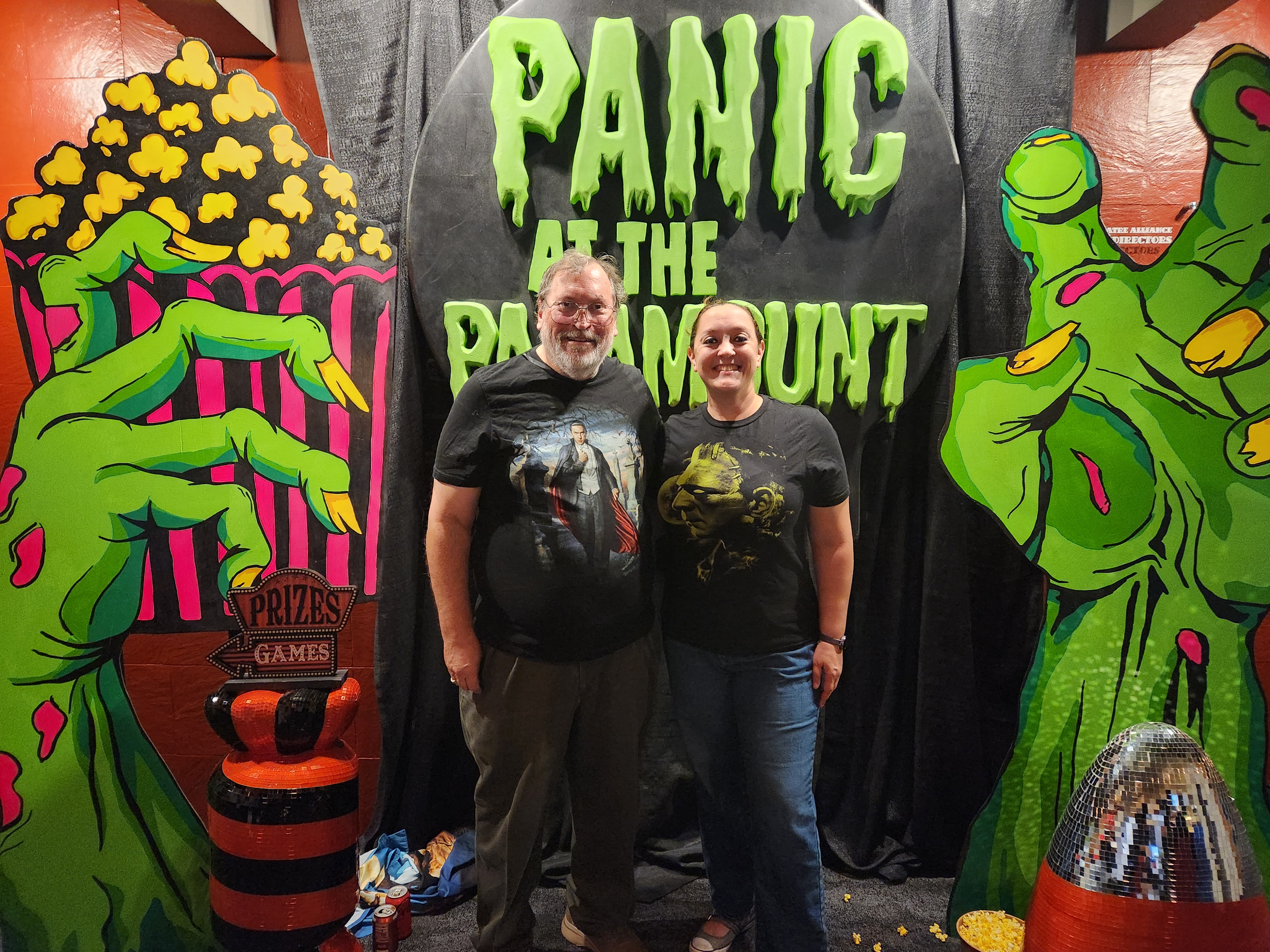
Panic! at The Paramount this year is actually Panic! at the State Theater since our beloved Paramount is undergoing renovations for a year. That does not mean that there’s been a fall off in the programming however, and although the State Theater is not as magnificent as the Paramount, when the lights are off and the screen is lit up with a classic film, and you are surrounded by people who love those kinds of movies the way you do, it is still a great experience.
Both “Dracula” and “Frankenstein” came out 95 years ago. A Century Of Horror was established with these films, and even though they weren’t the first horror films they created the template on which most of the films we see as being fright movies have followed. Warner Brothers was famous for its gangster pictures, and MGM had musicals but in the Golden Age of Hollywood, Universal is where you went to if you wanted a scary movie.
“Dracula” is based more on the stage play than on the book from Bram Stroker. There’s plenty of overlap, but the movie plays very much like a theatrical production. The actors have long bits of dialogue that they take turns saying in dramatic ways, with frequent pauses for the audience to process. It’s true that some of the storytelling here is a little creaky. Rubber bats bouncing up and down on a string are not particularly convincing, but in 1931 that’s how you did it, and I’m perfectly willing to go along with it.
The elaborate sets of Carfax Abby, are a nice in camera effect, that relies less on filters and backgrounds or animation, and more on production design with some spooky atmosphere provided by both the actors and the scenery. Speaking of scenery, I still think some of the painted backdrops used to create the roads and passes of Transylvania, are pretty impressive. The matte work of the castle in the mountains is equally strong.
The most lasting physical contribution that Dracula has made to the cinema is the portrayal of the dark count by Bela Lugosi, who starred in the original stage production, and his look is forever imprinted in our minds, this is what Count Dracula looks and acts like. I went as Dracula trick or treating as a kid, with the widow’s peak, the cape and The Medallion around my neck. They all reinforced the look, but it’s the fake accent that makes it work the best.
The other night I did notice an editing mistake in the film, or at least somebody screwed up on continuity. We learned that the lady in white who’s been terrorizing the children in London was in fact the deceased Lucy Weston. However we never see a resolution to that situation. I suppose it’s assumed that once Dracula himself has been disposed of his acolytes or Brides would fall by the wayside. In the Coppola version of Dracula, we got a gruesome resolution of that story. Maybe the audience is of 1931 we’re not ready to have a young woman be decapitated on screen.
As terrific as “Dracula” is, when it comes to production design, “Frankenstein” is how you really do it. The laboratory equipment sparks, snaps and flares with electricity. The interior of the abandoned watchtower, which serves as Dr. Frankenstein’s laboratory, , is matched by the exterior Matte shots, which make the local scenery into one of those Universal Staples. A dark mountain side with a castle located on the top and a foreboding Forest around it.
Just as “Dracula” had Bella Lugosi to anchor the story and give us an indelible villain, “Frankenstein” has Boris Karloff, playing a monster that is sometimes frightening and sometimes pitiful. The sequel does a much better job of building empathy for the monster, but in the moments where the monster is fearful of fire, all of us can relate to being intimidated by something scary.
The reels we saw the other night included the long missing segments with young Maria. She was always in the film, but the scene where she is flung into the lake by the monster, had been edited out back in the 1930s. The restored film stock is noticeably different in the film( although I’m pretty sure we saw a digital presentation).
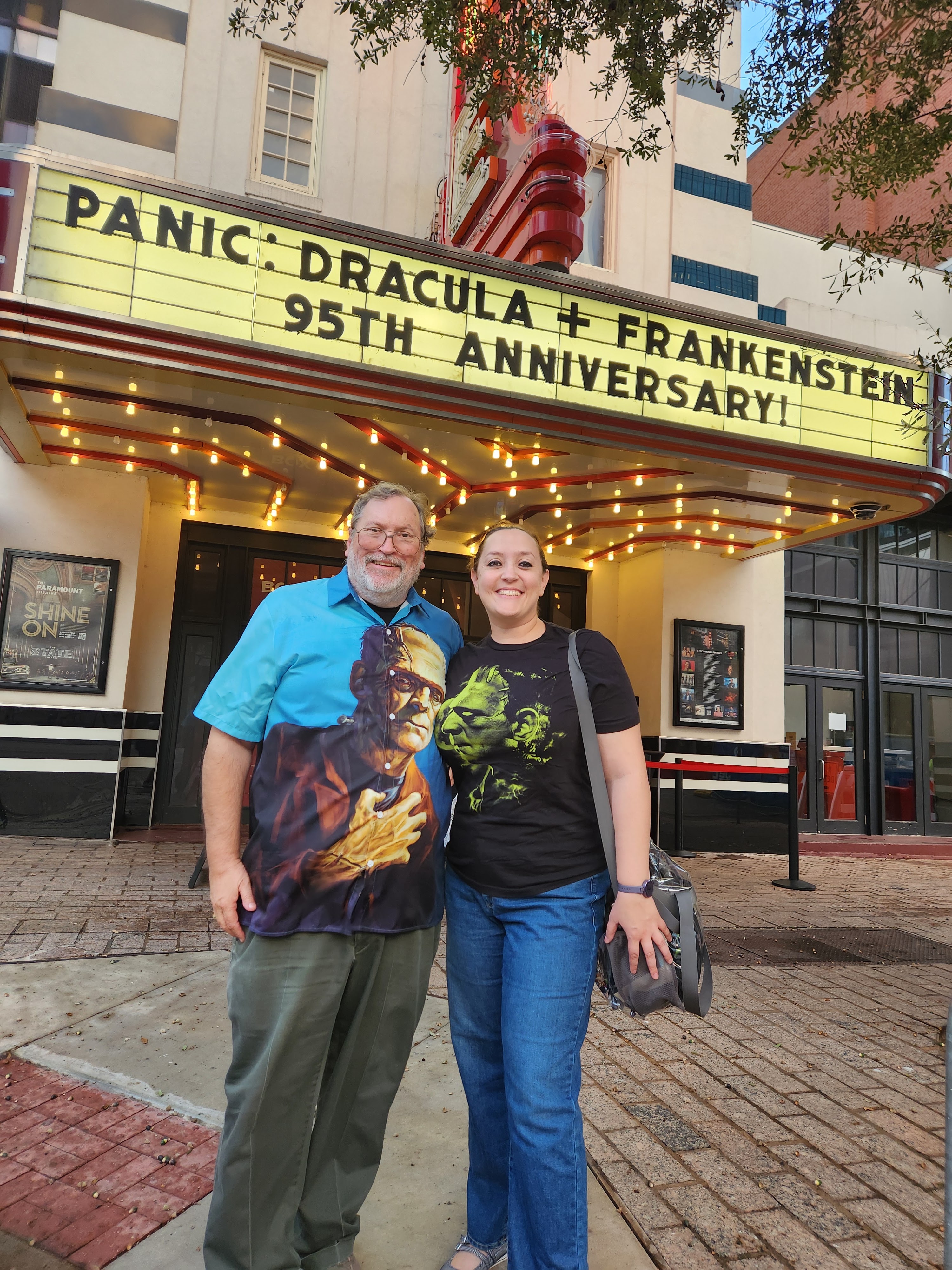
Colin Clive as Henry Frankenstein, is certainly an example of screen acting styles of the era. He is frequently melodramatic and his voice exaggerates the emotional beats. Still, as I was watching it, I felt much more engaged with his character than I had in some of the previous screenings that I have attended.
It’s been more than 50 years since the movie “Young Frankenstein” came into my life, and I am still influenced by the fidelity to the production design of that movie, and the scenes from the original film that it parodies. The graveyard sequences and the bit about the brain being abnormal, only barely deviate from the original tone. Once again the style of the era has to be forgiven, but doing so is easy.
If ever you get a chance to see either of these films in a real theater with other patrons don’t miss out. They are fantastic time capsules that reflect how audiences could be shocked a century ago, but they also show how we are not that different from those audiences. This was another terrific evening of Classic Cinema from the Austin theater group who managed both the Paramount and state theaters.