TCM Film Festival: Fat City (1972)

If you have read on this blog to any depth at all, you know that i am a champion of 1970s films. This whole blog started as a project to catalogue the films I saw in the summers of the 1970s.  There is a sense of danger and grittiness to films from that era. They don’t all end well, there are some very cynical views of life shown, and characters are often flawed in ways that real people are. They have their good points but the imperfections are substantial.fat_city

John Huston as a director is a solid choice for films featuring these kinds of characters. “The Treasure of the Sierra Madre” and “Beat the Devil”” feel like they were warm up exercises for a movie like this. While it may not be a Forgotten Film for old movie geeks like me, “Fat City” is a movie that probably no one in any of my classes has ever heard of much less seen. The subject matter and the style of the director would be too grim for most cinema goers these days. Heck, I’m not even sure it could be made as an independent film in the current marketplace. The closest comparison to a contemporary movie I can think of is “The Wrestler”. Both feature characters that are flawed and struggling to come to terms with their weaknesses. If you thought the end of  “The Wrestler” was tough, get ready to be punched in the gut because this movie is even more somber.  “Fat City” is a film of it’s day and it belongs in the 1970s.

Susan Tyrell was the actress nominated for one of the least glamorous characters in movies this side of  Aileen Wuornos. Oma is a woman too used up and soaking in alcohol to be of much use to anyone. She sometimes seems like she has a heart but she is completely self centered and simply can’t do anything to help the main character Tully with his own demons. She was one of the things I most remembered about seeing the film when it first came out and the last time I saw it, sometime in the early 1980s. Her subsequent career never seemed to give her a similar opportunity to shine and I recall that she passed away three or four years ago.

The greatest performance in the film is the lead and I am flabbergasted that Stacy Keach was not nominated for his role as the slightly past his expiration date boxer Billy Tully. From the dialogue free first five minutes of the film, Keach is magnetic. He feels so genuine as the abandoned former prodigy, embittered by bad luck in the ring and a wife who he loved deeply but who left him. He is coping with alcohol and working some of the toughest jobs there are to get by. The film is set in Stockton, California, an agricultural center and a city with a hard as flint personality. The actor seems to fit perfectly in this setting and as he starts to consider getting back into boxing, we have so much sympathy for him because he comes across as a guy trying to cope but in over his depth. The boxing sequences are fine but it is his scenes with Tyrell and a very young Jeff Bridges that gives the performance it’s spark. There is a terrific scene where Billy returns to the gym where his former manager is training a new crop of prospects. We know that they stopped working together on bad terms and that the last time the down on his luck Tully saw his former coach, he borrowed twenty bucks from him. Unprompted, Tully acts as if the reason he is stopping by is to make good on that loan. We know how hard it was for him to earn that twenty bucks and how valuable it is to him, but he wants to pass it off as a trifling, to get back in with the crew. Keach gives a warm half smile and a shrug of his shoulders as a way of conveying all of this and it is a great moment.

The boxing milieu of this era may be long gone but it is shown here in all of it’s difficult and hopeful sides. This is a life that seems truly hard, but it has the reward of accomplishment. Ernie Munger, the character played by Bridges is supposed to be an up and comer, discovered by Tully and groomed by his former manager, Ernie is himself something of a mess. He has a lot of potential but some of the same perils that Billy faced. It looks for a while like this movie will be about the two different trajectories these two are on. Instead, it is much more of a character and tone piece. Plot matters less than the feeling of sadness and hope that floats over all the characters. Despite the bad things that happen to each, there ends up being more compassion in this brutal existence than we have much right to expect. A cup of coffee, silently shared, holds the two boxers in each others orbt, long enough to see that although the battle is lost the fight goes on.

Stacy Keach received a very nice ovation as the guest before the screening. Eddie Muller, the noir expert and writer was the interviewer and he brought a nice sense of involvement to the event since the author of the novel the film was based on was a professional acquaintance, and his father wrote for the newspaper about fighters just like the ones we see here in the film. Keach was generous with his stories and clearly proud that the film has a great reputation at least among the cinema fans. He was probably already gone from the venue when the film finished which is too bad because the audience response was twice as enthusiastic. There was a literal roar of approval at the closing credits, which validates every positive thing you could say about this movie. This was one of my top three moments from the Festival. An unsentimental masterpiece by John Huston and actor Stacy Keach.

TCM FF: Cinema Paradiso

cinema_paradiso Movie lovers of all stripes should rejoice at an opportunity to see this ode to their own obsessions and especially on the big screen at the Chinese Theater.  This was the closing film of the festival and it was clearly chosen to celebrate the themes of the festival and the TCM Channel itself: Moving Pictures.  This sentimental story of a friendship between a little boy obsessed with the movies and the projectionist at the village theater, will surely bring one to tears if you let it wash over you without thought to anything more than the story and the feelings the film connects us with.

Cynics need not apply because this movie is manipulative as all heck, bit like a number of films shown at the festival, “A Tree Grows in Brooklyn”, “It’s a Wonderful Life”, and “Rocky”, it earns it’s tears with characters and dialogue. It simply helps to come under the sway of it’s spell to be an old movie weirdo. The last ten minutes of the film will evoke memories of our own passion for films and it will probably send you on a treasure hunt as well. You will have a strong desire to track down those movies that are referenced and enjoy them in their more complete form.

For the screening, actor Salvatore “Totò” Cascio, was present. He played the young boy who can’t keep his mind on anything except the films playing at the theater in his Sicilian village. Almost forty now, he seems to have had a happy life trading on his role in the film and being beloved around the world. The translations were sometimes unnecessary because the laughter in his voice and the tone of his answers often said it all.

The Chinese theater is certainly more opulent than the Paradiso, with its benches and folding chairs. The magic of the projector, streaming images out of a lions head is captured almost the same as the image above. An audience is entranced by the wonders that take place in the dark.

TCM FF: The Manchurian Candidate (1962)

This film is so well known that it has been remade and there dozens of cultural references to it in the political world. In pop culture I just caught a reference to it in the new “Captain America: Civil War” film, as Tony Stark tries to talk to Steve Rogers, he asks Bucky, the Winter Soldier, to put down his weapon, and he refers to him as “Manchurian Candidate”. This obvious reference to brainwashing comes up in a dramatic moment with a humorous context, and that is the way the whole film feels. It is a drama of political intrigue with assassination at it’s heart, but it is filled with comic moments that make you shake your head at the audacity of the story telling and film making.


Amanda had never seen it before, despite the fact that it seems to be on our Retro Channel on a weekly basis (not TCM, I think it is a Fox feed). It was rediscovered in the mid 80s, and the story I heard was that Frank Sinatra asked one of his people why he never saw the movie on the late show, and they explained that he controlled the rights and had mostly pulled it from circulation after the JFK assassination. Frank decided it needed to be out and I remember going to a screening on the west side of L.A. when a baby shower was taking place at my friend Rick’s house. He and I went to see it and had very similar reactions. We both thought the movie was great but it has some strange stuff in it.

Among the oddest things in the film is the meeting between Janet Leigh and Frank Sinatra’s characters on a train. The pick up lines she uses on him and the daffy way he responds to her are just so different, you wonder if they are in the same scene together, much less the same movie. Leigh’s character has no reason to exist in the film at all, so maybe the dialogue was tweaked to give  her character something memorable to do.

Just about everyone else who made the picture is dead, but 94 year old Angela Lansbury is still around and she graced this screening with her presence. She is an impressive figure who has a mind sharp enough to put guest interviewer Alec Baldwin to shame. She was quick to come up with names and moments that Mr. Baldwin seemed only to half remember. It’s not that he did a bad job, it’s just that he seemed so much less engaged than the woman 37 years his senior who still is as sharp as a tack.

The audience was very appreciative and they should be. This was Lansbury’s last Oscar nominated performance and except for a very few occasions, she slipped back into theater work and only returned to Hollywood for the TV series that she starred in for 12 years and 260 plus episodes. Which by the way has been off the air for twenty years if you want to feel a little old. She was terrific in the movie, but had the unfortunate luck to be up against a sixteen year old in the part of a lifetime in 1962. In an odd coincidence Patty Duke, the winner from that year, passed away only a few weeks ago.  One of the things that make film great for we fans however is that these performances will be around a long time after the stars have moved on. Although in Ms. Lansbury’s case, that may never happen.

TCM FF: The Longest Yard

longest_yardIt’s unfortunate that Burt Reynolds had to cancel on the Film Festival this year. I heard someone say there was an illness but I never saw an official explanation. He was scheduled to do one of the up close interviews and his would have made a great companion piece to run through the year to the Faye Dunnaway interview that did get done. The 80 year old star is an under rated actor in my view and he was a fixture on the film scene in the 1970s. Some fans of classic films might cut the date off for “Classics” nearly a decade earlier than this movie was released. I do see that it is a different era but I also have a broader version of the phrase “Classic Film”.


Producer Albert S. Ruddy, who won the Academy Award for Best Picture with “The Godfather” and “Million Dollar Baby”, did make it to the presentation and he puts forward a persuasive argument that this movie was substantially responsible for the wave of sports films that followed in the next few years. The underdog story is in fact a theme of this film but it turns out to be a lot deeper as well. I remember seeing this with my buddy Art Franz at the Garfield Theater in my home town of Alhambra. At the time it was the funniest adult style comedy I’d seen and it still holds up today. On my original project of Summer Movies from the 70s, my daughter wrote about this film for me while I was on a cruse to Alaska. It was nice to get to see it with her in a theater and watch her have the same kind of emotional reaction to the game as she described in her post almost six years ago.

Also appearing at the film was football legend Joe Kapp, the only player to have played in the Rose Bowl, Grey Cup, and Super Bowl. In the movie he plays the Walking Boss and definitely looks intimidating. His interview was a little awkward because he is nearly deaf and could not get the prompts from either Al Ruddy or the Sportswriter who was conducting the session. I did get a chance to shake hands and say hi to him outside the theater when we had gotten back in line for the next film of the day. He is 78 and not as on top of things as some are at that age but he was friendlier than all get out.

They finally got the story out about the local cops locking up much of the cast after a bar room altercation. It was interesting to hear that the prison guards in the movie were in jail one night before they were playing jailers themselves. When I listened to a podcast covering the festival recently, I heard that several more recent films that had been booked in the bigger venues were not drawing very well. This was effeminately one of those. It was a very moderate crowd, I suspect because the feature attraction was unable to make it. Listening to Albert Ruddy however made me glad that I came. He struck me as the kind of guy that Hollywood does not make anymore and that they really need more of.

TCM FF: Double Feature with Elliot Gould

The Long Goodbye (1973)

Even though I am a 70s guy and have seen a ton of movies from the era, and the original project here focused on those kinds of film, there are still gaps in my experience. “The Long Goodbye” is one of those films I knew about but for some reason or another, I’d just not gotten around to see. Maybe the idea of a contemporary Philip Marlowe through me off. Anyway, the film festival this year afforded me the opportunity to see this on the big screen at the Egyptian Theater. In addition, it came complete with a brief discussion with the star Elliot Gould, conducted by TCM Host Ben Mankiewicz.

The opening of the movie is a deadpan ten minutes about a guy and his cat at three o’clock in the morning. Marlowe is no great shakes at housekeeping but he is a conscientious pet owner. He goes out of his way in two very different approaches to making the cat happy. It has nothing to do with the plot, it’s all about establishing the character. Another character in the movie is the city of Los Angeles in 1973. The hippie chicks in the next apartment are naked most of the time, a guy like Marlowe with limited resources can still afford a canyon side apartment and the Malibu Colony is not packed with so many celebrities that people still can’t get near it.

Everybody in the story has an agenda, and some of them are so difficult to figure out that you might as well give up. Sterling Hayden is a disturbed writer that is a client, a suspect and a friend at different points in the story. His wife is cryptic and distant from both he and Marlowe. The cops are pricks and Marlowe’s friend, Terry, played by major league pitcher and notorious writer Jim Bouton, disappears after his wife is murdered. Director Mark Rydell, who made “The Cowboys” among many other films, plays a single minded mobster who is also looking for Terry, and he is truly psychotic.The story involves false leads,  hangdog characters and an aura of ennui  hangs over most everyone we meet. The plot is less important than the attitudes and the setting and it is a perfect embodiment of a 1970s movie. It may have been my daughter Amanda’s favorite film of the festival.

There was a nice tribute clip that they showed before the interview and then Ben asked Questions but Mr. Gould went all over the place in answering. It reminded me of the old days of talk shows when the guest and host would have wide ranging conversations and take as much time as they wanted to talk about a point.

M*A*S*H (1970)

Sunday morning found us returning to the festival after a long day before, (but not as long as Friday) and we were seated in the big house at the Chinese theater. Robert Altman really begins his esoteric movie style with this film. The rambling mostly improvised dialogue and blocking which would be a signature of his work for the remainder of his career, comes to prominence in this iconic anti-war movie. Centered on the Korean war but overtly dealing with issues in Vietnam, the rebellious spirit of 1970 is evident everywhere. This picture is the bookend for the seventies, the film it lost to for Best Picture that year, “Patton”, was also a war film but much closer to the sensibilities of the 60s than the 70s.

Gould and co-star Donald Sutherland are the least glamorous film stars you can imagine. In contrast to Newman and Redford in “Butch Cassidy” the year before, these guys were unkempt and often covered in blood. Their language was salty ant heir hijinks were more schoolboy naughty than cool. Still they were very funny and the film managed to inspire the long running, much awarded television series of the same name. It is the least likely success story I can think of , trying to make this movie into a TV show. That it worked is again a testament to the fact that characters were more important than the plot.

This is a movie that is easy to watch on a regular basis. First because it is so funny, and second because you will notice new little things about the film each time. A joke or a prop that slipped by the first time will sneak in and give you another moments pleasure when you were not expecting it. The supporting cast is filled with familiar faces and accomplished actors. The last supper of “Painless Waldowski” is filled with faces that could be in a portrait of 70s film and tv stars, and it does not even include Robert Duvall, although Tom Skerritt does make the picture.

This was one of the presentations where the guest appeared after the film screened and again Elliot Gould did not disappoint. He was a little more focused but just as fun and the stories were all different from the night before.

TCM FF: 90th Anniverasry of Vitaphone

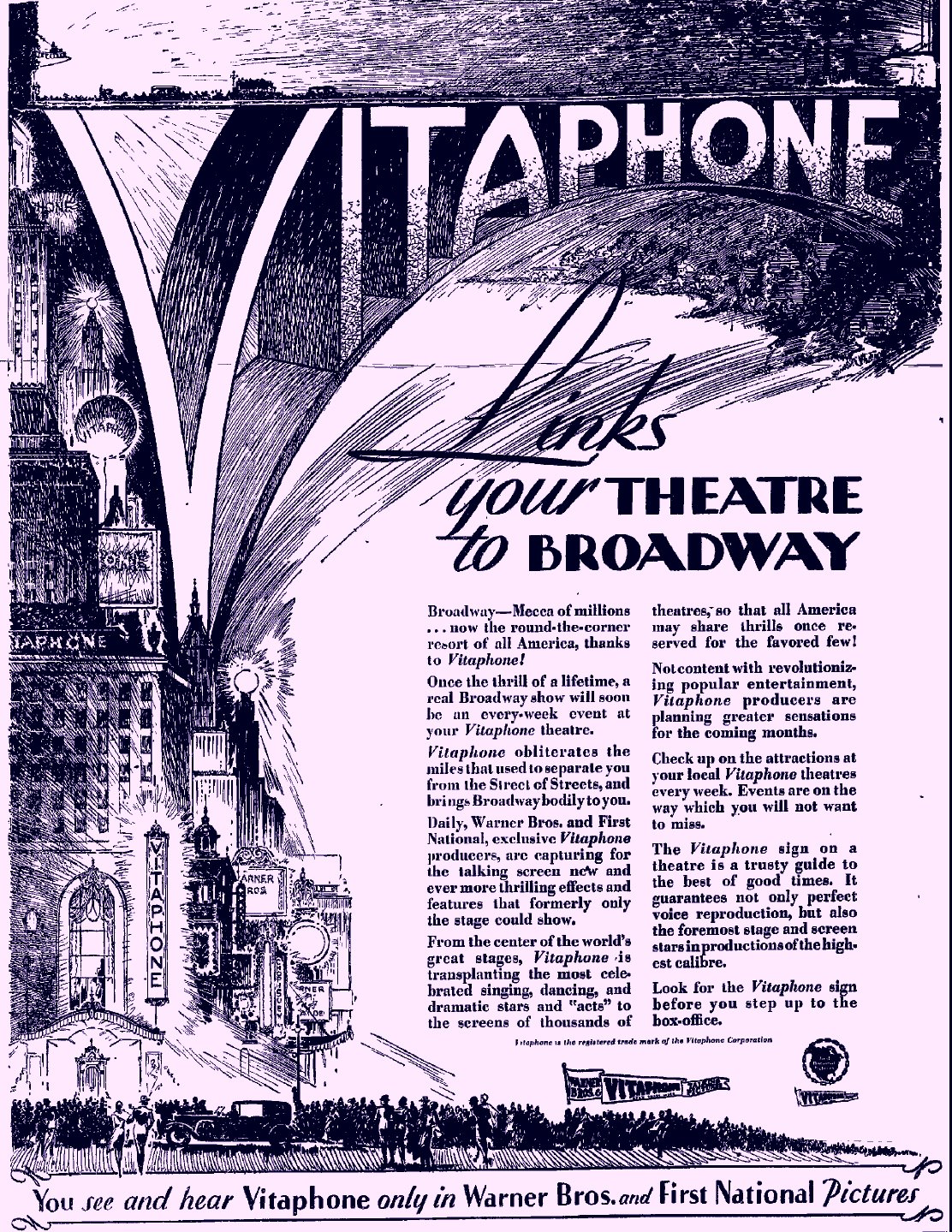
This was a wonderful program featuring 7 shorts from the start of the Vitaphone era, 1926-1931. I neglected to take notes and write down the names of each of the shorts, if you were there and have that list please share them here. I will try to remember a few of the performers featured in the program.

The Vitaphone process involved recording of sound to synchronize with pictures. The system as described by Ron Hutchinson, from The Vitaphone Project, used 16″ discs that were powered by the same motor that drove the film projector. That way the synchronization would be much more effective than other systems had used. Mr. Hutchinson described how there are several hundred missing shorts. Some they have film for but no soundtrack and some they have the discs for but no film. The Project has about 150 complete shorts, so we saw a pretty solid selection of the groups work.


Most of the performers were vaudeville stars and they did their act for 10 minutes on a studio set so the material could be recorded. Since the act was designed to be on a stage in front of a live audience, there are not any optical effects and the staging is very basic. Also, since one of the studios of Vitaphone was in New York, they featured performers from the era that would be fairly specialized. Molly Picon for instance did a Yiddish humor presentation that involved two sets, a drawing room and an alley in a tenement building. That alley was the most elaborate staging I remember seeing. George Burns and Gracie Allen simply did their shtick in a drawing room set. Al Shaw and Sam Lee just stand in the same spot in “The Beau Brummels“, and slay the audience with their understated mannerisms.

Baby Rose Marie, the Child Wonder belts out several songs with adult flair and brash confidence. I did not realize until I did some background research that this was the same Rose Marie that I knew from the Dick Van Dyke show. She was a hoot because that voice and charisma coming from a child was just so incongruous as to be shocking. It was a very entertaining few minutes.

There were two or three other performers that also entertained but their styles would probably be lost on most modern audiences. One woman sang in impressions of performers from the time, including Mae West and Fanny Brice. Another couple sang a duet while at a piano and all kinds of insanity takes place around them.

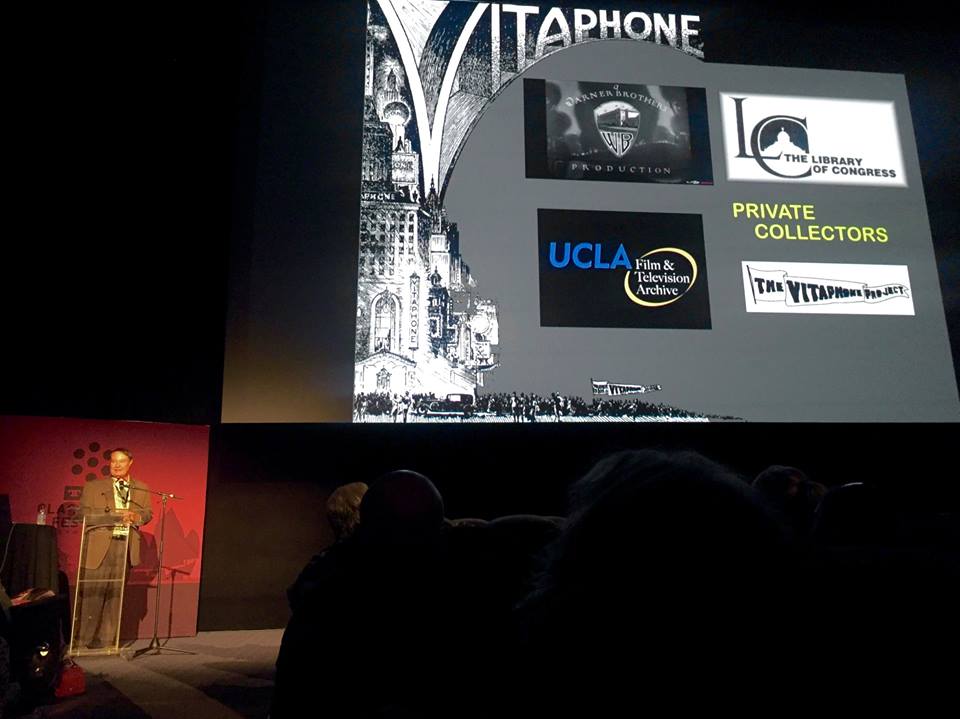
Ron Hutchinson’s slide presentation to start the program provided an excellent historical context and was entertaining in it’s own right.


When I looked at the Festival Gallery posted on the TCM Festival Web Site, I was surprised to  see that I made it into the portfolio. There is an audience shot of this presentation and there I am enjoying the experience from my seat. So here’s a screen shot of that moment for you.

I also got to say Hello to my Facebook friend, blogger Will McKinley right after the program. we didn’t speak for long but it’s great to have a non-virtual moment with someone you know and admire.

TCM FF: The Coversation

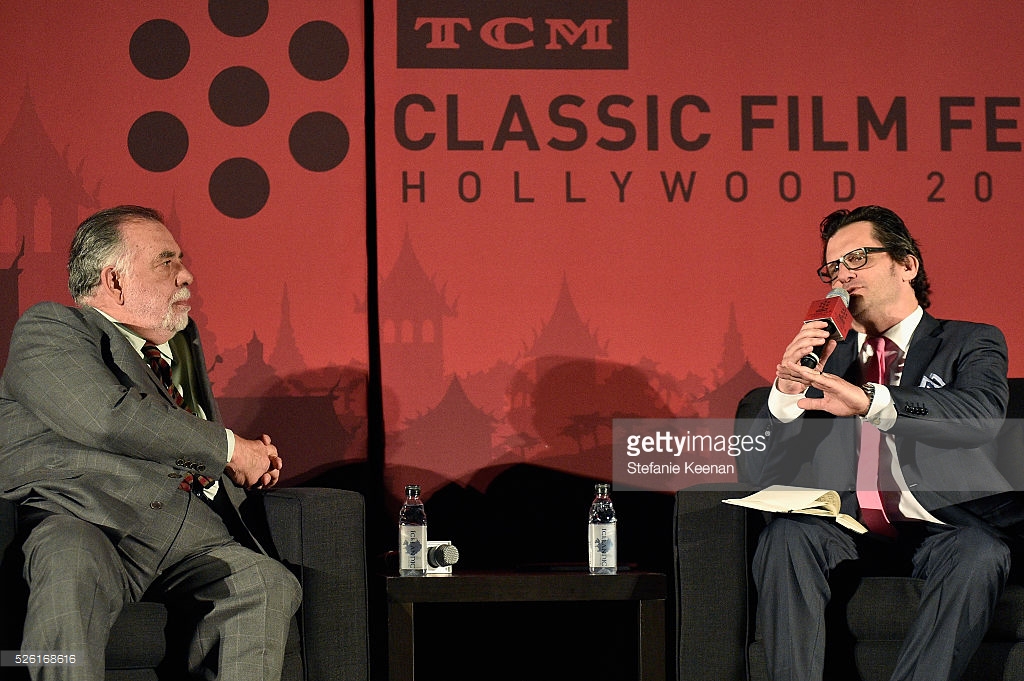
OK, I’m going to out myself as an old man right now. As Steven Spielberg is to my kids and most of the movie going generation after, Francis Ford Coppola was to my generation. He was the inspiration for my movie mania in the 1970s. He is responsible in whole or part for five Best Picture nominees including three winners in that category. Getting a chance to hear him speak was number one on my list of “must dos” for the Festival. We were not at the front of the line but we were there almost two hours early to insure that we did get in. Mr. Coppola did not disappoint.


There was an elaborate description of the opening scene that reoccurs as the movie plays out. The idea that more is revealed or that the comments being made are interpreted in a different way as we get some more context is an early version of a technique used by later films like “Memento”and “Crash “. That Walter Murch had to be given a title that did not exist before [Sound Designer] because he technically could not work as an editor is a testament to the clash between the old ways that studios worked and the new styles that film makers like Coppola wanted to employ. The innovative use of sound in this film was the start of a specialized field. I wonder how Ben Burtt feels about this and if he would agree.

Gene Hackman is my favorite actor, and this was a terrific part that required him to be very different than in other roles. He is introspective and something of a schlep in his plastic raincoat and black rimmed glasses. He still has the volatility of Popeye Doyle, but it is tempered by a meekness that is surprising. When he tosses away his valise in frustration, that’s a moment you expect, but when he turns around to go back and get it, that is not the performance choice that is typical, but it is reflective of the character. His passive-aggressive manner with his girlfriend is another indicator of Harry Caul’s tentative ability to connect with others. We know that he is in over his head when he gets bested by a professional rival in a joke, but even more so when he falls into a honeypot that is designed to get access to materials he has held back from the assistant to his contracted employer. Robert Duvall is barely in the movie, in fact I think he is uncredited, but it is nice to see the two of them occupying the same film.

The timeliness of this kind of surveillance is odd. The movie is more than forty years old but it is still relevant with the privacy invasions that we see today in politics, social media and National Security issues. Harry’s paranoia is just a precursor to the kinds of intrusions that all of us are subject to today.

dead_men_dont_wear_plaid_ver1

Steve Martin and Carl Reiner collaborated several times in the late 70s and 80s. Some of their films are silly and some are brilliantly realized concepts. Dead Men Don’t Wear Plaid is both. It is an homage to the film noir of the 40s and 50s, with a Saturday Night Live sensibility. They took clips from more than a dozen classic films and mixed them with new material that was specially created for the movie. Martin rocketed to fame as a stand up comedian, and Reiner honed his comedy chops on improve and 50s variety shows. They seem to have been perfectly combined for this movie.

I saw this movie when it opened in May of 1982. I still have the promo button they passed out at preview screenings proclaiming that opening day was National Plaid Day. It remains very funny but the technology for merging older film stock with contemporary materials is much greater today than thirty four years ago. It still looks great but we are spoiled today by the digital wonders that come from progress. My guess is that Zelig and Forrest Gump would also suffer a little by comparison as each uses a similar technique to this film to tell it’s story.

Rachel Ward was the “It” girl of the early 80s after starring in “The Thornbirds” on TV. She is the damsel in distress rather than a femme fatale here, which she would be two years later in the neo noir “Against All Odds”.  Steve Martin gets to man handle her a couple of times for big laughs in the movie and she was indeed a beautiful woman, although she has no comic touch at all. Reiner himself appears as the butler, and maybe a little bit more, and he hams it up with Martin very effectively. Most of the costars are actually big names from past films who appear for a few brief seconds but are integrated so well into the movie that I hope their families are getting residuals.

Mr. Reiner was honored after the film with a short assemblage of film clips put together by TCM and a nice introduction by actress/author Illeanna Douglas. She proceeded to try to interview him but Reiner was “On” and would not be contained. The 94 year old actor/writer/director/producer was full of jokes, side track stories and assorted foolishness. He was very entertaining but I was occasionally left wondering if he sometimes just lost track of what he was doing and went to a comfort zone.  The big house at the Chinese Theater was packed and the nearly 1000 of us lucky enough to get in gave him a standing ovation greeting that was very sincere.

He talked about his days with the Dick Van Dyke show and was clearly quite proud of his accomplished children, including his director son Rob, his psychologist daughter and artist younger son. He shared George Burns ribald comment with the audience as to what sex was like in your 80s, after all they did work together on “Oh God”, but he had to make sure there were no children in the audience. The analogy was disgusting and funny as heck.  He appears to be in good health and still very amusing with his improvisational comments during the interview.  It was an afternoon well spent and reminds me that I should be visiting my DVD collection more often, where “The Man with Two Brains” and “All of Me” reconnect him with Steve Martin. There are several other films to post about from Friday and Saturday, but I will have to catch up during the week, it’s just too late when we are getting back to do any coherent writing.

TCM FF: Guess Who’s Coming to Dinner

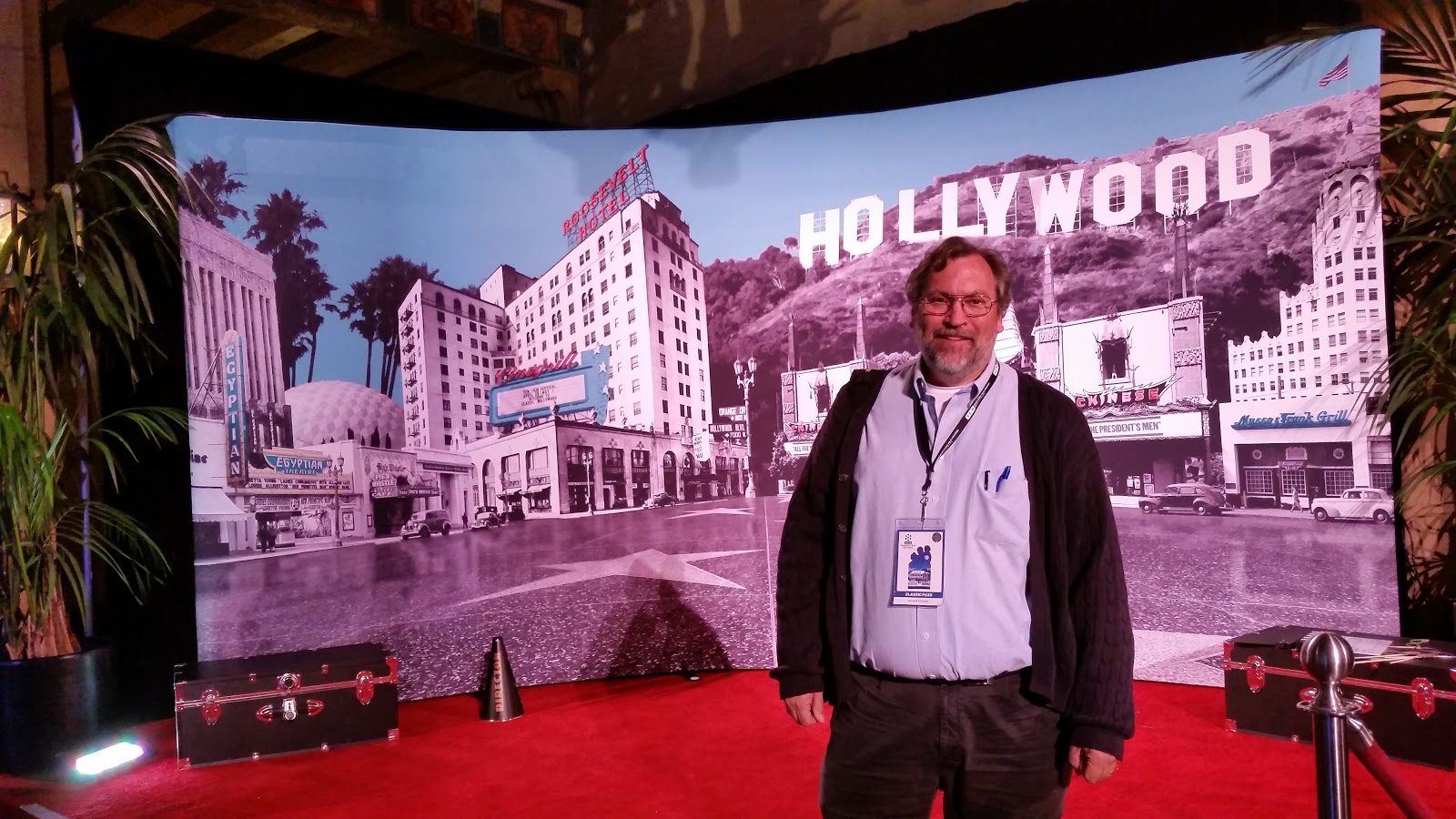
After my Thursday evening class, I drove down to Hollywood to begin this years TCM Film Festival. I walked past the Chinese Theater, which was already dark in front but contained the opening night Gala screening of “All the President’s Men”. MY pass did not get me into that event but I was meeting my daughter across the street at the Hollywood Roosevelt Hotel for a 9:30 screening of this somewhat creaky but for it’s time groundbreaking social comedy/drama.

The show was delayed by the fact that fire alarms had cleared out several other earlier films, including the theater we were supposed to be in, which was showing “Dark Victory” at the time. The hundreds of film fans milling about would get back in to see the ends of their films before the next show started. We answered a trivia question for Social media producer Jeff and had our picture taken for his Instagram feed. After a longer wait in line we got into the theater for the film


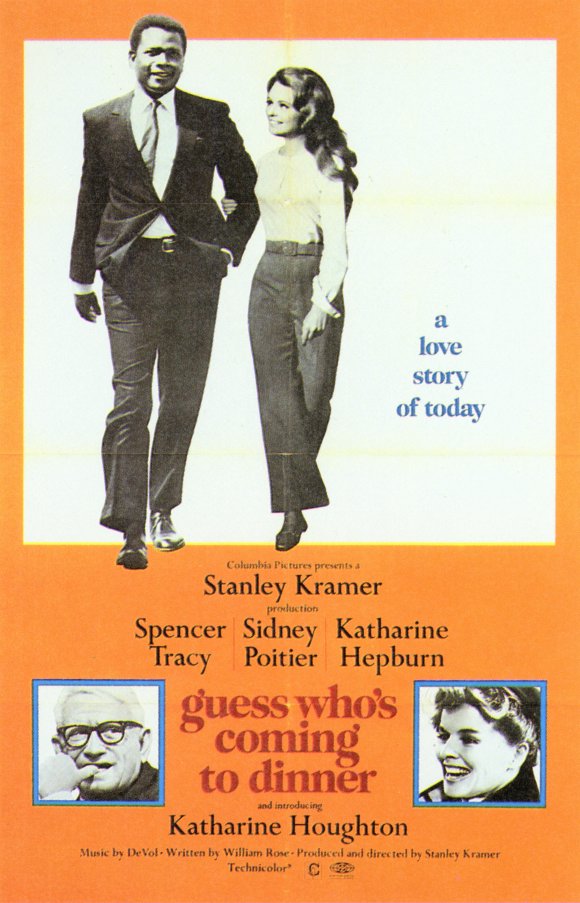
Katherine Houghton who starred as Sidney Poitier’s love interest in the film, was there to greet us with a short set of stories about the making of the film and the accidental way in which she was cast. Although she was Katherine Hepburn’s niece, the real reason she ended up in the film was that Carl Reiner didn’t think she was Jewish enough for the film he was making, and suggested that his friend Stanley Kramer should use her in this picture instead.

Now a pretty dated film and one that modern audiences might see as condescending, “Guess Who’s Coming to Dinner” was controversial in it’s day and also very entertaining. Amanda had not seen it before and she laughed quite a bit at the facial performances and timing of stars Spencer Tracy and Katherine Hepburn. It’s also nostalgic to look at the city of San Francisco in the mid 60s to see what once was.

The film did not get done until after midnight and we got home at 1 am, so I’m a little toasty and the post here will be a bit thin. We are back on our way this morning to the Festival, but we have L.A. traffic to fight for a couple of hours sio not as much rest as I might have wanted. An exciting day is ahead but our long awaited weekend has arrived and there will be plenty of films to dive into with a little more analysis.

So long for now.