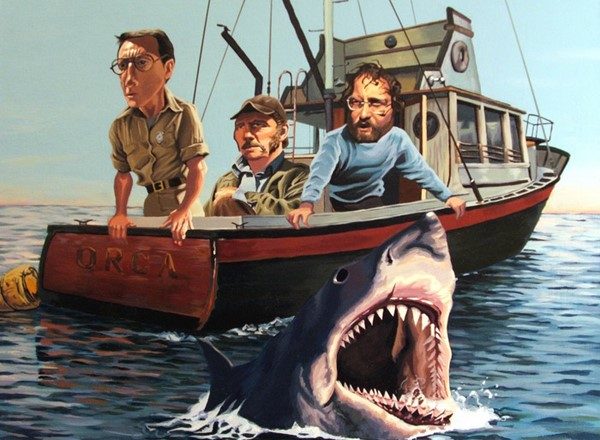
Dracula and Frankenstein (1931) Panic! at the Paramount

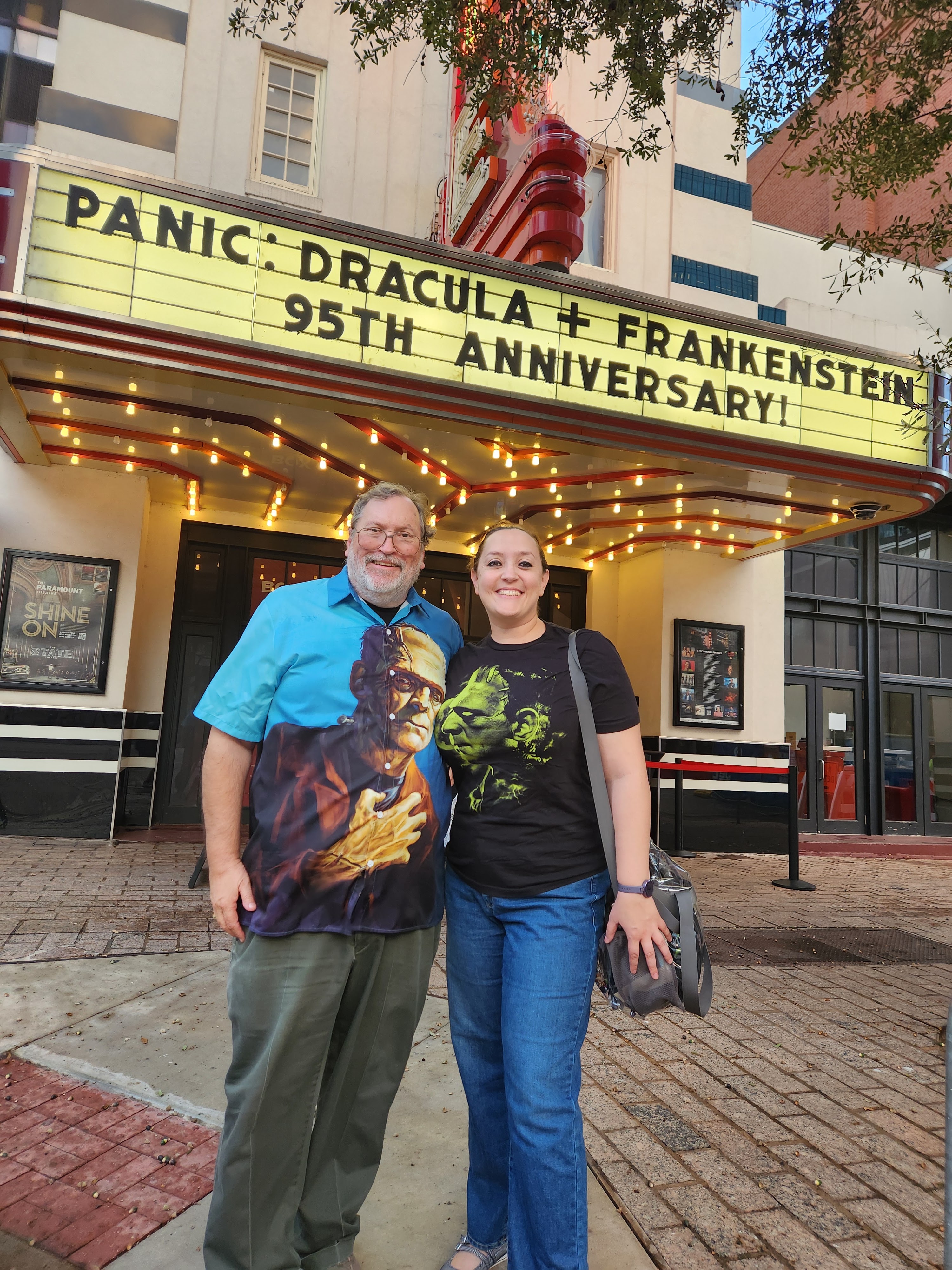
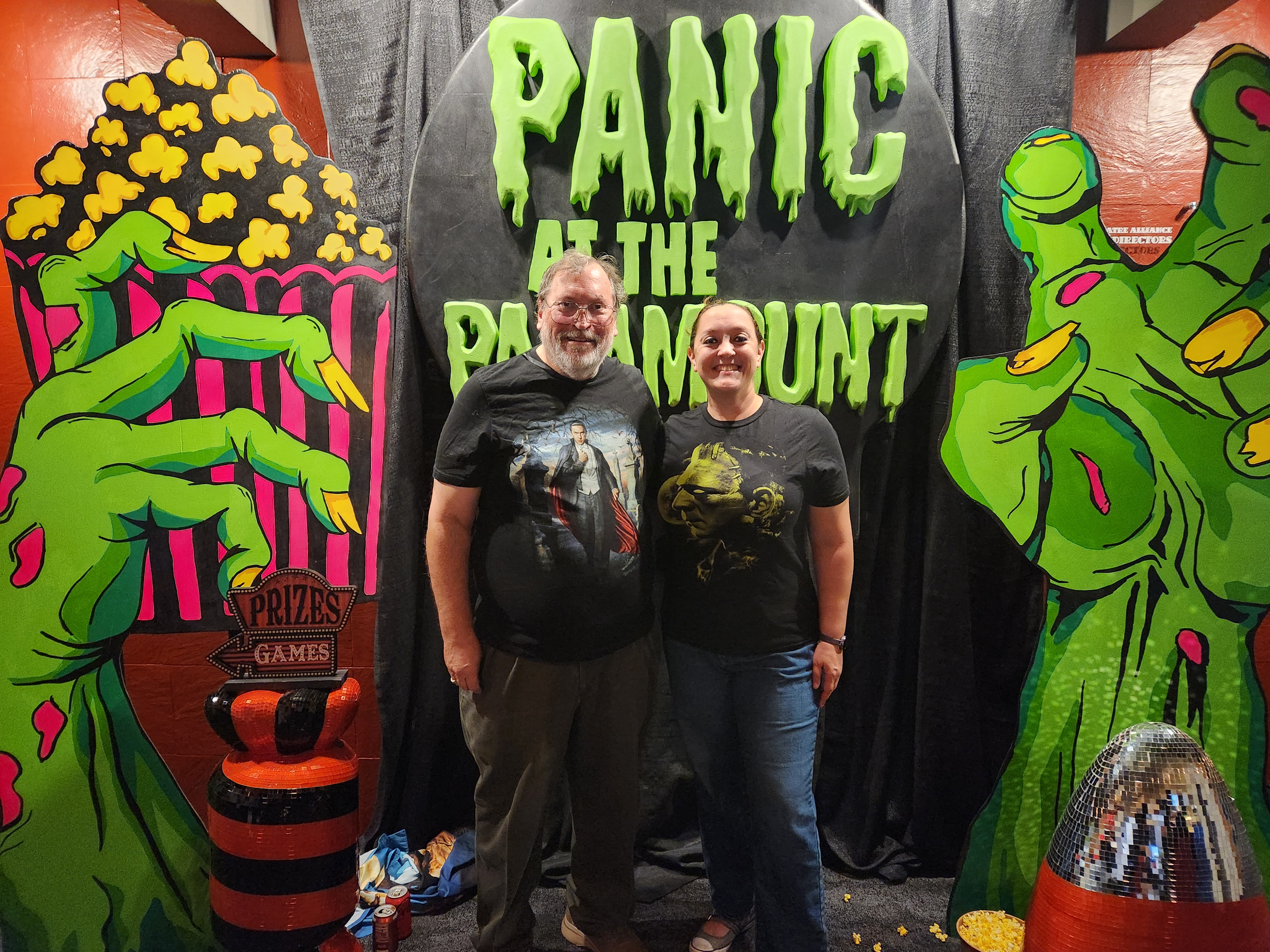
Panic! at The Paramount this year is actually Panic! at the State Theater since our beloved Paramount is undergoing renovations for a year. That does not mean that there’s been a fall off in the programming however, and although the State Theater is not as magnificent as the Paramount, when the lights are off and the screen is lit up with a classic film, and you are surrounded by people who love those kinds of movies the way you do, it is still a great experience.

Both “Dracula” and “Frankenstein” came out 95 years ago. A Century Of Horror was established with these films, and even though they weren’t the first horror films they created the template on which most of the films we see as being fright movies have followed. Warner Brothers was famous for its gangster pictures, and MGM had musicals but in the Golden Age of Hollywood, Universal is where you went to if you wanted a scary movie.

“Dracula” is based more on the stage play than on the book from Bram Stroker. There’s plenty of overlap, but the movie plays very much like a theatrical production. The actors have long bits of dialogue that they take turns saying in dramatic ways, with frequent pauses for the audience to process. It’s true that some of the storytelling here is a little creaky. Rubber bats bouncing up and down on a string are not particularly convincing, but in 1931 that’s how you did it, and I’m perfectly willing to go along with it.

The elaborate sets of Carfax Abby, are a nice in camera effect, that relies less on filters and backgrounds or animation, and more on production design with some spooky atmosphere provided by both the actors and the scenery. Speaking of scenery, I still think some of the painted backdrops used to create the roads and passes of Transylvania, are pretty impressive. The matte work of the castle in the mountains is equally strong.

The most lasting physical contribution that Dracula has made to the cinema is the portrayal of the dark count by Bela Lugosi, who starred in the original stage production, and his look is forever imprinted in our minds, this is what Count Dracula looks and acts like. I went as Dracula trick or treating as a kid, with the widow’s peak, the cape and The Medallion around my neck. They all reinforced the look, but it’s the fake accent that makes it work the best.

The other night I did notice an editing mistake in the film, or at least somebody screwed up on continuity. We learned that the lady in white who’s been terrorizing the children in London was in fact the deceased Lucy Weston. However we never see a resolution to that situation. I suppose it’s assumed that once Dracula himself has been disposed of his acolytes or Brides would fall by the wayside. In the Coppola version of Dracula, we got a gruesome resolution of that story. Maybe the audience is of 1931 we’re not ready to have a young woman be decapitated on screen.

As terrific as “Dracula” is, when it comes to production design, “Frankenstein” is how you really do it. The laboratory equipment sparks, snaps and flares with electricity. The interior of the abandoned watchtower, which serves as Dr. Frankenstein’s laboratory, , is matched by the exterior Matte shots, which make the local scenery into one of those Universal Staples. A dark mountain side with a castle located on the top and a foreboding Forest around it.

Just as “Dracula” had Bella Lugosi to anchor the story and give us an indelible villain, “Frankenstein” has Boris Karloff, playing a monster that is sometimes frightening and sometimes pitiful. The sequel does a much better job of building empathy for the monster, but in the moments where the monster is fearful of fire, all of us can relate to being intimidated by something scary.

The reels we saw the other night included the long missing segments with young Maria. She was always in the film, but the scene where she is flung into the lake by the monster, had been edited out back in the 1930s. The restored film stock is noticeably different in the film( although I’m pretty sure we saw a digital presentation).
Colin Clive as Henry Frankenstein, is certainly an example of screen acting styles of the era. He is frequently melodramatic and his voice exaggerates the emotional beats. Still, as I was watching it, I felt much more engaged with his character than I had in some of the previous screenings that I have attended.

It’s been more than 50 years since the movie “Young Frankenstein” came into my life, and I am still influenced by the fidelity to the production design of that movie, and the scenes from the original film that it parodies. The graveyard sequences and the bit about the brain being abnormal, only barely deviate from the original tone. Once again the style of the era has to be forgiven, but doing so is easy.

If ever you get a chance to see either of these films in a real theater with other patrons don’t miss out. They are fantastic time capsules that reflect how audiences could be shocked a century ago, but they also show how we are not that different from those audiences. This was another terrific evening of Classic Cinema from the Austin theater group who managed both the Paramount and state theaters.
The Last Voyage of the Demeter

Earlier this year, we got a variation on the Dracula legend that followed the supporting character of Renfield. That film was primarily a comedy, but the twist of focusing on a secondary story component as the basis of a film is what seems to have produced this movie as well. The film directly gives credit to the Captain’s Log from the original Dracula novel. If you have never read Dracula, you might be surprised to find that it is structured not as a singular narrative, but as a series of letters, journal entries, legal communications, telegrams and such. The Captain’s Log is one such document that fills in the story. This film attempts to fill in the log.

The set up of the story is pretty effective with a group of Roma men delivering a set of crates to be delivered to England, dockside. Their are anxious to leave before sundown and will not assist in loading the crates. A young man, anxious to get back to England, ultimately hires on as a hand to set things in motion. The story telling convenience is that he is a doctor. Why would a medical professional have to join the crew of the Demeter to get back to England?  The plot creates a reason that he is unable to get work as a doctor, because he is a black man. These two contrivances are the only things at the start of the story which feel a little forced. Otherwise, it all works at building the situation pretty well with a little bit of mystery. 

We get a plotline that has been pretty well established over the years in horror films. The crew gets wiped out one at a time by a malevolent evil on board (I just saw Alien again last week, and the parallels are obvious). Unlike some previous films, like Alien, we don’t quite get to care about the crew as much as we might need to. The manner in which they are dispatched is usually pretty interesting and creepy, but it does not feel particularly surprising. Maybe that’s because of the prologue at the start of the film that lets us know from the beginning that everyone is dead.

“The Last Voyage of the Demeter” is a good looking film, with a production design that convincingly shows us the environment and operating of the ship. The CGI effects are pretty heavy and the vessel in the long shots from the sea is not quite as convincing as the moments on the deck or down in the hold. The creature effects are fine but we see Dracula too soon and too often in the film. The only surprise that comes in the climax are the wings, but we were tipped to that earlier and that also diminishes the horror effects. There is a coda section that does not make much sense, and it seems designed to justify a sequel, which also does not make any sense. 

It is not an essential film in the Dracula portfolio of films. I was mildly entertained by the film but I was not impressed by it. I like the idea of trying a variant on the story while using a part of the original plotline, but it seems a bit ambitious for what is ultimately a simple story. When I see it in the five dollar blu ray bin at Wal-mart or Best Buy, I will add it to my collection, but I won’t feel compelled to buy a special edition 4K release, it just is not that special. 

Renfield

The best thing that “Renfield” has going for it, is the demented, ham fisted performance by Nicolas Cage as Dracula. He is the antagonist in the story and is mostly a secondary lead to Nicholas Hoult as the titular character. Hoult is great too, but it is the make-up heavy visage of the Count that you will remember if you see this film. From the very beginning, when Cage and Hoult are digitally inserted into the original 1931 version of the film, I was hooked into the story, regardless of where it ultimately was going. 

This is decidedly a comedy rather than a horror film. There is not really a sense of dread so much as an expectation of violence. So it is also an action film, although one with an unconventional premise. Renfield has decided to break his codependency with the count, and try to make up for a lot of horrible things that he has done. Making amends is complicated when you are for the most part, a contributor to the longest murder spree in history. The conflicted servant seems like a decent guy, despite enabling a monster for almost a century. That we can relate to the character is the gift of Hoult, who manages to convey a puppy dog like sincerity, even when dragging dead bodies across the floor to his master. 

In trying to flesh out the story, the film makers have borrowed a subplot from the long forgotten, “Innocent Blood” from 1992. That story mixed vampires with mobsters and “Renfield” does the same thing to create more confrontations for Hoult’s character and a threat for Dracula to expand on. It also justifies the addition of Awkwafina to the cast, as a smart mouthed cop who both backs up Renfield and pursues him as a suspect. There is also a romantic element to her presence, which is mostly discrete but makes the film more conventional than it needs to be.

Cage gets a mouthful of fangs to emote through, and that is fun to watch. Dracula in the story has been repeatedly stopped by good guys and it doesn’t end with his death so much as a fall in fortunes that takes a while to recover from. This feels like it is borrowed from “Interview with the Vampire”, as Lestat had to lay in a hole in the ground for a long time before being revived. The decrepit make up effects here are stellar and the incremental improvements are faithful to the story. So the technical elements of the film are top notch.

The action sequences are reminiscent of a thousand recent films in which the fights are staged with wire work, CGI and physics defying visual movements. There are also copious amounts of CGi blood and dismembered body parts. That is the stuff that is used for the extreme humor that a movie such as this is designed to take advantage of. The use of a persons limbs as projectiles that another person will be impaled on is both disturbing and amusing. I suspect that if you are inclined to see this film, those will be the kinds of moments that you are looking for, congratulations, you will find plenty of them.

“Renfield” is not going to set the movie world on fire, but it does entertain in the lane that it is driving in. There are a lot of gruesome laughs to be had and a fun performance from Nic Cage. So I can’t think of a reason to skip it, even if in the long run it is not a substantial film. The idea for the concept is what makes this worthwhile, but it is not a very deep idea in the first place. Dwight Frye has nothing to worry about. 

TSA Trays at LAX this Week