Movies I Want Everyone to See: Double Dipping with Musical films from the Oughts

josie_and_the_pussycatsmusic_and_lyrics

We are taking a slightly different journey this week with MIWETS (Yeah, not a great acronym). I would not really say the films I am going to focus on are guilty pleasures but many film fans might turn their noses up at such crassly commercial projects. One film exploits a TV show comic book legacy and the other one comes from one of the most resented genres among movie fans, the romantic comedy. I think each film actually has some merits that could be discussed in a passionate way because I have seen some hate for these films online. Neither film is essential, seminal or serious in any way. The two movies have one thing in common that moved me to pair them like this. Each one is a version of a nearly extinct form of film making, the original film musical.

It is true that we occasionally get a musical in an animated movie, or that a stage musical is adapted for the big screen. Those are rare enough however that even Disney cannot be counted upon for regular versions of this form. In the 1980’s, music videos were basically inserted into movies to make them musicals, think “Flashdance” or “Footloose”. They worked well enough to bring in the music but audiences not used to actors breaking out in song would probably not go for a modern version of fifties style musicals. The safe bet has been to put stage musicals on the screen. The two films I am focusing on here try to varying degrees to use the format of “An American in Paris” or “A Star is Born”. They take an original story that includes music and then adapt it to movie form. Both use a backstage perspective, so the songs are connected to public performances, and not just singing as the characters walk down the street. It is for the music and particularly the songs that I have included them in this series.

josie_and_the_pussycats_ver2The first film of today’s double feature is “Josie and the Pussycats” from 2001. Roger Ebert put it this way: “Josie and the Pussycats are not dumber than the Spice Girls, but they’re as dumb as the Spice Girls, which is dumb enough.” He gave the movie a half star. While I have always appreciated Ebert as a film critic, I have not always agreed with him and this is one of those times. At this point in his life I think he had finally disconnected from the audience relationship that had made his work with Gene Siskel so effective, and he simply spouted off on something he did not get. In his review he even gets picky about the term subliminal versus subaural, and he got that wrong also. Subliminal refers to consciousness which is the correct way in which it is used in the film, subaural is below the ear, and means nothing in this context.

The film is a cute girl-empowering satire on marketing. It is not about how a band is put together or even how it might become successful, it is about how that band might then be exploited to sell other stuff. Is the movie subtle? Hell no, it is obvious and goes for very big jokes, most of them visual. It is clear that the brands in the movie are being marketed in product placement as a way of mocking that placement. Lots of other films or Television shows would be viewed as cutting edge for the type of humor that is attempted here and for trying to reach the audience that the film is trying to appeal to.  I can accept that others may not like the humor or that the story is a bit obvious but I am defiant in my belief that the music in this film is worthy and that’s why I want people to see the movie.

I love a good title song, but a song that is part of the story and is integrated into the themes is the type of song I think makes a movie work as a musical experience.  “Josie and the Pussycats” has at least three great songs that make the story memorable.  Ebert wrote “The music is pretty bad. That’s surprising, since Kenneth “Babyface” Edmonds is one of the producers, and knows his way around music. Maybe it’s supposed to sound like brainless pre-teen fodder, but it’s not good enough at being bad to be funny, and stops merely at the bad stage.” It’s silly to get into a debate with a dead man but come on, just saying it without explaining it is the worst appeal to authority there is. Ebert was not a music authority, and to be fair, neither am I but I’m willing to at least explain my position. To start let’s take “Pretend to be Nice”:

This song has a very appealing guitar lick, a fun chorus and a wicked hook that keeps pulling us in. Yes it is pop, but listen to the refrain “pretend to be nice” when sung by the lead in a mock low key sexy voice. There is real sarcasm there. It fits in as an example of the kind of song a girl band might be expected to play. It is smarter than any Spice Girls song and I think that undermined the belief that this movie was about bad music, it was about mocking bad music by taking it’s form and subverting it.

Example Number Two is “three small words”. This is an up tempo power pop song that gives the Pussycats the perfect opportunity to insert a performance based music video into the film. Look and listen:

Anyone who doesn’t appreciate that song just doesn’t understand that Heath Ledger is the new Matt Damon.

The ultimate example of the musical bliss of “Josie and the Pussycats” however is not provided by the title group. Instead the greatest example of musical subversion is done by the Boy Band that the Pussycats are being used to replace in the movie. I think Ebert must have missed the lyrics or have been totally unfamiliar with the Backstreet Boys or *NSYNC. “DuJour”, provides the moment of musical genius early on in the film and if you listen to the song you will know how to listen to the songs in the rest of the movie. Here is the final nail in the coffin of the naysayers for this film:

“just cuz i slip in back doors,

well, that doesn’t make me, hey!”

That just summarizes the whole music scene of the early 2000s. Maybe it isn’t something everyone should see, but it certainly isn’t something that everyone should reject. I may come back and defend the story, actors and whole film in another place, but for now the focus is on the music and it works the way it is supposed to in the film.

After a brief intermission, it is time to move on to the second film in this musical extravaganza.
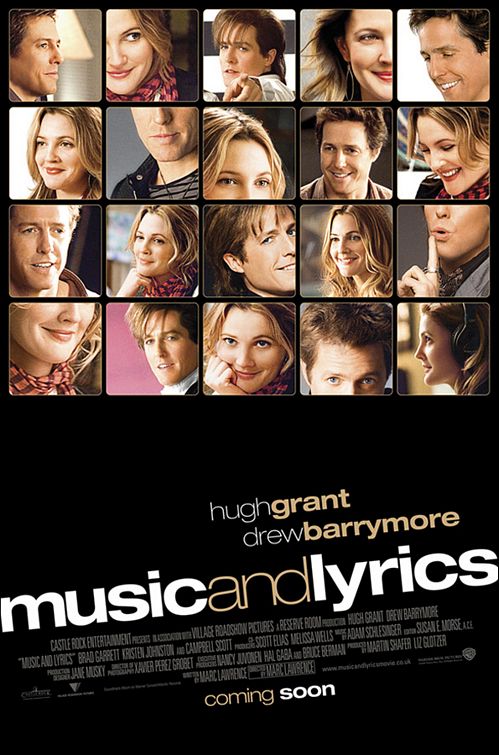
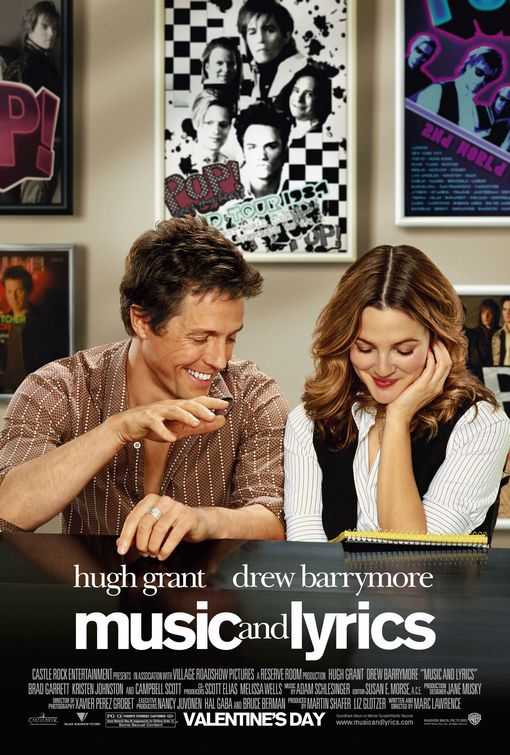
music_and_lyrics_ver2“Music and Lyrics” from 2007, is a much more conventional film. It is a romantic comedy that features music and both embraces and mocks the taste of popular culture. It features two of the most appealing stars of the last twenty years, Hugh Grant and Drew Barrymore, who between them have as many romcoms under their belts as anyone this side of Tom Hanks and Meg Ryan. This movie was moderately successful at the box office and has almost certainly a bigger audience than the first movie and it also has some great music designed explicitly for the purpose of the story.

The setting of the love story here involves the accidental meeting of two people who have complementary artistic skills but conflicting social skills. No one will be surprised by the development of the love story, it has the usual cute meet, slow romance, complication and then satisfying resolution. So it is all formula, but it is a formula that works because of the extra ingredients that get ladled on top. To begin with, Grant plays a semi washed up pop star from the 1980s. If you can imagine Duran Duran and Wham having children, the result would probably be the fictional band “Pop”.  Here in the title sequence of” Music and Lyrics” is the video for their biggest imagined hit:

This is a pretty perfect spoof of 80s pop video. The little sideways booty snap would fit into almost any George Michael video of those times. The song is a lightweight confection that illustrates the weightlessness of music from that period. Even though it has no heft to it, there is still significance to it. People are moved by music and while we may not appreciate someone else’s taste in songs, to that person the song matters. That is shown in a couple of ways in this film. First through the hysterical behavior of middle aged women reliving their wild teen years at nostalgia performances by Grant’s character Alex Fletcher. Yet we also see that the music can be inspirational to the next generation when Cora Corman, a Britney Spears knock off hires Alex to pen a new tune for her because she was a fan of the video.

A short clip of her current music video tells us all we need to know about how deep she is:

The creative process is something that is hard to visualize on screen. Painters in films get montages of images swirling as they put their imagination on the canvas. Writers are usually depicted as reflecting on their “inner eye” and recalling the story they want to tell. In a romantic comedy about writing a pop song we get a nice sequence showing how a last minute demo track comes together as the two co-writers race against a deadline. Here is how it is envisioned in the film:

What you see is not a complete version of the song but the romantic comedy version of the creative process. It works at building character and also shows us how the two miss matched lovers are going to come together. I think it is a very effective sequence and it has the advantage of having something to do with the story. Later in the movie we will get a more complete version of the song that will help cement our happy ending and irritate all those who hate Romantic Comedies in the first place, but as a song, this piece of music works as it is intended.

There is one other link between these films. Many of the songs share a common composer; Adam Schlesinger. He is the genius behind the song that made “That Thing You Do” one of my “Perfect Films”. Probably best known for leading his band “Fountains of Wayne” onto the charts with “Stacy’s Mom”, Schlesinger has contributed to a number of songs in films and his work makes both of today’s movies something I want everyone to see. The songs are not simply pop music inserted into the closing credits, but they are integral parts of the movies that they come from. That seems like a better standard for a movie music award than how big the pop star is that wrote it.  If you can think of some songs from movies that drive the story, explain the characters or enliven the pace of the film, please share them. MIWETS is all about sharing the love.

Richard Kirkham is a lifelong movie enthusiast from Southern California. While embracing all genres of film making, he is especially moved to write about and share his memories of movies from his formative years, the glorious 1970s. His personal blog, featuring current film reviews as well as his Summers of the 1970s movie project, can be found at Kirkham A Movie A Day.

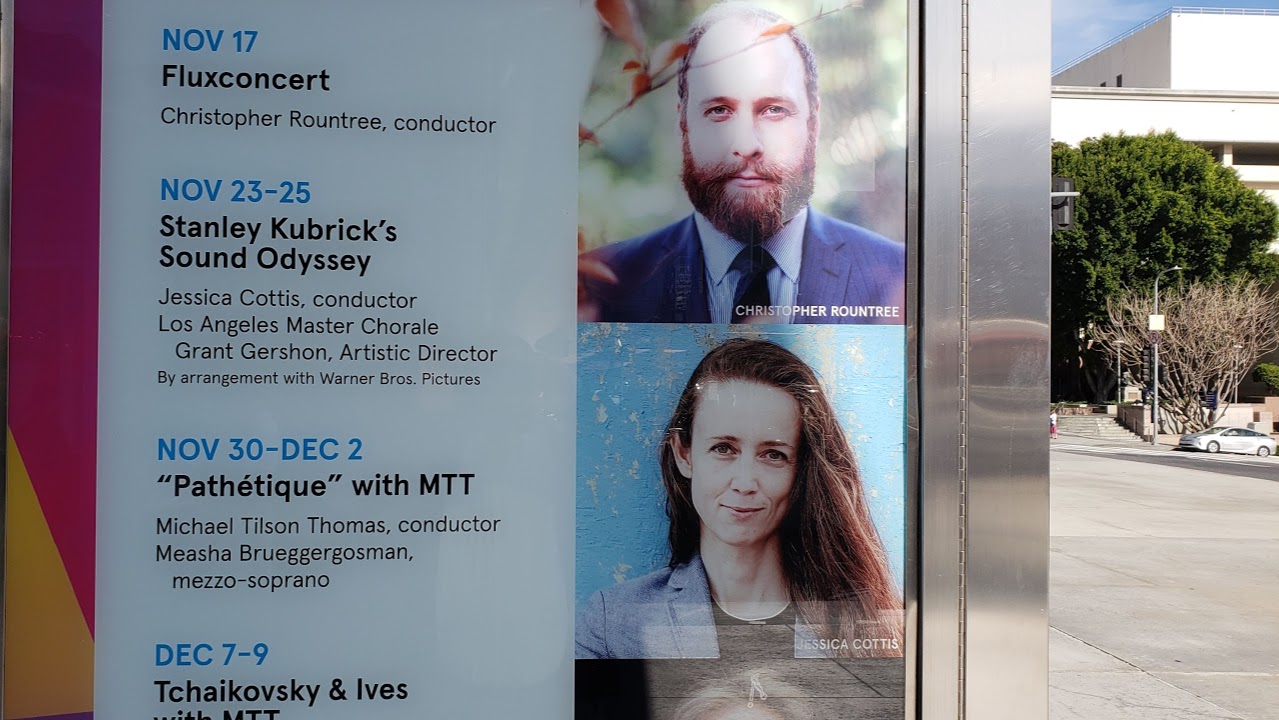
Stanley Kubrick’s Sound Odyssey

While this is a movie blog, I have on occasion posted on concert events that are related to movies in some way. Today’s post is just such an occasion. On Sunday I attended a performance by the L.A. Philharmonic of music featured in the films of Stanley Kubrick. The use of music in Kubrick films is a fascinating subject because unlike most film makers, after the midway point in his career, Kubrick largely abandoned the use of original orchestral music and integrated existing classical works into his films. Notoriously, for 2001 A Space Odyssey, the score composed by Alex North, a 15 time Academy Award nominee and a collaborator with Kubrick on the film “Spartacus” was not used. North had been shown about forty minutes of the movie on which to base his score. It was not until he watched the film in it’s premier that he realized not a note of his composition was in the film.

Before the concert we attended a Upbeat Live talk by Bernardo Rondeau, one of the music curators for the soon to be opened Academy Museum of Motion Pictures. With his slides and historical citations, he led us through the evolution of Kubrick as a consumer of classical music and described some of the ways that he filmed to the music instead of trying to make the music fit the film. Famously, the waltz of the shuttle and the space station that opens the modern section of the picture uses the music of Johann Strauss to suggest a dance between celestial objects. It was a marriage of sight and sound that almost everyone agrees is a perfect fit.

The opening of the concert commenced with the tonal and ominous Atmospheres by Ligeti. This modern composer had been told that his music was used in the film in brief background sections but when he attended a screening, he took a stop watch and kept notes on how much of his music was used. That was one of the intriguing slides in the Upbeat Live Talk.

It is when the Richard Strauss “Also sprach Zarathustra” notes begin, over the MGM logo from that year, that the concert starts for real. Those notes and the combined visage of the moon, the earth and the Sun lining up produces the emotional power of these choices.

My hair literally stood on end. The impact of the live orchestra plating those notes in sync with the image on the screen was breathtaking and electric.

On the Lambcast we recorded on Sunday, I’d mentioned that I was going to this event and one of the guests made a joke that it would be funny if a chorus came out and hummed or grunted the music from the monolith. That sound is actually a Ligeti Requiem, and guys it was performed by the Los Angeles Master Chorale, during the film clip of the monolith on the moon. It was eerie as hell and simultaneously beautiful.

One thing I had not mentioned to my companions on the podcast was that the concert was to be hosted by actor Malcolm McDowell. The actor shared a number of insights and amusing anecdotes during the show. He added a special aura to the day which made the event feel so much more movie related.

The Bartok and Pendereki music from “The Shining” was suitably ominous and the sequence where Nicholson is coming through the doors with an ax, actually do have some score under them. The best use of the music however, was in the blood flood from the elevator and the chase through the outdoor hedge maze. Watching those clips with the music immediately made me want to go home and watch the whole movie again, with the volume extra high.

After the intermission. McDowell returned to share with us the fact that for the most part, the score for Kubrick’s visual masterpiece “Barry Lyndon” was era appropriate. Handel, Schubert, Bach and Vivaldi all were played prominently throughout the picture. The harpsichord music was presented to us using an actual harpsichord and a variety of stringed instruments. It was an elegant sequence in the concert and it was one of the longer interludes of the day.

Our conductor for the afternoon was Jessica Cottis, an Australian/British citizen who is well known in the UK for her work with the Scottish BBC Orchestra. It may be old fashioned of me to note that she is one of only two or three female conductors I have seen in symphony venue like the LA Phil at Walt Disney Concert Hall, but she was engaging and authoritative with the orchestra.

“Eyes Wide Shut” was Kubricks last film and he makes use of one more Gregor Legeti piece as well as a selection from Shostakovitch. There were a couple of nude clips included in the film selection and the family next to us were apparently a little surprised that their nine year old son and eleven year old daughter were getting a sneak peek. There were warning signs as we entered the venue that the material in the films contained nudity and mature themes. So the kids were freaked out a bit by “The Shining” clips and Mom was embarrassed by the “Eyes Wide Shut” moments, but the best was yet to come.

Malcolm McDowell told several stories about the making of “Clockwork Orange”, including the fact that Alex’ getup in the film was mostly his own cricket regalia worn with the protective codpiece on the outside. He also related a story about encountering Gene Kelly at a Hollywood Party a couple of years after the movie was released and Kelly, upon recognizing him, walked in the opposite direction. McDowell said he had assumed Kelly was angry about the way “Singin’ in the Rain” was used in the movie, as the expression of joy for the antithesis of Kelly’s use of the song and performance. He then said that he had met Kelly’s widow nearly forty years later at an Academy function and she said that Gene had no anger with him, he was pissed that he did not get paid for the use of the song by Stanley.

“Clockwork” features Rossini, Purcell, and of course Ludwig Van Beethoven. The Rossini music is used during the break in where Alex murders the woman at the health spa. He uses a piece of art that is a giant phallus balanced by some equally large testicles. The two kids roared out loud when they saw him pick this sculpture up. The climax of the film involves Alex having sex with a woman to the strains of Ode to Joy. It is an amazing juxtaposition of tune and image and one I’m sure will haunt the family seated next to us for years to come.

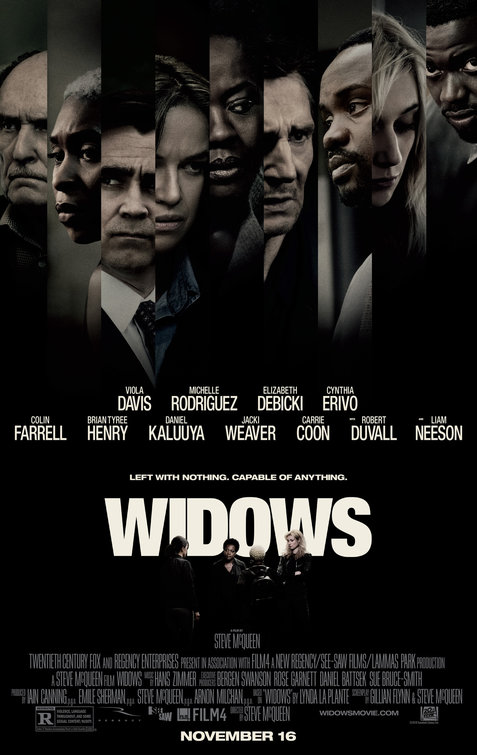
Widows

A slow burn with a heist that does not carry much weight in the end. “Widows” is a quality film about a criminal enterprise, unfortunately, it is the political system in Chicago as opposed to the robbery that is at the heart of the film. The cast for the film is impressive and the story is full of unpleasant twists but there is something about it that holds me back from a strong endorsement. Those who want a slick crime film will be disappointed because this movie travels down some byzantine alleys and the thing that is around the next corner is usually a downer.

The grime and decay of the neighborhood featured in this movie should be enough to tell you this is not “Ocean’s 4”. There is nothing cute or charming or fun happening here. This is a story focusing on rich criminals robbing each other in the midst of urban decay and neglect. That the criminals are all politically connected should come as no surprise to anyone familiar with how things work in these big urban centers. One crooked deal makes way for another and the only thing more depressing is that everyone considers this de rigueur. The only thing that changes is who gets the power. This movie attempts to shift the power to a group of women by turning them into reflections of evil men. I’m not sure that is the best way to create a story of female empowerment.

It is a little hard to tell what the basis of the opening theft is. The story starts mid-crime when there is a shootout between the robbers and the security team for a local thug who has delusions of political grandeur. Half an hour later we see what happens to those crooks who were supposed to be providing security and got taken. They should have just asked to jump in the van and take off with the money. As it turns out, getting tagged and tracked down to a local warehouse is part of the plan. I can tell you that this detail was not included in the notebook containing the plans for all of the criminal masterminds plans. Viola Davis is an excellent actress and she shows her worth in a couple of grieving scenes. Her husband has been killed in the robbery and her moment trying to gather herself rings very true. In a flashback, we see another death that she mourns and again, it plays realistically although that death plays like a note from a producer on the film who is a little too “woke”.

As the widows begin to plan their robbery, there are several tasks they have to accomplish. Michelle Rodriguez has a very solid scene where she gets caught in a lie and still manages to get a piece of human behavior awkwardly into the moment. Had it gone any further, the moment would seem unrealistic but the guilt and the loneliness of the two people involved really does provide some emotional core for what is otherwise a very cold film. Elizabeth Debicki has the only moments in the film that could be thought of as light. As she tries to get a proxy to buy guns for her, she uses a story that is grimly amusing. Unfortunately, as we have learned, physical abuse at the hands of a man is not a fiction in her life. Cynthia Erivo who I just saw in “Bad Times at the El Royale” is equally good here as a babysitter/hairdresser who gets recruited for the job and turns out to be just the right touch of bad ass under the skin.

As for the rest of the cast, well there are a lot of them and most are solid. Lukas Haas who I just realized was in “First Man”, is a man with a cynically realistic view of romance who enables the women to get a key piece of information. Garret Dillahut makes a second appearance in a Steve McQueen film and this time he is a lot more sympathetic. Colin Farrel, Bryan Tyree Henry and Robert Duvall, dance around each other as political hacks with ambitions that confound each other. Jackie Weaver is the most cynical Mother you will ever hope to meet. It is Liam Neeson however who manages to turn a small roll into a strong performance and with one plot twist turn most of our assumptions around. What starts off as grief turns to long term resentment and finally to the worst sort of betrayal you can imagine. Finally, Daniel Kaluuya lurks in the background, menacing everyone with his crazy eyes and and reckless disregard for humanity.

The exposition that goes on in long conversations between the characters often reflects danger but it is not just physical danger but moral danger we are facing. Only the very last shot in the film provides any hope that the world might be an OK place to live.There was a point in the story where the worst crime we can see coming is directed at an animal, but at least the immorality of all of the characters is not taken out on the dog.

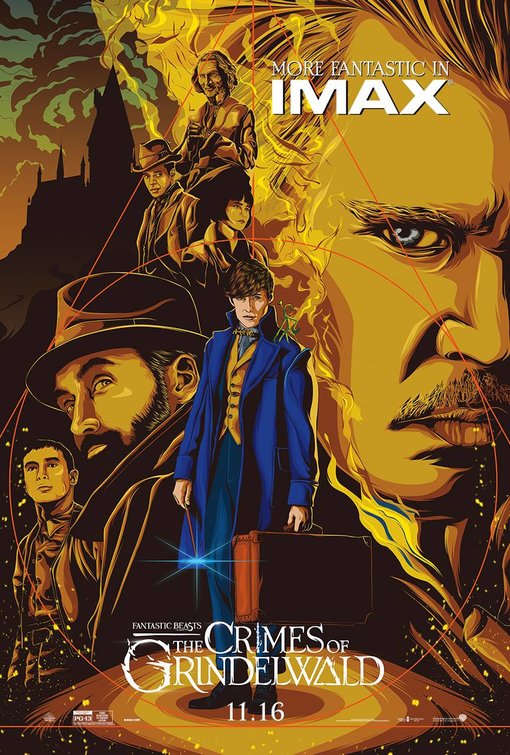
Fantastic Beasts: The Crimes of Grindelwlad

I need a safe house in Paris, because things have gone terribly wrong. J.K. Rowling has finally exhausted her creativity and has delivered the first vapid filler of the Wizarding World. “The Crimes of Grinelwald” could easily be called the “Exposition of Grindelwald”. Almost nothing that happens in this film makes a difference in the narrative that is supposed to be coming. After the opening escape sequence, we get two hours of visual imagination signifying nothing.

Last week on the Lambcast, we covered all eight of the Harry Potter films. I was only on the second show covering the last four films, but if you listen, you will hear everyone at some point praising these movies for making the books come alive and entertaining us. I doubt that on tomorrow’s Lambcast, anyone will be saying the same things about this movie. I fell asleep several times because nothing seemed to be going anywhere. Every time a new scene came up, it involved giving us backstory on a character we just met and who may very well be out of the story by the end of the movie. Halfway through the film I realized I had no idea what was happening and why. I think it’s because nothing was happening and there was no reason.

Let me pick out two or three things that irritate me about the “story” and then I will try to find some things that I can complement. Jacob and Queenie were my two favorite things about “Fantastic Beasts and Where to Find Them“,  in this movie, Jacob is wasted and has lost most of the charm that made his presence in the first film so refreshing. Queenie is completely misused, including having her character undermine the relationship that was so pleasing in the first film. If you get to the end of this movie and you think what happens to her makes sense, please post an explanation so the rest of us can figure it out. Was Katherine Waterson’s “Tina” even in this movie. I don’t recall any scene where she was essential. Her character appears and mostly stands around while other people explain things. She gets back to being an Aurour, but has the investigative ability of a Niffler. She can only see the shiny distraction in front of here and she lets her relationship with Newt turn sour for the stupidest reason imaginable. Newt Scamander is supposed to be the central hero, but Eddie Redmayne is so understated and boring in the film that he is an invitation to nap until something starts to happen (which it rarely does). Now I have a policy on this site to not give spoilers and to avoid recapping the whole movie. The later of these two is easy today because I can’t recall much of the story. As for the former, it is not much of a spoiler to say that Credence, the character from Fantastic Beasts who was responsible for the Obscurial is back. How? I don’t know. Why? the same reason in the first film. What happens?, the exact opposite of what we saw in the first movie.  Again it makes no sense.

There are a wide variety of spectacular visual sequences in the movie. I thought the opening escape from custody by Johnny Depp’s Grindelwald worked really well. The rally sequence at the end also looks solid. There are a few creatures that manage to get our attention as well, but none of them except the nifflers are really relevant to the plot and that is peripheral as well. Jude Law turns out to be perfect casting as a young Dumbledore but he mostly stays on the sidelines. It’s not till we get to the end of the movie that we sort of learn why, and I guess that will be a plot thread for the next film.

Speaking of the end, there is a major issue with the climax of this film. In addition to one of the best characters in the first movie wandering off the reservation, we get a major piece of retconning. It is so unlikely, given the previous materials that if it turns out to be anything other than a convenient lie, I may have to reassess any desire I have to see subsequent film in this series. This is not a good film, and it is a major disappointment for fans of the Wizard World we have been visiting for the last seventeen years.

Hunter Killer

So, a couple of weeks ago we had a MOTM episode on “The Hunt for Red October”. Most of the participants would put it at or near the top of the list of submarine movies. I can’t say that “Hunter Killer” is going to displace “Red October” but I can say it belongs on the list of entertaining sub movies. The plot here is a little too full of melodramatic twists to be very realistic, but it keeps you engaged and there is a nice amount of tension as you go along. If you don’t mind a few shots of models standing in for real submarines, rather than more extensive CGI, you will also like the look of the movie. It feels like a 1960s film, shot in the 1980s, with some contemporary actors standing in for folks like Charlton Heston or Rock Hudson.

The political scenario has the U.S. and Russia at odds over international policies, but there is no particular tipping point that the conflict rests on. A Russian sub, as it is leaving it’s base, is attacked and the U.S. sub following it is also attacked. We don’t know what is going on but it looks to the major powers as if one side has opened war on the other side. The Russian President conveniently arrives at the Navel base as the U.S. has inserted a SEAL reconnaissance team to investigate and report from the ground. A second American Submarine is sent into the area as back up and potentially as point in a navel battle. The captain of the American boat is Joe Glass, an officer who came from the ranks rather than the Academy, and he is played by Gerard Butler.

If this was a conventional action movie, Butler would be killing people right and left. He has made a career for himself as a tough guy hero in several recent films including “Olympus Has Fallen”. In this film, he is oddly cast because he is not required to break anyone’s neck, punch them in the face, or deliver six shots to the chest at close range. In fact, Captain Joe is reluctant to ever pull the trigger on his torpedoes and missiles. He regularly seems hesitant to take the sort of cowboy action that his casting would suggest is coming. Butler seems to be in the role because he can come off as a commanding presence who can stare down an opponent or reluctant subordinate. For this story he mostly works, although I would have liked him to go all Liam Neeson on someone at some point.

The late Michael Nyqvist plays the Russian Submarine Captain and when he and Butler are on the bridge together, this movie does come across as a poor man’s version of Red October. They have to manage to trust each other through a major crisis and hope to avert a World War. Since there is only a limited amount of sub action in the film, a big chunk of time is taken up by the covert mission on the surface. In another twist requiring Russians and Americans to trust one another, the SEAL team is asked to rescue the Russian President from an attempted coup. In another example of a Brit stealing American roles, Toby Stephens leads the seal team, much as he did in “13 Hours”.  Both he and Butler are convincing as American military officers. Less convincing are rapper turned actor Common, who looks to young to be a Rear Admiral, and current Academy Award Winner Gary Oldman, who shouts too much to be the Chairman of the Joint Chiefs.

The stuff that works includes a series of shootouts around the Russian navel base, and the submarine moments when Nyqvist and Butler have to stare down metaphorically, the Russian fleet and the narrow passages leading into the bay where the Navel base is. I was a little disappointed that bad guy Igor JiJkine, who I remembered from “Kingdom of the Crystal Skulls”, doesn’t get a memorable death. You usually want that in a film like this. We just have to assume he gets his along with all the other coup conspirators. I won’t say the movie is great but I will say I had a great time. If you measure by popcorn consumption, I finished a whole bucket by myself before the movie was two thirds done. That my friends is an entertaining flick.

PIG

Mani Haghighi is an Iranian director that I was unfamiliar with until this film. I hope to see more of his other movies after experiencing this vastly entertaining piece of sick humor about social climbing and status in the country of Iran. The set up is pretty simple and intriguing. Hasan Kasmai is a director of films in Iran, but he has run a fowl of the government censorship  rules and is basically barred from working in film for an unspecified period of time. While he is making due with commercial shoots and keeping up with the film community in the culture world, other Iranian film directors are being murdered by a serial killer, who has the unmitigated Gaul to ignore Hasan.

It might seem that serial murder and laughter are not complimentary companions, Haghighi as screenwriter, director and early victim, manages to argue persuasively that they do. Hasan is a close friend of the first victim we see and is asked to identify the body, correction, not the body, just the head. A moment from a Farelly Brother’s movie follows. It is painful, hysterical and gruesome all at once. Hasan is the central figure and his displacement in the community is heightened by the fact that everyone else in the community seems to be a target except him.

Some moments of grisly farce are interspersed with fantasy dream sequences as Hasan goes from being neglected potential victim to social media star suspect. His interviews with investigating officials don’t seem to lead anywhere except into a deeper hole. His aged mother has some dementia issues but at times she comes across as his strongest defender and the one who makes the most sense in the story. The other women in his life are breaking his heart or stalking him. We can’t really tell if one is a red herring or a black widow.

The character of the director who is lost emotionally and professionally is still pretty sympathetic. With his hangdog face and moribund demeanor he seems like a sad sack case but one that manages to be a provocative outsider. In every scene he appears in  Hasan wears a metal band tee shirt, including two Kiss shirts featuring the image of Gene Simmons. This was not something I expected to see in an Iranian movie but it clearly made an impression on me. Two other items that made a deep impression are the pesticide commercial he is directing and the music video he creates in his head as he is held in solitary confinement for a period.

The absurd story plays out with a great deal of violence and ridiculous imagery, which was all entertaining as hell. I’m sure Howard might have his own thoughts to write about but he told me this was the best thing he saw at the AFI Fest, and I could easily believe it. I can hardly wait for a blu-ray release.

Lemonade

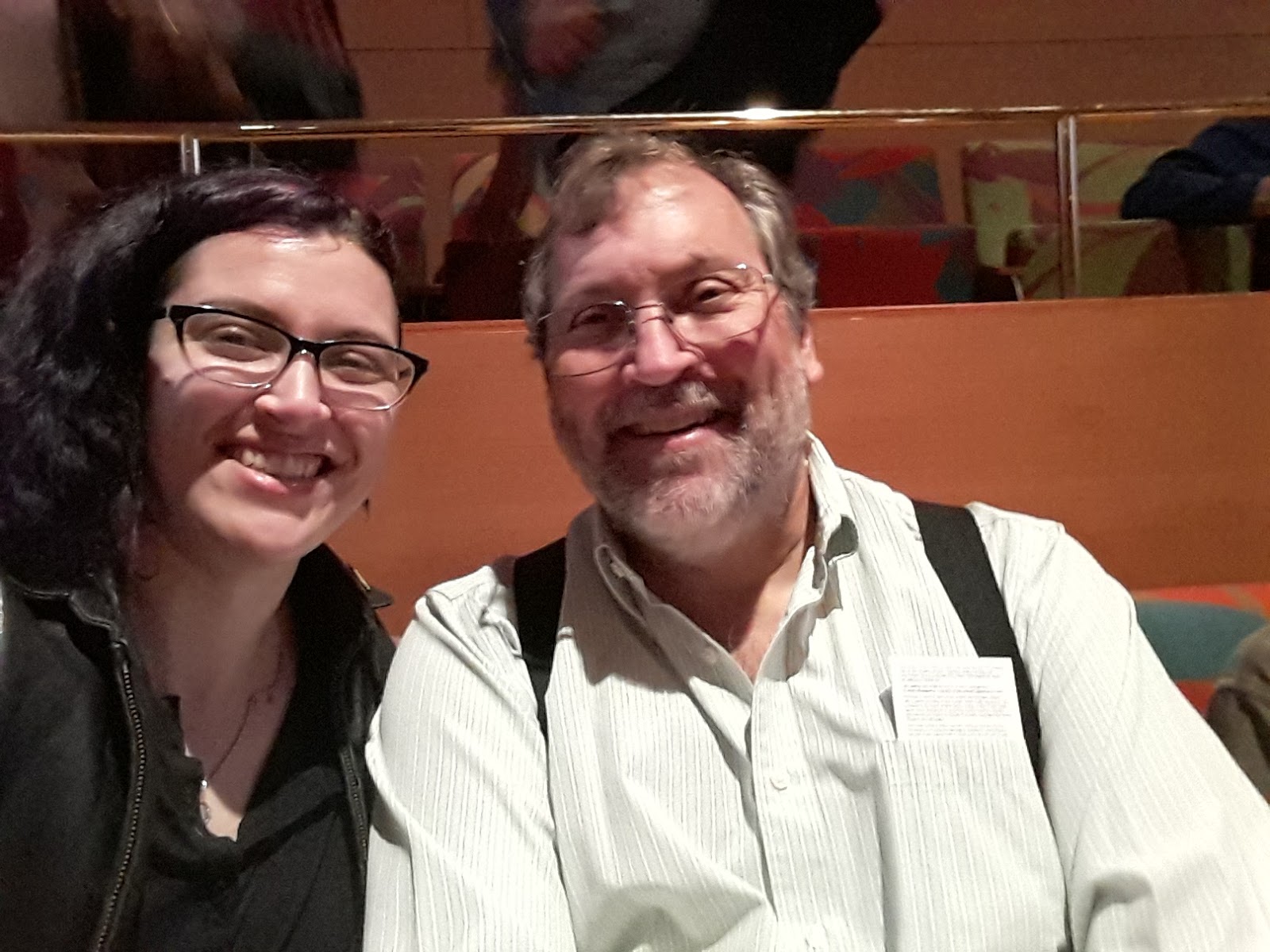
So I had an opportunity to meet up with a Fellow member of the Lamb at the AFI Fest yesterday. Howard Casner and I are the two senior sheep in the flock so to speak. Most of the other lambs are half our ages. We were talking on a podcast a few weeks ago and he mentioned he would be attending the AFI Fest in Hollywood. Since Monday was a school holiday, I was able to accept his offer of a couple of tickets to screenings at the festival. We greeted each other and had a nice conversation at McDonalds before getting in line for the first of the two films.

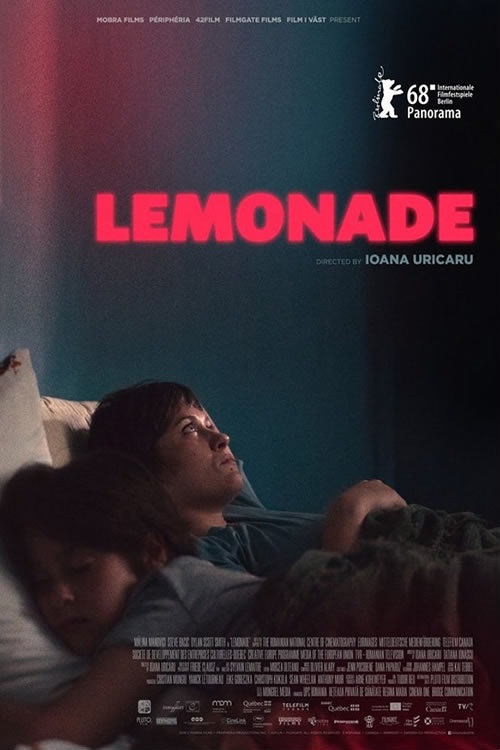
“Lemonade” is a Romanian production filmed in the U.S. and featuring actress Mãlina Manovici. She plays Mara, an immigrant who has married an American that she took care of at a convalescent hospital. She is seeking a green card and has arranged for her son to join her in the States. This is a stark tale of immigrant struggles against bureaucracy,  culture clash and toxic male  hegemony. It is a well told story but bleak for a number of reasons.

It is easy to appreciate the desire to locate to the U.S. when your economic opportunities are limited. Mara seems to have lucked out by connecting with a kind man who seems to care for her and is trying to cope with some medical issues at the same time. There are a number of hoops she must jump through as a result of the marriage. The Immigration agent investigating her case asks pointed questions of her and it’s not long before some shocking unpleasantness rears its ugly head. The main issue I had with the film concerns the way in which the difficulties start stacking up. In addition to potential and real exploitation, she is swept up in a child neglect case, her husband is not very understanding about the abuse that has been directed at her, and the strategy her lawyer recommends is full of danger and potential humiliation.

Manovici is suitably hopeful and naive as she confronts a pretty dark vision of America. The emotional scenes are handled well and she is appropriately defiant and cowed in a long conversation in an automobile. As loathsome as this encounter is, another one is coming up that will make you equally sick. As is typical in the American system, justice cannot be had simply because a rule or law has been broken. Her attorney sums it up well when he explains that victims get the benefit of the doubt and the system protects them more than it punishes the guilty. There is a little bit of convoluted hope at the end of the story and the aphorism that gives the movie it’s title is revealed.

Overlord

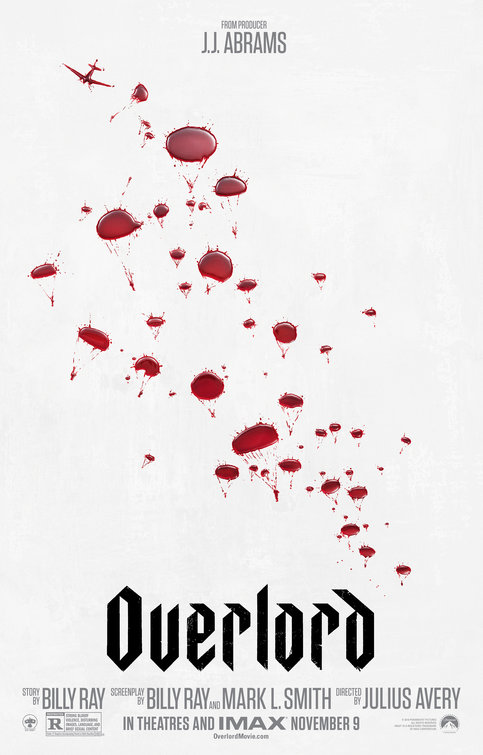
Frankly, this was the most entertaining movie I have seen in a while. It’s not artistic, or deep. It lacks the elegance of some fine movies that I have seen in the last few months. But if you were to ask me to go with you to see this movie, I’d do it in a heartbeat because I had so much fun the first time. This is the Nazi Zombie movie about D-Day. If that thumbnail does not turn you on immediately, you are reading the wrong blog. This premise could have been done 40 years ago. That it is a current film is just coincidence. This is well made pulp horror, that scares you and takes it’s time building tension and does so with energy.

“Overlord” starts as a typical WWII film, with the exception that black American soldiers are integrated into the combat units fighting the war, that just was not the case.  Otherwise, this is just a few men on a mission to destroy a radio tower that is crucial to the success of D-Day. Most of the Platoon is obliterated by anti-aircraft flak and German soldiers on the ground. The four who make it together to their destination include a milquetoast black private, a stereotypical wise guy, a photographer who is sort of in the way of the tough corporal who is the demolition expert and ends up as the leader of the team. The combat scenes are brutally realistic and there is some vivid sound editing in the film that will make the battles stand out. Of course it turns out there is more to the location than just the radio tower and that’s when the horror really begins.

Like a lot of WWII films, this one manages to get a female into the story so it is not completely male-centric. That does not make this a feminist film by any stretch of the imagination but Chloe, the young woman in the story played by Mathilde Ollivier, turns out to be pretty tough and when she picks up a machine gun or flame thrower, you better watch out. Jovan Adepo, who was very good as Denzel’s son in “Fences“, shows a lot of range here as a mild mannered man, sent to war, who has to overcome not only the horrors of war but of the nightmare horror story this turns out to be. At first he believes that Corporal Ford as played by Wyatt Russell, may be the worst kind of monster. Soon he discovers that the SS officer in charge of the local area is barely a human at all. When things go south from there his expectations get shifted quite a bit.

The less we see, the more unnerving things can be. That is typical in horror films, but there are also some things that need visualization. The practical effects and make up that are at the center of the story sell the horror factor much more than a lot of CGI blood would have. The fact that these are combat soldiers who are armed and capable, is a little like “Predator”. Russell may not be Arnold, but his bad ass is in for some reversals that are pretty scary. In the end he turns out to be a righteous guy who sees the dangers of technology in the hands of men willing to use it. Don’t worry, it’s not a peace polemic, it is just an interesting aside.

This was just exactly the movie it sets out to be. There is violent war action and tense drama with the civilian population, and then things take a hard left into zombieland.  The music in the  score builds tension and it clearly is designed to turn that tension into scares. The cast is game, the editing is crisp, the visuals are solid and it all works. Maybe it is not a great film, but read the premise again. If it appeals to you at all, I think you will have a heck of a good time.

The Nutcracker and the Four Realms

There are a lot of things I see in this idea that might make sense for a Holiday movie. The opening is set at Christmas time, the motif uses the Nutcracker Ballet and music, and it is family friendly. Having seen the film however, I can’t really say who it is for. The music is incidental to the story, as is most of the Nutcracker story itself. This is a stand alone movie that is too weird for it’s own good. It lacks the charm to overcome it’s weaknesses and frankly, it is not very well acted.

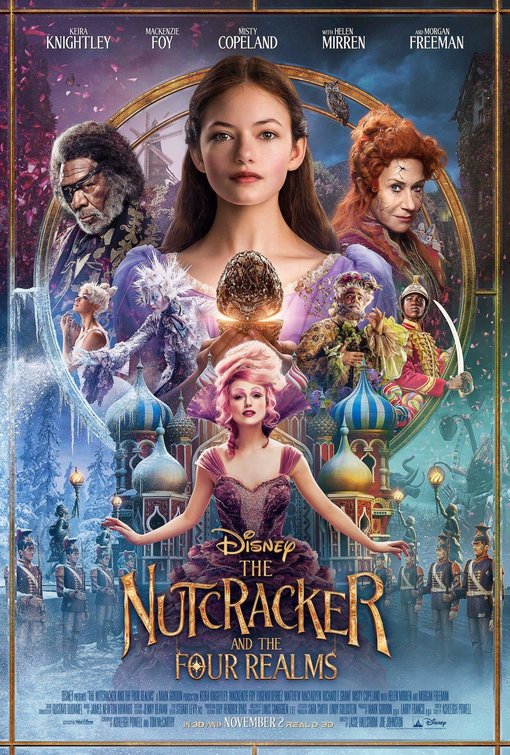
Set in Victorian Times, this new telling of the Nutcracker focuses on a young girl named Clara, who is mourning her Mother but also trying to be a bit independent. The family dynamic suggests a close bond with her younger brother and older sister, but neither of them become a part of the fantasy here. Her widowed Father also mourns but in the style of keeping a stiff upper lip and conforming to expectations and appearances. This drives a wedge between the two of them which is more appropriate for a contemporary film than one set in the 19th Century. When Clara is lead into the fantasy Realms of the Nutcracker, it is then she discovers how her Mother created this world and brought it to life. The four realms are sometimes ignorant of the real world but at other times seem to be well aware of what is going on there. The world building in this fantasy makes very little sense and never seems consistent.

Morgan Freeman appears as Drosselmeyer, and in this story, he gives gifts and is an inventor, but not as good an inventor as Clara’s Mother or her. He is in the bookend segments of the film only. Occupying the main story, which involves a war between one of the realms and the others, is Keira Knightly as the Sugar Plum fairy and Helen Mirren as Mother Ginger. We at first do not understand what is at the base of the conflict, and at the end we are equally ignorant. The contrivances the story comes up with are just odd. The mouse king is not really a king, the evil is very unclear, and the ray gun that transforms toys into soldiers is ridiculous. The fact that it operates using the key that Clara is searching for is so forced as to make this film feel more mechanical than it intends to be.

No one in the movie is very good, with the exception of maybe Matthew Macfadyen as Clara’s father. Mirren gets little to do and Knightley overplays both the sweetness and the reveal. Jaden Fowora-Knight is well cast as the Nutcracker, because he is as wooden as you can get. He is a handsome young man with some potential but even this children’s story seems out of his grasp. Mackenzie Foy has the look that Clara needs but her skills are also a bit weak, She is trying to carry this whole production on her shoulders with her charm, and frankly that is an unfair assignment.

The production values on the film are impeccable however. This movie looks like a Christmas picture book and both the “real world” settings and the four realms are lavishly decorated and use color design in interesting ways. The CGI exteriors are picture perfect but the best things are the costumes and the practical set designs. There is a five minute segment where Clara watches an abbreviated version of the Nutcracker Ballet, and the stage craft there is the most inventive aspect of the film and it doesn’t use CGI at all. There is a stacking clown sequence that uses a combination of CGI and costumes to achieve it’s look and that was also worthy. Lasse Hallström with an assist from Joe Dante, directed this film. It reminds me a lot of the  Barry Levinson misfire from 1992, “Toys”. Both have mildly interesting premises and are being sold as Family Holiday movies, but despite amazing art direction, they just don’t connect with an audience.

Bohemian Rhapsody

I was introduced to the music of Queen while I was in college. A senior on the Trojan Debate Squad, Mark Dickerson, was selling me some of his old sample cases since his debate career was finished. I went to his apartment and he played some Tom Scott jazz records while we were talking. As I was looking through his album collection, I came across the Queen Album “A Night at the Opera”. I asked about it and he played Bohemian Rhapsody for me, I was hooked. That summer when my family took a trip across country in the Chrysler Station wagon, I contributed two 8 track tapes to the trip. One was the Blue Oyster Cult album, “Don’t Fear the Reaper”, the other was the aforementioned classic. We must have listened to the whole thing a dozen times between California and New York.

What made Freddie Mercury so great as an artist was both his vocal range and his theatricality. The film about the band, but mostly about Freddie, gets those two things right. The music tracks are synced up to work with the film and the performance of Rami Malek does justice to Mercury’s out sized persona. From put upon son of an immigrant family to one of the most charismatic performers of the rock era, Malek captures the essence of Mercury, even if he does not sing all the songs himself. As for the story, I suspect it has been cleaned and tweaked and molded into something that will be appealing to a mass audience, although how accurate it ultimately is will probably be a subject for discussion for many miles down the road.

Obviously for dramatic purposes, many events have to be condensed to tell the story in a timely fashion. The music montages that rocket us from his first performance with the band mates that connect with each other, to their signing a recording contract and becoming a major attraction in England is pretty swift. It does showcase some tremendous songs however and we see the flowering of his personality on stage. The romantic story that accompanies this rise is quite sweet but it is uncertain. We know that his life was extravagant and ultimately his sexuality is more focused elsewhere, but the pairing between him and Lucy Boynton as Mary Austin feels sincere and plays out in the early stages like most romantic films. The complexity of his need for her in his life might have made the film story more memorable, but it is largely glossed over and we simply are expected to accept that she accepts his terms for their relationship.

The traditional story beats of a band that comes together, struggles to find it’s voice and holds firm in the face of doubters are all played out here. The band members are introduced and each has sufficient personality to distinguish him enough to get the outlines of the story, but none of them have any complexity to draw focus away from Freddie himself.  When they argue over the inclusion of one song or another on their upcoming album, it feels more like a contractual obligation to keep the roles clear and give each member some role in the success of the band. Their sniping over song titles and lyrics is just an amusing way to show that the band was not just Mercury. There are some fun scenes where the creation of key works is mythologized. Roger Taylor hitting the high notes during the chorus of Bohemian Rhapsody is played for laughs. The idea that “We Will Rock You” is an audience participation number designed to feed upon the growing relationship of the band with it’s international audience, is planted like a seed to bring the fantasy to life.  If the bass riffs used to calm an argument can become the basis for “Another One Bites the Dust”, than all the better.

The downward trajectory of Mercury is set up early on by both the self discovery of his sexual identity and the indulgences of a decadent lifestyle. Sex and Drugs and Rock and Roll are a cliche that even the great ones cannot escape. After bitterly discharging a longtime manager for suggesting he pursue a solo career, Freddie is guided into trying exactly that by a sycophantic friend and romantic interest who we have been suspicious of from the beginning. I quite liked the mea culpa that Malek has to make Freddie go through to be able to reconnect with his three musical partners. It’s a good scene that allows the actor to perform as a character and not just a performer. The performance part gets the full attention treatment in the last part of the film. The Live Aid Concert and the moments with a new romantic interest and his family, feel a bit contrived by all happening on the same day, but hey it’s Hollywood and we expect to be entertained by a movie. Yanking your heart strings and wowing you with theatrics are two sure fire ways that the screenwriters and primary director Bryan Singer keep you hanging on for two plus hours and send you out of the theater thrilled instead of despairing.  The movie may not be artistic but it is vastly entertaining. Oh yeah, it also has a Killer Soundtrack.