An absolutely gorgeous film that is wasting away without an audience. Somehow, the studio has managed to botch the release of this film, and instead of having a solid adult hit, they have a shiny disappointment that someone should lose a job over. “Cyrano” is a musical update of a classic tale with a variation on the main character that is reasonable and allows an actor who might otherwise never have had the opportunity, to take on a great role.
The film is based on a stage musical by Erica Schmidt, who is the screenwriter for this film. I found some reviews of this Off-Broadway version of the musical, but I did not see any information about it’s success other than it was nominated for some stage awards. The one thing that is noteworthy is that the star has been transferred to the film, so we get the chance to see Peter Dinklage in a role that he originated. None of the other stage actors mentioned in the New York reviews, made it into the film, but Haley Bennett , supposedly did play the part on stage, and the rest of the film casting is quite excellent. The parts all require some ability to sing and most of the cast acquit themselves admirably. Dinklage as Cyrano performs the songs in a low register and narrow range, much of his singing reminded me of Rex Harrison talk singing in “My Fair Lady“. He is effective but it is not the musical moments that make him shine in the part.
For most people familiar with the play, Cyrano de Bergerac, it is the language of the poetry that is memorable and makes us care about the character. That largely survives with one disappointing exception. The duel that contains Cyrano’s witticisms about his opponent and even himself is lost in a musical presentation that surprisingly diminishes the moment instead of enhancing it. The duel itself is effectively staged and the resolution is dramatic and gives Cyrano a bit more cryptic personality, although he does quickly return to the arrogance that he started off with. Dinklage is affecting in the dramatic moments and his winsome longing for Roxanne is best seen in the moments leading up to her request that he befriend Christian and protect him, you see he thought briefly she might truly have seen that he was in love with her and she returned the favor, but the false assumption comes crashing down on his face and it is a moment of sublime performance from our lead.
Set in France, but largely filmed in ancient towns in Sicily, the environment feels completely appropriate for a time period before the Revolution. The production design is detailed without being overly opulent, but there are several elaborate scenes that will take your breath away. I was particularly impressed with the opening sequence set in a theater, with a rowdy crowd, a claustrophobic stage, and authentic costuming and make up for all the extras. There are several dance moments in the movie that are also elaborately staged. I have written before about the ability of Director Joe Wright to manage complex sequences of movement in dance, he did it beautifully in “Pride and Prejudice” and it is also true in this film. The choreography contains a lot of arm movement that feels like an elaborate pantomime, and I was more distracted by that than intrigued. Because such a style was repeated a couple of times in the course of the film, it also felt less distinctive and more like a crutch.
Haley Bennett, Kelvin Harrison Jr., and Ben Mendelsohn make up the rest of the cast as Roxanne, Christian and De Guiche respectively. Of the musical sequences they each get, I was surprised that Mendelson’s was the most effective, but that may be because it focuses entirely on his character in that moment. The best number in the film is “Wherever I Fall” which is performed by supporting players in the battle sequence near the end of the film. It was quite dramatic and I noticed that Glen Hansard from “The Commitments” and “Once” was the lead guard performing the number. I find it interesting that unnamed characters get the most effective moment in the film, but it is a tribute to the integrity of the story that no effort was made to force Christian and Cyrano into the musical aspect of the scene.
This film opened in Los Angeles for an Academy Award qualifying run, but has not been widely available until the end of February. The only nominations it has received are for the costumes, for which the acknowledgement seems deserved. The absence of Dinklage from the nominees seems to be a glaring error in retrospect. Once again, Joe Wright might also have been deserving of some attention, but if Denis Villeneuve was going to be ignored, than this oversite is not a surprise. The film is available for streaming, but you shold make an effort so see it in a theater, you will be taken by it’s beauty and the shared experience of the film with an audience, will make it more poignant.
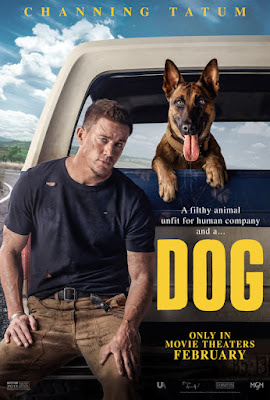
Channing Tatum has become a reliable presence in films and with this release he takes another step in his ascent to an essential Hollywood Player, he co-directs the film with his frequent producing partner Reid Carolin. Together they have crafted an affecting story of two wounded warriors who find a way to help each other through the battlefield scars that are holding them in misery. This is a military story with a dog, and that was enough to get me into the theater, but what can Tatum manage to do to make me happy that I showed up?
If you have visited this site before, tou may see that I have a fondness for films featuring dogs. This however is a bit different because the dog that is featured is not a lovable mutt or a friendly golden retriever, Lulu is a Belgian Malinois, trained as a military dog working with Army Rangers in middle eastern conflicts. The dog has been wounded ant traumatized, most recently by the death of her handler. She is on edge and dangerous, and sensitive to a variety of triggers. Tatum plays Jackson Briggs, a fellow platoon member of the deceased, who is himself trying to return to service after head trauma suffered in war has put him on disability leave. Lulu is an animal, so doesn’t bother trying to hide her PTSD, but Briggs is all kinds of a mess and in denial that any real problem exists.
So this is a road picture, with the dog and soldier driving along the West coast to arrive at the funeral for their comrade in arms, and ultimately, Lulu will be assessed and likely put down because of the condition she is in. So it is no surprise that the film is really about how these two damaged creatures begin a healing process that is needed but was not being actively sought. The incidents along the road demonstrate that both of these warriors have skills that remain functional, but that they are also ill equipped to deal with their troubles on their own. Two sequences, one on a pot farm in Oregon and another in a hotel in San Francisco, give us some drama and a little humor. Each character dances around the other, setting off problems and adventures but ultimately bringing them closer to healing.
Three different dogs are credited for the Lulu performance, and they do a good job showing her fierce personality, but also giving us glimpses of the companion and partner that she must have been to the deceased soldier. Between destructive moments, and fearful incidents, Lulu also shows us an animal who is well trained, capable of friendliness if approached correctly and even providing some lovable glances, in spite of her teeth being bared. Tatum is a natural as a soldier without portfolio, who is struggling with his place in the world. He exudes confidence but secretly is in turmoil and incapable of getting past some traumas. He is great with the comedic bits in the film, but he carries the drama also.
At just over a hundred minutes, the film is paced well and it doesn’t linger over the story it is telling. The screenplay, by Carolin and Brett Rodriguez, who has been a crew member on some of the films Tatum and Carolin made together, does a good job of showing rather than telling us the story of these two soldiers. Maybe the best example of this are two nearly wordless sequences when Briggs tries to connect with family. We get the dog’s point of view, instead of a dialogue filled confrontation, and it helps keep the story focused on Briggs and Lulu. This film has been a success and that gives me hope because if a mid-level drama like this can pull in an audience, there may be hope for other films that are not Comic Book Spectacles.
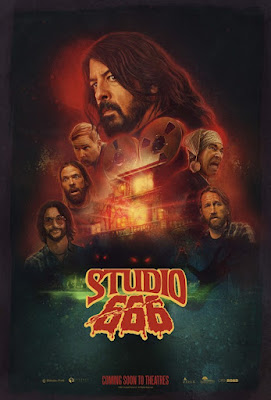
I wish I could say that the formula above, which popped into my head the minute I saw the trailer, was true. Unfortunately, hopes and dreams are not always fulfilled by Hollywood or our heroes. There was fun to be had here, but not enough to recommend to anyone who is not a fan of Foo Fighters or schlock horror. In spite of the big swings the film tales, it just does not connect with the two genres it is reaching for.
There are plenty of films that mine the link between Rock and Roll and “Evil”, I remember seeing a film back in the 1980s called “Trick or Treat”, it had brief appearances by Ozzy Osbourne and Gene Simmons. That film was more of a straight horror film and it took the subject seriously, with a little bit of irony. “Studio 666” starts off with a few good rock and roll clichés being sent up, but those drop off more quickly than is wise. The horror stuff starts but because the humor has been laid down and there is a lot of quick bits designed to show it is really a horror film, all of that gets undermined very quickly.
Much like “Abbot and Costello Meet Frankenstein”, the horror elements of this film get undermined by the slapstick tone of the comedy. It also does not help that the band members are not really actors. They are playing exaggerated versions of themselves but the self parody wears thin and there is not any real tension as the movie goes on. Director BJ McDonnell, is a camera operator who has worked on a ton of films, including a variety of horror films, but his strengths are not really in story telling. He is hitting the notes but it feels like a piano student who is playing a piece for the first time for their teacher. Everything is technically correct, but none of it connects. The movie is just flat. Maybe it would work as a sketch but as a full length film, it leaves a lot to be desired.
Everyone goes all in on the death scenes, with lots of blood and body parts to go around. The gore never seems real however, because it is undercut by the silly situations. “Evil Dead 2” made the comedy and horror work together, here they work against one another, and it shows. I’m not a huge Foo Fighters fan, but I would have appreciated some of their songs in the film, and basically, there are two riffs of their material and that’s it. There is an uncredited part played by John Carpenter, and the theme song for the titles, feels like composter Carpenter contributed, to get that 80s feel in the credit sequence.
I don’t regret going to see this and even paying for the privilege. I just wish I could be more enthusiastic about it. The movie is too long, the jokes are inconsistent, and the stars all feel like they are just having a lark, which is what they are doing, but it doesn’t seem like the audience was as important to them as they would have been in a concert. Dave Grohl, continues to be a guy I admire, and he is the one Foo that seems to be putting in some effort, but it is not enough.
I have seen several comments in social media over the past few months, which question the need for a new Batman movie. That is a little understandable since the character has been trotted out a dozen times or more in the last thirty years and the D.C. Extended Universe has not made the best use of the character possible. That last bit has been rendered obsolete by the latest film which does in fact make “The Batman” a relevant character and which manages to give him something a lot more interesting to do than battle interdimensional beings from outer space. Instead of trying to fit Batman into a super hero story modelled after the MCU Infinity war, director Matt Reeves and co-writer Peter Craig have set him in what may be the most realistic version of Gotham City we have seen in the movies and given him a task that doesn’t require technology from the future.
It seems that every iteration of the caped crusader in the last couple of decades has gotten grimmer and grimmer, and this is the current end point. The Batman is facing a job that makes him the equivalent of Brad Pitt and Morgan Freeman in the movie “Se7en”, he must track down a serial killer who has a hidden motive and a set of elaborate clues that he leaves behind. This story goes to some bad places, and it might be appropriate to nickname our hero “The Darker Knight”. The killings are gruesome, the clues are also pretty forbidding. We are spared seeing some of the crimes, but we do see enough to be put off by the actions of the villain, even though some of the victims seem deserving of some kind of retribution. The killer is known as The Riddler because he leaves clues that are language puzzles, for the Batman to figure out. For two thirds of the film, the character is only seen in a get up designed to limit any forensic clues and to hide his face. There is a vocal performance but it may be enhanced through audio technology. When actor Paul Dano finally appears on screen as the character, he sparks up the movie considerably, having been built up so well in the first couple of acts, his mild mannered dementia is plenty creepy even though he is not a physical threat to the hero.
This story is set relatively early in the career of “The Batman”, and we don’t get the usual origin story, we are simply dropped into the set up as if these activities have been going on for a while. Lt. Gordon has a tentative working relationship with the masked vigilante, and that connection is resented by most of the cops but the authority of Gordon allows Batman into crime scenes where he is both forensic investigator and profiler. This film could aptly ne subtitled “C.S.I. Gotham”. The puzzles are sometimes answered quickly by our title character but just as often, he and Gordon struggle to come up with solutions and they follow a macabre path to the next clue to try and bring them closer to the killer. Gordon is played by Jeffery Wright, who is making a career out of playing second fiddle to the main characters in films (see James Bond and The Hunger Games). His low key persona and low modulated voice are good counterparts to the title character. “The Batman” is played by Robert Pattinson, who seems to have shed the “Twilight” baggage and is building a very credible resume of films, including “Tenet” from two years ago. Usually, the actor cast in this role gets his best moments as Bruce Wayne, but this is the least Bruce Wayne heavy Batman film I have seen. Wayne is a secondary character and The Batman is front and center for the key events in the movie. The Wayne Family plays a more prominent role in the film than Bruce himself does.
Gotham is a dark place with lots of evil around every corner, but much like the Nolan Trilogy of films, the city looks fairly normal, except for the fact that no one turns on a light and it rains almost continuously. The thing that is disturbing is how much the corruption, feckless law enforcement, and gang related violence shown in the movie, mirrors the cities like Chicago. It is taken as a given that the politicians are craven tools of special interests, in this case the mob. Two characters that are known to officials, including the police, but for which no one seems able to do anything about are Carmine Falcone and his underboss known as The Penguin. It is an open secret that they run the city and why The Batman and Gordon should be surprised at who all turns up as a victim of the Riddler is unclear. The targets are pretty well marked. The Riddler is starting at the top of the Official List and working his way down. What is a surprise is how easily one of the victims fall prey to the serial killer when he should know that his role in the crime world is connected to the first two victims. The part of the Penguin was secondary, but it was significant enough to draw Colin Farrell to it, even though he is unrecognizable in costume and make-up. As a lynchpin to the story he does have a very solid sequence that includes our introduction to the new version of the Batmobile.
The movie looks great when seen on a big screen, I am less confident that it will translate to home viewing, unless home audiences are willing to change the settings on their televisions in some dramatic ways to see what the hell is going on on screen. For a nearly three hour movie, there are not as many action set pieces as you might expect, although there are plenty of hand to hand fistfights where Batman punches the crap out of dozens of opponents. It’s not quite at John Wick levels of preposterousness. Pattinson’s Batman has a temper and he definitely takes it out on the bad guys. When he punches someone in the face, he is not doing so indifferently, he means to punish them, without necessarily killing them. There are no real light moments in the film, but the presence of “Catwoman” Zoë Kravitz, does give us some quiet moments with a hint of romance. Her character is like Farrell, a keystone for the story but not a main character. Wright and Pattinson are the dynamic duo in this film and Dano is the formidable opponent. There is a hidden villain who shines in the few scenes he gets and that is John Turturrow’s Falcone. Be aware that there is a surprise plot turn in the last half hour of the film, That storyline is only partially set up and it feels a little tacked on, although is is explained in a very effective way.
Some people have gone so far as to say this is the best Batman film ever, and have even called it a masterpiece. I can’t go quite that far but it is top tier and on a par with the Nolan trilogy, but be warned, the seriousness of the plot up until that final turn, will remind you more of “The Silence of the Lambs” than any previous Batman film. Not a lot of humor, but some good characters effectively realized and a main plot that is driven more by detective work than the action man with the marvelous toys.
This is a week late, not because I was lacking enthusiasm for the film, but because I have been so busy this week, I really haven’t had a chance to sit down and put it in writing. This film is based on a video game I have never heard of, much less played. The structure does feel a bit like we are leveling up at each juncture to where we get the next amount of action and reward, and that is fine. It also feels like a puzzle film, where there is a mystery to solve at the next sequence and that also makes it feel a bit episodic. That being said, it was a totally enjoyable experience and one that gives me a little hope for the near future of movie theaters.
I would still like it if people would go to adult dramas and comedies in a theater, but for the moment I will settle for an action film with big set pieces, well known stars and fun special effects. The theater owners will be glad that this movie showed up in February, so that there was a reason for them to remain open. This is a big dumb event film that fulfills your need for fun without insulting your intelligence. If characters are a bit too standard and the quest is overdone, that doesn’t matter because the actors and the tech people seem to be putting their all into making it work for you. So maybe it does recycle “National Treasure”, “Indiana Jones” and “Pirates of the Caribbean” , those are all fun pictures and the bits of each that show up in this screenplay are supplemented by some nice work from the actors.
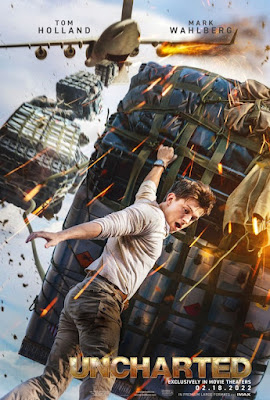
Tom Holland is the poster boy of the cinema world these days. After starring in the biggest blockbuster success since the pandemic started, he shows up here and does what a movie star is supposed to do, brings some charisma to the events of the story. He is joined by the older more veteran version of himself, Mark Walberg, who has past the stage of young lead to now take on the role of mentor, although still an active and well defined mentor as these stories will demand.
Director Ruben Fleiser has made some films that I enjoyed, (Zombieland and Zombieland Double Tap), some that should have worked but didn’t (Gangster Squad) and one huge financial success that is mocked by aficionados of the source material (Venom). I think the action groove is where he fits best, but it is apparent to me that the scripts he is working with and the way he is shooting things, character development is not his strong suit. The flashback sequence at the start of the film is about as close as you get to something reflecting real character arcs, but what can you expect from a movie based on a video game?
This is a perfect movie for a weekend afternoon with the family, or maybe date night, followed by pizza or burgers at a local joint that you know well. You will have a good time, a pleasant memory of the experience, but you may not remember much of the story or even the action scenes. I did like that the female lead is not simply a love interest but a character in the film who adds some drama to the proceedings and reminds us that everyone can be a little good as well as being a little bad.
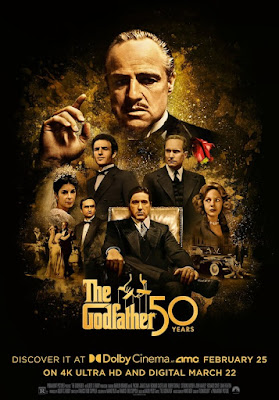
There is no greater tribute to the quality of a film than the fact that it resonates with audiences many years after it was first shown to them. The Screening of “The Godfather” that I attended on Friday, is basically a commercial for the 4K transfer and Blu-ray that is being released next month. This year marks the fiftieth anniversary of the film and it continues to be among the finest movies ever made, if not in fact the best film ever made. Our screening was packed. That’s right, a fifty year old film, that is available on multiple platforms and formats, is still able to draw an audience to a movie theater and that is the miracle of this movie.
Five years ago, at a similar screening, I offered thoughts on the film that mentioned two scenes that again stood out. I will let you go back to that post for those details, instead let me offer two other moments to focus on for this screening. The very first scene with Brando is spellbinding. He speaks in a passive voice and he is not really focused on the supplicant who wants him to do murder, he is fondling a cat. Famously, this was not scripted but was a result of the stray animal being on the set and Brando improvising. It fits in perfectly with the persona of Don Corleone, who is only half listening to the undertaker seeking vengeance, but is also confident enough to hide his thoughts in this playful moment.
Later, when he is taking the meeting with Sollozzo, he looks like a mildly interested man who wants the meeting to be done with but is polite enough to be slightly more attentive. When he moves over to speak to Sollozzo more intimately, he dusts off his conversation partner’s knee in a familiar fatherly gesture, even at the moment he is turning down the proposal. It is clear that Vito Corleone has a personal charisma that is not loud and overpowering but rather soft and subdued. The only time we hear him raise his voice is when he is mocking Johnny Fontaine, his Godson, and most of that volume is exaggerated for their relationship, not real anger. This is a man who knows how to influence people and woo them to his patronage. That it fails him with the “Turk” is just a catalyst for the story.
Once again, anyone who has not seen this film on the Big Screen is missing a marvelous chance to be absorbed into one of the greatest films of all time.
The very next night, we also traveled back to a critically acclaimed Best Picture winner, that I have loved since I first saw it when I was nine or ten.
Just as the Godfather experience I wrote about above had a five year precursor screening, it has been five years since we had the same sort of performance for “West Side Story”. This was not your typical screening but rather a presentation of the film with a live orchestral accompaniment. Back in 2017, we saw the film with the Los Angeles Philharmonic at the Disney Concert Hall in Los Angeles. Having relocated to the Austin area almost 18 months ago, it was taking me a while to get back to live Orchestra performances. Two weeks ago we saw the Austin Ballet Company perform “A Midsummer Nights Dream” it was a lot of fun but the orchestra was in a pit and the focus was on the dance. Last night the stage was filled with a hundred plus musicians and a large screen above them for the movie to play on.
I found the Austin Symphony Orchestra to be a powerful ensemble who played excellently. There was not a dominant section that stood out because all the instruments were solid and the scoring matched the design of the film. I was happy to be listening to live concert music and it simply doubled the pleasure that it was with a great movie.
Again, I will refer you to the earlier post for a complete discussion of the film, but for this post I do want to take time to talk about a couple of things. All props to Rita Moreno and George Chakiris who deserved their awards back in 1961, but it is frequently overlooked as to how effective Natalie Wood was in the role of Maria. It is true that she did not do her own singing and she was not of Puerto Rican heritage, but she looks wonderful on screen. Woods dances elegantly in several of the numbers that require her to be light on her feet, and her visual performance in close ups is completely in keeping with the character.
Live Music, a classic film musical, and the recent Spielberg remake to stoke interest was enough to get me out for this.
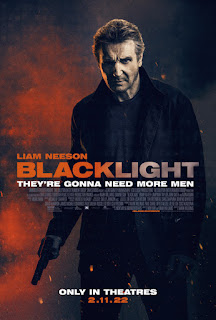
In one of the few instances I can think of, I went to this movie knowing nothing about it except that Liam Neeson was the star. I literally had heard nothing about it and it was only a passing listing on a theater web page that brought me to the movie. The trailer above I had never seen before writing this post, after seeing the film. When I posted it, there were 195,750 views, which does not shout out “Success!” or “Box Office!” in today’s social media environment. That was OK because it is Winter and Liam Neeson is in a movie, so someone is going to do some killing. I am an admitted fan. I somehow missed his last two action films, “The Ice Road” and The Marksman”, but I usually queue up immediately for one of these Winter Action Thrillers. This time I must admit I was disappointed.
This movie is so conventional, it feels like a Netflix retread of an eighties conspiracy film, not a seventies one, which would probably be worthwhile, but more like something drained of inventiveness but slick enough to look interesting for a few minutes. It turns out it never gets as interesting as you hoped it would be. The plot is so simple as to be a trope in and of itself, a government agency is killing citizens it thinks are a risk to the country. This time it is not the C.I.A. or the N.S.A. of some made up intelligence group, it’s the F.B.I. and they have their own rogue operatives. It turns out Neeson’s Travis Block isn’t in on the program, he’s not actually an agent. He works off the books, backing up agents who are in deep cover and need assistance. It’s not clear if the whistle blower agent is his partner, which does not make much sense since Travis is not an agent, or if he is just a close friend. Either way, should he be stopped or praised for coming forward with his story?
No one should be advocating the assassination of someone you disagree with, but the Alexandria Ocasio-Cortez plot device is probably going to amuse some people and outrage others. The idea that what she is doing is actually accomplishing something in the movie is silly, and whoever thought getting rid of her was a good idea is an idiot. Which brings us to the first of the two stupidest characters I have seen in a movie in a while. Aidan Quinn is the F.B.I. Director without a ounce of common sense. If you see this movie, see if you can pick out the three times he screws up in his decision making. There is one plot point where he almost goes BOO! and then runs away from the complication. It is the laziest writing I have watched in a theatrical movie in a long time. This could be one of those Bruce Willis Video films that requires no sophistication at all.
The “journalist” in this film is even more stupid. She seems to have no idea that you need evidence, sources and additional corroboration to make a charge in a news publication. Her editor seems to understand that, but he is even more stupid by publishing her work without verification under his own by-line. The truth is, this may unfortunately reflect the state of modern journalism, we are a long way from Woodward and Bernstein.
There is a personal story about Travis having OCD and paranoia, so much so that it drives his daughter away from him and creates a potential problem with his granddaughter. You would think that the threat to the family would be a major element of the film, giving Neeson license to unleash his well known special skills. That turns out to mostly be a red herring. He does not go after the bad guys so much as he runs away from them and outwits them a couple of times. Mostly this is an excuse for chases, none of which are very good, although the idea of a garbage truck being used as a vehicle for local destruction is fun.
I did not hate this film, I simply did not respect it and there are soo many better Neeson Action films, why waste your time?
So the reboot of Agatha Christie stories by Kenneth Branagh continues with this elegant film that is being released almost two years later than planned. Murder on the Orient Express was reasonably successful adult mystery film a couple of years ago, so a follow-up seemed likely. The character of Hercule Poirot is a natural for a film series and the detective does not disappoint in this entry.
The film opens with a flashback scene that shows us young Poirot in WWI, already observant of the details surrounding him. Although we also get an origin story of his mustache, it’s really about his detective skills and the sadness that will follow him the rest of his career. It is certainly not relevant the story but it adds character to our lead and makes the main story more interesting. This is one of the things that marks this as an improvement on the previous film, all the characters are going to be introduced slowly enough for us to have a sense of what is going on and who is who. The fact that they are not on the Nile in the first fifteen minutes does not detract from the story but rather adds to it.
The cast is elaborate and international, and they are all reasonably good. Gal Godot looks great but the scenes she appears in during the trailer had me worried about her performance. As it turns out, the over the top delivery in those clips is not typical and she is really much more solid. These films seem to have a curse on them to some degree, because one of the lead actors has gotten into a public relations nightmare. Johnny Depp is still trying to crawl out of the hole that lead many to boycott seeing him in “Murder”, Armie Hammer now takes a turn at being the public figure with a dark cloud hanging over him and bringing it to the theater with him. His character is the most cliched in the film, so that undermines a little bit of the suspense. His best moments are a dance sequence with Emma Mackey who plays the fiancé that his character ditches for Godot. Their erotic dance suggests a relationship that is pretty powerful and may leave some suspense on the table as a result.
Frankly, the main attraction here is the look of the film. As elegant as “Murder” was, this doubles down on that. Once we get to Egypt, we have fantastic vistas, a romantic river (filled with crocodiles) and a boat to die for. The ship that the whole cast ends up on may be a CGI invention is some shots, but it is carried off well, and the actual sets that are the staterooms, dining room and main hall of the boat are all decorated lavishly with period colors, art work and deco designs. The clothes and the food will make you wish that you were taking the trip with this crew of suspects.
The main weakness of the film is the convoluted process by which the murders are carried out. It follows the same design as the 1978 version, so I assume that Christie is responsible for those plot points since they are identical for the most part. When we get to the solution, it feels a little bit like one of the three endings of the comedy “Clue” , where there is a lot of running around, actions that rush by, and the detective taking it all for granted that he has it correct. The side plot of the blues singer and her niece is a little spliced in, but it ends up working anyway.
All in all it is a very entertaining film and one of the most gorgeous pieces of cinematography you are likely to see this year. The score from Christopher Gunning is lush and evocative, and I thought it was superior in fitting the film than the work that was done in the 2017 “Murder”. This is an adult film with a little mystery, a lot of drama and some great scenery. Why wouldn’t you have a good time?
I am getting ready this weekend for a Podcast on the LAMB, covering the 1995 Sam Rami film, “The Quick and the Dead”. I have just watched it for maybe the thirtieth time and I am so excited to talk about the film again. The movie was one of eight that I submitted to be Movie of the Month on the Lambcast. As host, I get to select the films that the community votes for in my Birthday Month. While it is at least the fourth time I have submitted “The Man Who Would be King” as a MOTM option, I am perfectly happy with the results found here because I clearly love this film.
Let me point to the two biggest factors that draw me to this movie. First of all, it is a western, and they don’t make them much any more. The early 90s saw a brief revival of the genre, lead in part by the fantastic Clint Eastwood film, “Unforgiven”. At the time this was shot, there were a number of other westerns being made and reportedly, costumes became a little sparse. When I was growing up, most of the westerns being released were post modern critiques of the traditional genre. “The Man who Shot Liberty Vallance”, “The Wild Bunch”, and the spaghetti westerns of Sergio Leone, focused on breaking down the myths of the western, and giving us anti-heroes as our protagonists. Of course there were television westerns all over the three major networks, and that saturation probably lead to the decline of the film genre. While some of those featured unconventional heroes, none of them that I remember were out right bad guys for us to root for. Leone and Sam Peckinpah turned shady characters into the stars of their films and ever since, there is a delicate morality to the movies.
The second major factor that keeps me hypnotized by this film is the performance of Gene Hackman. I have made no secret of the fact that Hackman is my favorite actor. He is not movie star handsome, he is not chiseled like a superhero, and unfortunately, he stopped working in movies in 2004. The thing that he is is talented. He seems to have an instinct for the characters he is playing and the everyman quality he brings to the screen, actually enhances both his roles as good guy and as villain. In “The Quick and the Dead”, he is clearly the later. Unlike the brutal sheriff of Big Whiskey, that he won the Academy Award for best supporting actor in “Unforgiven”, John Herod, the town of Redemptions usurper king, has no pretentions as to morality and justice. He is a self centered monster who rules with an iron sidearm and an iron fist. More about his performance in a bit.
So those are the two primary draws, but they are not the only sugar bringing this fly to the table. The star and co-producer of the film is Sharon Stone. This film came out the same year as her Academy Award Nominated role in “Casino”. She was at the height of her star power and sexual charisma, and she is using it in this movie. There is something striking about a woman in the traditional gunfighter’s role that makes it compelling. The film is drawing on her bigger than life persona to turn her character into the person that we most want to see succeed in the story. The fact that her wardrobe flatters her, and she still gets to wear very western garb is visually satisfying in almost every scene. “The Lady” as she is usually referred to as, wears a her holster and the gun at a slightly different angle. Her style is also just different enough to be noticeable without it becoming an artificial conceit. Slightly forward on her hip rather than low and on the outside.
When it comes to talent and charisma, the film does not run out of steam with the two leads. There are two actors billed after Hackman and Stone who will dominate the masculine acting roles for the next twenty five years. Russel Crowe is making his American film debut with this appearance and he quickly leans into Sam Rami’s style and looks the heartthrob that he would become for a decade after.
The part of Cort, gives him a meaty role that allows him to act as well as engage in the action. He is a reformed criminal who is doing penance for his previous life by taking up the role of preacher and is reluctantly dragged back in to the town by the will of his former mentor and now enemy, Herod. His conflicted participation in the quick draw contest that frames the story is dramatically satisfying without sucking up all the air in the revenge drama that Stone’s character is playing out.
Speaking of heartthrobs, this movie features a young actor, fresh off of his first Academy Award Nomination and just two years away from playing the biggest romantic lead in the biggest romantic movie of the last fifty years. Leonardo DiCaprio, was 20 years old when he played the part of Fee, better known as The Kid, opposite the three other acting legends. He looks like he is twelve, and playing cowboys with the big kids. He does however have a winning smile and a effervescent way of talking that belies the characters desperation to be accepted at the grown up table by his suspected true father, Herod. Of all the actors, he needs the most help with the gunplay required of his part. He manages the bravado of the tricks and the poses, but he just seems slow in comparison to everyone else.
Cantrell in the Background Ace with his deck
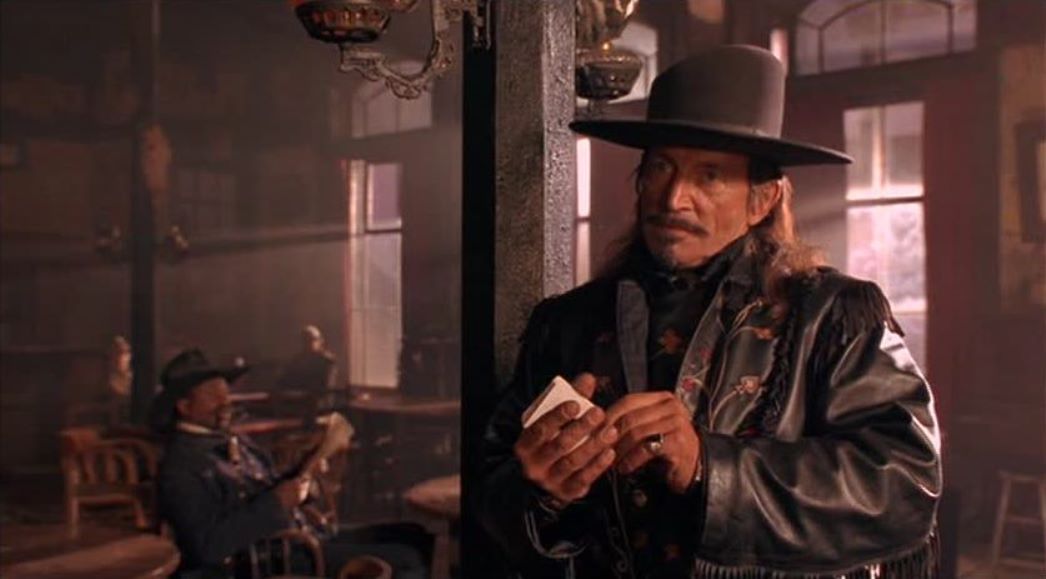
So those are the stars, but the acting wattage does not really end there. Among the cast are veteran TV character actors like Roberts Blossom, Kevin Conway and Mark Boone Junior. They are grimy character actors who make up so much of the environment of the movie. The personalities that fill in the background are even bigger. Keith David is Sgt. Clay Cantrell, a self described gentlemen’s adventurer and shootist. His enigmatic character faces down Hackman both in the parlor of Herod’s house and on the street of Redemption. The polite banter that he and Hackman engage in is an opportunity to see the professionalism that the two gunfighters want to project to the world. Another gunfighter, played by Lance Henriksen, is the blow hard Ace Hanlon. A self promoter who has affectations that mark him as something of a buffoon, including a deck of cards stacked with aces, one for every man he has killed, and boots to die for, Hanlon is a character that enters the film dramatically and exits it too early.
Momentarily I will get to the plot and it’s connection to the Leone films of the 1960s, but one actor who appears in the flashback sequences should also be named. A year after his nomination for Best Supporting Actor in Forrest Gump, Gary Sinise, plays the long ago Marshall of the town of Redemption. His character is the catalyst for the revenge story that Sharon Stone is following. Even though his scene is broken up into bits for the brief flashbacks, he creates a sympathetic character that the audience can see as important to the story arc that Ellen (The Lady) is carrying out. Sinise does the whole scene balanced on a chair and choking. What happens creates a different kind of choking on the part of the audience.
The film’s story and the look of the movie, are clearly influenced by Sergio Leone and Clint Eastwood. There is an entrance based on riding by the local undertaker as they enter the town, In “A Fist Full of Dollars” Clint tells the man to get three coffins ready, here, the coffin maker speaks and accurately states the height of Stone’s character, suggesting he will be ready when her turn comes. The duster she wears is not the same as the poncho that the Man with No Name wears in the Dollars Trilogy, but she does have a scarf that gives a very similar effect in her appearance and both of them seem to favor the same tobaccoist.
“The Quick and the Dead” is Sam Rami’s homage to the spaghetti westerns of the 60s and 70s. There are tense close ups in the build to each showdown. The eyes of the characters are doing so much of the acting in those scenes that we barely notice the rest of the surroundings. Rami cross cuts tightly and the images close in, just as Leone did in so many of his films. There is a scene in a gun shop in “The Good, the Bad and the Ugly, where Eli Wallach’s character Tuco, is examining the guns and clicking through the cylinders. Crowe does the same thing as Herod takes him to get armed for the contest in Fee’s shop. Woody Strode, the athlete turned actor who supported John Wayne in Liberty Vallance, and tried to gun down Charles Bronson in “Once Upon a Time in the West” makes his final screen appearance in this film as the coffin maker and the movie is dedicated to him. The most obvious steal is the scene featuring Sinise. Sharon Stone is a much more attractive version of Charles Bronson’s Harmonica from “Once Upon a Time in the West”.
For every idea and stylistic flourish that Rami takes from Leone, he brings his own original style to the movie as well. The dolly zooms that he used so much in the Evil Dead films, fit perfectly in several spots in this movie. The gunfighters stand far apart from one another, but we can feel the tension ratchet up as the next shot zooms the opponent in at a weird Dutch angle.
All of these tricks are needed to help overcome the somewhat repetitive showdown in the street structure of the story. This is a quick draw contest, ultimately to the death, and there are 16 participants so there are going to be a lot of gunfights in the movie that are one on one in the main street of the town of Redemption. When I have seen negative reviews of this film, they often claim that the story is boring because the same event is reenacted over and over. Siskel and Ebert gave the movie Two Thumbs down for that very reason. What people are missing ate the innovative ways each of those gunfights is shot. There are also twists in several of the face offs that make the each contest unique. Additionally, the music themes play up different emotional beats for the fights. Sometimes the score is nearly whimsical and other times it is thunderous.
Two of Herod’s fights demonstrate this. The showdown with Ace Hanlon is slow to develop and then like a whip, the first shot is cracked and then we get a villain’s exposition from Hackman that is so condescending, the end is almost a relief to Ace. With Cantrell, we get two extra shots, one that spins his fancy sidearm around after the man has been shot and then the Coup de Grâce, a point of view shot that is disturbing and inventive and new to the genre. The TV critics down play it as grotesque, but let’s face it, the deadly combat in and of itself is also morbid.
Back to Gene hackman for a few minutes. Herod is an egoist who wants everything to go his way. He demands the retorn of Cort to his town, just so he can lord over him the power that he has. He is dismissive of The Lady at first and then tries to manipulate her to his will. At the dinner scene, Ellen gets the drop on him with a small gun under the table, hidden from view. Herod hears the hammer being cocked and responds with a similar sound to dissuade her from shooting. After she blinks, he gives away the fact that he was bluffing with the hammercock sound he produced, using a metal matchbox. He smiles smugly in his victory over her as she retreats. Hackman does these kinds of smiles and small hand gestures throughout the picture. Before his gunfight with Cantrell, he meticulously files the hammer on his disassembled firearm, to insure it is working properly. Rami tags on a slow motion shot when Hackman is lighting his cigar during a showdown, which accentuates the moment but it is the deliberate manner he uses in a casual way that sells his total control of the situation. Just to add one more element to Hackman’s complete command of the part, he looks elegant in all of his costumes, including the sidearms that go around his suit jacket in one scene.
In previous posts about the film, I mentioned the music, in fact I had a link up to the theme on YouTube, that seems to have expired for some reason. I have an updated link to a suite of the music here:
It is quite lovely, and it does mirror some Morricone themes from the softer moments of the Dollars films. There is nothing as grandiose as the Theme from the Good ,The Bad and The Ugly”, but there are a lot of places where it builds tension really well. Composer Alan Silvestri, who has done scores for “back to the Future” and four of the MCU films, has never received an Academy Award, but his music has received a lot of love from fans, and this is one of the pieces that is maybe not as popular, but it is certainly well matched with the drama of the film.
Director of Photography Dante Spinotti worked with Rami to get the signature shots that enliven the shootouts, but he has also photographed the plains, town and dingy barrooms of Redemption in a beautiful fashion. The sometimes sepia infused lighting is great for some of the interiors and the early shots. I was very impressed with all of the shots supposedly taking place in the rain, especially the shootout between Ellen and Dread. Spinotti would go on to an Academy Award nomination two years later for “L.A. Confidential”.
There will always be more to talk about on this film. Russell Crowe and DiCaprio should merit some comments of their own. Some of this will be discussed on the podcast, and I will come back and add a link to that when it goes up. For now I am just happy to be anticipating the discussion we will have, the notes that I have just given you, and the fact that a 4K version of the film arrived on my doorstep today, and I am about to watch it again.
There is no way around it, this may be the dumbest movie of the year. The premise is silly, the dialogue is stupid and the ultimate explanation will leave you feeling incredulous at the crap that some people might believe. That said, you will probably still have a good time because all of the stupidity plays out in pretty solid special effects at a reasonable pace, with a little humor thrown in now and then and those jokes were intentional.
Patrick Wilson and Halle Berry are working for a paycheck and having a little fun, and for the most part they play it straight. No one could take this seriously, so the laughs are not unexpected but they may be unintentional. I have not seen “Don’t Look Up”, but my understanding is that the satire in that film is supposed to make us think seriously about our institutions. This film has no such pretentions. This is presented as a straight drama, but nothing in it is believable. I saw in the credits that there were actual consultants from NASA who advised the film makers, but whatever they said must have largely been ignored.
Let’s talk about what is fun in the movie and ignore the idiocy for a moment. For years I joked with my students about the persuasive power of a TV commercial where a Toyota tows a Space Shuttle down the street. If the director had placed a Toyota Tundra in one scene of this movie, it would have amplified the moment ten times over, someone missed a trick here. Even so, it was still fun when a decommissioned Space Shuttle is hijacked to be the vehicle the astronaut rescue team is going to use. Having walked by the building that house Endeavor on my way to the USC football games each weekend, it was a blast seeing the L.A. Coliseum in the background and the streets of L.A. littered with debris. It is also outright hysterical when the gravity of the Moon starts lifting objects off the ground like a tornado. In fact, the large tree that pins a character to the ground flies up in the air, although the characters do not. The gravity wave is the most interesting visual effect in the movie and it’s mixture with the launch of the Space Shuttle looks great but seem preposterous.
The main reason we go to films like this is that it is safe disaster porn. Unlike the footage from 9/11 or the scenes of the Japanese tsunami, we know what we are looking at is a fiction, and we don’t have to feel like ghouls watching a traffic accident as we drive by, because it is not real. The destruction of the cities is vivid with the exception that we don’t really see any people dead afterwards. It’s just a picture we can look on with mock horror and still sleep at night later. Roland Emmerich has destroyed the planet three or four times before. I think “2012” was more elaborate, “Independence Day” was more fun, and “Godzilla” may actually be more intelligent. Start the popcorn maker, shut off your brain, and don’t let your self worth be defined by enjoying any of this, that would be taking it too seriously.







 Kirkham A Movie A Day