Butch Cassidy and the Sundance Kid: Fathom Events/TCM Series

In preparation for this Fathom Event, I went back to an excellent post written my my friend Michael for his own blog three years ago. “An Appreciation: Butch Cassidy and the Sundance Kid” is well worth your time. There are nuances that I found really interesting and anybody who loves Butch and Sundance should love it. I also know that sitting somewhere on the other side of town, Michael was enjoying the same experience I was because there is no way he would miss an opportunity to see this wonderful film on the big screen.

I myself wrote about this film for the final post I did for “Fogs Movie Reviews“, a site that I contributed to for several months before its ultimate retirement. That post was about the three great Westerns of 1969. Today I am going to focus exclusively on the George Roy Hill film. As Ben Mankiewicz said in his intro to the film today, it was the biggest film of 1969.That was an understatement, it made over a hundred million dollars and that was more than twice as much as any other film made that year. I first saw the movie with my friend Don Hayes when his family took me with them to a drive-in theater to see the flick, that was probably late 1969 or early 1970.

The secret of the films success is so easy to identify after watching the movie again, that it surprises me. There are three essential ingredients that make this movie sing. First is the star pairing of Paul Newman and Robert Redford. In old Hollywood, they say you could feel the chemistry of stars in a film. Bogart and Bacall, Tracy and Hepburn, Flynn and DeHavilland all had charisma together that made their films fly. Here is a match between same gendered co-stars that had the same effect. Their only other outing together is the Academy Award winning “The Sting“. That’s a pretty good track record for casting. From the opening sequence, the two of them showed perfect comic timing, playing off of one another’s facial expressions and body language. In the long sequence of the film where they are fleeing the pursuing super posse, they sweat and squirm and kibbutz with a real relationship that seems built on years together as outlaws. Mankiewicz mentioned some of the original choices for the film cast and I can’t imagine Jack Lemmon as Butch but I could see Steve McQueen as Sundance. Lucky for us that we had to wait for that Newman/McQueen flick until 1974.

The direction of George Roy Hill is another piece to the success of the film. Hill has managed a number of films with a nostalgic feel, including “The Sting” and “The Great Waldo Pepper”. He may not have been as stylish as other film directors but he had an eye and an ear that would let the past come to light and I think his creative use of music cues, sepia tones and timing of comic scenes accouts for a lot of the reasons that people can love this movie. The first five or ten minutes of the movie look like the nickelodeon feature that plays behind the titles. When the three main characters head off to Bolivia, they make a stop in NYC near the turn of the 20th century and the photo montage delivers enough information that we don’t need the extended film sequence that had to be condensed for reasons of studio politics. The lighting choices for most of the night scenes feel very distinctive from other films at the time. Of curse he was aided by Conrad Hall’s cinematography.

Finally, the most important ingredient in the whole concoction is the script by William Goldman. He had done extensive research, and for the spine of the story, the opening tag that declares “Most of What Follows is True” is mostly correct. Long time fans of “The Princess Bride” will be able to recognize the attitude of some of these characters. They are non-conformists with a wicked sense of humor and a streak of fatalism about them, for instance when Sundance turns his back on Butch as he kids that he is stealing Etta from him, he mutters “Take her”.  That sounded like the Man in Black and Prince Humperdink all at once. Percy Garris mocking the two bandits turned payroll guards as Morons, is just priceless. Sheriff Bledsoe, played by Jeff Corey, speaks wisdom without the humor when he points out that times have changed and that the two outlaws have outlived their minor legend. Sundance complains about where they have landed in Bolivia, “this might be the garden spot of the whole country.” The gallows humor is abundant and it is one of the most wonderful things that Goldman contributed to the story. Goldman wrote in one of his books that this was one of two real life stories that he thought were instantly compelling and cinematic. Somehow they managed to neuter “The Ghost and the Darkness” but thank heavens this story was brought to life by the right set of artists.

The movie will be playing two more times this coming Wednesday, I can’t think of anything you might be doing that would be more enjoyable for two hours than taking in this film. Get thee to a TCM/Fathom participating theater and set yourself down for the best time to be had in 1969 and so far, 2016.

13 Hours: The Secret Soldiers of Benghazi

A minor disclaimer here, I don’t hate Michael Bay and I also have all the respect in the world for America’s fighting forces. With that said, we can get some of the political stuff out of the way. This movie does not lay the blame for the failure to protect Ambassador Chris Stevens on anyone. It does describe in detail the events of that fateful September 11, eleven years after the same date in NYC. I know there are people in that part of the world who simply want to be left alone to live their lives. Ideally under a government that protects and nurtures them. It is very hard to imagine from the first hand description provided by the men who told this story, how we are going to be able to help them do that and how we are supposed to be able to tell the good guys from the bad. This part of the world is loaded with groups armed to the teeth who want nothing less than absolute control over they fellow man. Libya and Syria are failed states that have a long way to go before diplomacy will be of much benefit.

One of the striking things about the whole incident is how hopeful Americans were, including the Ambassador, and how sad it is that those hopes have largely been crushed. This film shows that it was not a lack of fortitude on the part of the Americans on the ground that are responsible for those failures. This is primarily a salute to the warriors that we have asked to go into these places to try and make a difference. If this were a work of fiction, I know that some people would be criticizing the cliche story points of men separated from their families or the comradery of warriors in battle. The reason those things are cliches however is because they are true and they mean something to the people involved. The actors and director do an outstanding job in this film in presenting men who live for this kind of service but also the way they dread the price that they pay to self actualize this way.

Technically, these guys were not soldiers at the time, they were private contractors doing the job of soldiers. The story shows how the chain of command becomes problematic when this private security team, filled with the best kinds of former military personnel, has to but heads with the CIA and State department officials they are working with. Since they were employees of the agency, they deserve the status of heroes rather than mercenaries, which is a term some have used to describe these kinds of private contractors. The men in this story see their loyalty to the U.S., it’s mission in the area and the people on the ground they are there to protect. John Krasinski and James Badge Dale play the two main figures in the story, Jack and Rone. Their relationship goes back to earlier service but the work they are doing and the co-workers on their team are clearly part of a brotherhood as evidence by the loyalty they show one another. Others at the scene made sacrifices as well and all of them fit well into the stereotype of single minded military guys with hearts of gold. If half the stuff that is shown in this film is depicted accurately, they are heroes many times over.

I started out by saying I’m not a hater of Michael Bay. That does not mean I will defend his “Transformers” movies, they are for the most part, loud mechanical exercises in cinematic excess. He can however build tension, stir patriotism and explode things in a way that make the story he is telling invigorating. It looks like he just needs a good story to make a good movie and here he has one. Back in 2001, he was celebrated for a shot in the trailer for the then upcoming “Pearl Harbor”. It was a point of view sequence of a torpedo bomb being dropped during the December 7th attack. The movie never lived up to the awesomeness of that shot but it was clear that he had a good eye and the technical ability to make something like that feel real to us. We are presented with a couple of similar shots in this film and they work dramatically in the climactic battle that produces the biggest emotional tolls in the film. There are a few of his other excesses on display that show he directed the film but don’t manage to take us out of the experience. John Woo likes flying birds, Michael Bay likes windblown cloth floating over the scenes of mayhem as a serene counterpoint to those events. There is a lot of shaky camera work in the film as well so if you get motion sickness let me recommend that you sit near the back of the theater.

The tension in the lead up to the critical day is thick, but not nearly as deep as the tautness during the firefight. The visualization of what must have happened to Ambassador Stevens is compelling, although the final script of his death is speculative. The fight at the CIA Annex however is well documented by the men who survived it and wrote the book that this movie is based on. It is never clear who is on your side and who is simply waiting to kill you. This was an ongoing conundrum for the tech team in the compound, who needed to know who to shoot and which lives to spare. That’s a tough question to have to ask when there is gunfire and weapons all around you. It looks that the team did the best that anyone could have hoped for under the circumstances. I was incredibly moved by the final screen shots of the film and it was a reminder that what we saw for the previous two hours was not a make believe story, thought up to entertain us, but a dramatization of real events, designed to honor those who gave all for their country and their fellow warriors.

Concussion

This is a movie that never manages to be greater than the sum of it’s parts. In fact, it might be a little less because it builds up such a strong desire to be great. Instead, it is simply good enough to dramatize it’s subject and give us an historical context, but as a movie it just seems to be lacking something. Despite the ultimately unsatisfying dramatic elements, it does contain an effective performance from star Will Smith.

I can say that the N.F.L. definitely comes off as the bad guy here and that may be a just conclusion. The story may have been simplified for dramatic reasons but it comes off as a Snidely Whiplash type character, abusing it’s naive and innocent partner. The players are mostly portrayed as helpless and clueless saps who were disposed of by the league when their usefulness was done. I have incredible sympathy for the bewildering experience that some of the players in the story seem to have gone through. David Morse portrayal of Steelers legend Mike Webster is heart breaking and horrifying. The effects of CTE and the players who suffered, might be a more dramatic story to tell. Instead, we get a solid C.S.I. episode, inflated by a conspiracy theory and punctuated with the American Dream of a Nigerian immigrant. It is a hybrid of a film that is satisfying to none of those elements.

Smith plays the Dr., a pathologist in Pittsburgh, who discovers a pattern of injuries in pro football players that contributes to a variety of mental issues and suicidal/homicidal behavior. We get just enough science to know that his theory is accurate, without really understanding the explanation or the doubts that the league might have had about it. Instead, the film plays up incidents of boorish behavior by fans of the game who think the doctor is out to destroy the game. The N.F.L. is suddenly equated with the tobacco industry and the paranoia of Jeffery Wigand is transferred to Dr. Omalu. If you believe the film, agents of the N.F.L. created a Federal probe of Omalu’s boss and personal hero, cost him his job, and caused the death of his child in utero.

There are long conversations where Smith’s character philosophizes on the American Dream, and seems to ache for it, but his version of the dream lacks any commitment past the facade. He is really a gifted and brilliant scientist, who lacks the ability to relate to the coworkers at his job, the sympathetic scientists who support him, or the players and fans who might be terrified by his discovery. He is given a speech at the end where he pays lip service to some of the emotional needs that come with the consequences of the disease he has discovered. The only time the position of the league is represented , the words are put into the mouth of a craven physician who is so stereotypically a sellout that he does not seem to be a real character.

Will Smith does a nice job disappearing into the role of a dedicated physician, trying to solve a problem. In the long run the film comes across like a star vehicle designed to show off his chops. The accent and immigration angle are played up to give the story more narrative heft, but it is the least interesting part of the film. Roger Goodell was not having a good year before this movie came out, if it had been a bigger hit there might be something for the N.F.L. to worry about. Because the picture comes off as a polemic, instead of being an inspiring story of discovery, it tastes like medicine that might be good for us, but sometimes , the cure feels worse than the symptoms.

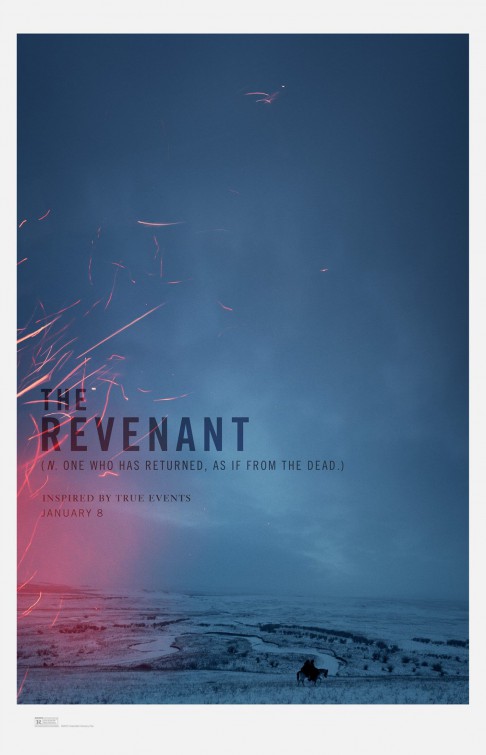
The Revenant

Back in 1971, I saw the Richard Harris, John Huston film “Man in the Wilderness“. I was a Boy Scout at the time and while not an expert woodsman, I always thought that I might have what it takes to get through an experience like the one portrayed in the film. That is the fantasy of youth, that we are as great as we might aspire to be. As I watched what is essentially a remake of that film, forty-five years later, I have no illusions. If this were me, I would die. It would be painful and the cold would drive me mad before actually doing me in. The makers of the current film pile on so many obstacles that I’m not sure anyone could visualize themselves in the role that Leonardo DiCaprio plays. As a result, the movie plays less like an adventure film and more like an endurance test. It is well made and has some fantastic sequences but there is a lot to get through and some of it will test your patience.


A trapper, abandoned by his party after being mortally injured, would naturally feel resentment and seek revenge on those who turned their back on him. This story is more direct in building a revenge theme specific to a particular individual than was the case in the 1971 version of the tale. There is also a theme of forgiveness and redemption that follows the character of Hugh Glass. His struggle in punctuated with spiritual messages from past misdeeds as well as visions of his future. The Indians that are tracking him may be profiting from the raid they conduct on his companions but there is another purpose as well, one that mirrors the story of our abandoned frontiersman. It sometimes feels like an awkward attempt to add some balance to the story, but it can occasionally be confusing as well.

I’m inclined to say that the film is centered around three action segments that will dazzle the audience and build immense tension. The first ten or fifteen minutes of the movie involve a violent attack on a group and there are some harsh images that will sometimes be disconcerting. It is staged in a manner that feels very natural and accurate, which makes it even more ominous as it plays out. There is a rumor going around that at Academy Screenings of the film, many older members of the body have walked out in disgust at the level of violence depicted. I don’t think it compares the “Saving Private Ryan” levels but it does take one’s breath to imagine the intensity of fear that would accompany this event. A short while later is the visual moment that will be the signature image from the film, an attack by a grizzly on the lead character, which leaves him in his near dead condition. Finally, there is a confrontation at the end of the film that quenches the thirst for revenge but also stops short of accepting the consequences of that action. It is a choice that fits in with some of the spiritual elements that the movie has advanced, but it feels like a cliche.

Cliches may be the one weakness of the film. The villain of the piece is a cliche racist that eary on we might understand, but as the story develops we have less and less reason to hope for any resolution other than his annihilation. The wilderness sequences are spectacular to look at but there are so many times when an amazing idea is followed up with an obvious moment. I think I first saw an animal used the way Han uses his tauntan in the “Empire Strikes Back” in an old Robert Taylor movie. After a very creative action moment, the movie inserts a sequence much like this for no particular reason except that it is a survival film and this is one of the survival cliches that has been around a long time. Every chase has a component to it that is fresh and then a moment that is cliched. It is all shot so beautifully that you may not care, but because the pace of the film is so leisurely, I frequently found time to think about things like this. The film is almost two and a half hours long and in many places it feels that way. A little economy of storytelling would make this picture more effective, but that is not to say what we got was a disappointment, it was just not the tension filled action piece that is sold to us. There is a lot of navel gazing at times and it slows down the film enough to notice that you are watching a film.

DiCaprio is fine in the movie although I did not find his performance to be the one that will finally get him his Oscar. In fact, at one point, I had to knock myself out of an internal dialogue because Leo was repeating a moment from “The Wolf of Wall Street” only this time it was for dramatic purposes rather than comedic ones. That is not the kind of thing you want in your head while you are watching an intense drama like this. Alejandro González Iñárritu makes the story visually interesting in the same way he accomplished so much in last year’s “Birdman”, but it is a little noticeable at times, also reflecting a self awareness that seems out of place. This is an excellent film and I may just be reacting to my expectations, but it did not feel as special as it has been hyped as. The story is grim with only one moment of lightness in the whole 156 minutes, and that may be one of the missing pieces for me. I need to care about the character a lot more and he is never given any personality only a mantle of spirituality that he wears like a mantle of honor, but without much clarity.

Indiana Jones Triple Feature

If adventure has a name, it must be Indiana Jones…

A year ago, I kicked off my movie going with a trip “Back to the Future” at the Egyptian Theater. The triple feature idea apparently is now a tradition because the American Cinematique at the Egyptian offered a different New Years program this time. A chronological presentation of the three essential “Indiana Jones” films, with no mention of the fourth movie to spoil the evening.

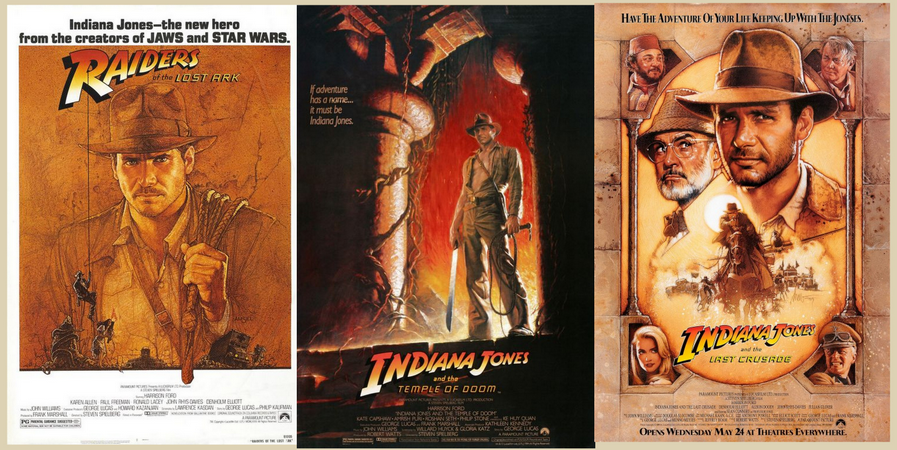
The three images above are very familiar to me since all of them are hanging on the hallway wall right outside my home office right now. From the very beginning, Indiana Jones has been a character that I have embraced. The films are a combination of James Bond and Errol Flynn, set in the 1930s and playing against the backdrop of the times. Critics have sometimes suggested that the movies are racist, sexist, and xenophobic but Dr. Jones is a forward thinking character in the times the films are set and his actions are always influenced by the core of his decency, not just by greed.

I have written about each of these movies in various contexts so this will be a short reminder with some links for you to get a more detailed reaction. I know you have all seen the films and a review is hardly necessary, these are mostly my impressions of the movies from the recent times I have encountered them.

Raiders of the Lost Ark

Conceived by  George Lucas and Phillip Kaufman, and brought to life by Steven Spielberg, this is the most exciting action film ever. More happens in the first ten minutes of this movie than in the whole run time of most movies. Raiders is a throwback to the serials of the thirties and forties but done on a scale and budget befitting a major Hollywood production.

http://kirkhamclass.blogspot.com/2012/09/raiders-of-lost-ark-imax.html

If you click on the poster to the left, you will find a link to an IMAX screening of Raiders from about three years ago. There are certain movies that If I get a chance to see them on the big screen, I will always make the effort. This movie works on a giant movie screen because the vistas engulf you and the action scenes playout so much more clearly. In fact it was just a year and a half ago that I last saw the film in an AMC program at my local theater.

I love the way Spielberg delays showing Harrison Ford’s face at the start of each of these movies. There is a creative use of shadow and light in this introduction that makes Dr. Jones a little more ominous but definitely very interesting at the start of the film. It comes right at the end of an action beat and it is a perfect first reveal of our hero. Another Spielberg touch at the start of the film is the inclusion of the Paramount logo into the titles of the movie. He is going all out to make this an immersive experience.

Indiana Jones and the Temple of Doom

The first sequel is actually a prequel, taking place a year before the events in “Raiders”. So maybe I am wrong in saying the screening was chronological, it was only the release dates that are chronologically followed not Dr. Jones’ adventures. If the 2008 Indiana Jones film did not exist, this would be the chapter that is most criticized. My friend Eric is particularly dismissive of it in his recent review of “Raiders“. To each his own of course. I provide a spirited defense of “Temple of Doom” on my “30 Years On” blog project about the film year of 1984.

https://70srichard.wordpress.com/2014/05/23/indiana-jones-and-the-temple-of-doom/

 Again, we get a slow reveal of Dr. Jones as we see him from the waist  down walking in a White dinner jacket down some stairs and across a nightclub floor. I enjoyed the screwball visual comedy of the action piece at the opening of the movie, but the tone of Willie Scott never gets to the Rosalind Russell/Katherine Hepburn heights it strives for. The character always remains shrill and she may well be the least loved character in all of the films despite the fact that the actress is clearly the best loved of all of Spielberg’s leading ladies.

The mine car chase is the highlight of the movie for me, it combines miniatures, puppets, mattes, green screen, live sets so well to make a memorable action sequence.

Indiana Jones and the Last Crusade

The pairing of Harrison Ford and Sean Connery was brilliant in my view. Connery played the character that was one of the inspirations for the whole Indiana Jones series. Lucas and Spielberg both wanted a 007 like character and in this movie they get to have 007 himself as Indy’s Dad. We also get more Marcus Brody played by the late Denholm Elliot, Indiana’s colleague at the University and here he provides the comic relief without becoming too cloying like Short Round in the second film. We also get to reconnect with the gregarious Sallah (John Rhys-Davies) from the first film as well.

http://kirkhamamovieaday.blogspot.com/2013/06/fathers-day-with-sean-connery.html

If you click on the poster here, you will be taken to a video blog post I did for

a Father’s day outing a couple of years ago. Sean Connery was featured in two film, “Goldfinger” and this gem. Someday I will have to do an extensive post on “Last Crusade”. I will say that it is the one film in the series that my wife saw before me. The day it opened, i dropped her off at the Chinese Theater and i went down to Fullerton to give a final exam. She bought tickets for the 10:00 am show and the 1:00 pm show. I came back and met her for that afternoon screening and she just about burst trying to keep from saying anything abouth the film that she was seeing for the second time in a row.

The reveal shot in this film includes a double reveal. River Phoenix as young Indy, gets the face out of the shadows reveal that is similar to the original “Raiders” and then we get a jump cut transition with Indy’s hat to twenty-five years later, another Spielberg touch that makes this movie work so well.

It was a long seven hours but worth every moment. Except for spilling half my popcorn on the poor guy in front of me, and having to pay twice as much to park as I usually do when I go to the Egyptian, it was an exceptional evening.

Top 10 of 2015


As is customary, I will start off with a couple of reservations and caveats. To begin with, I saw fewer movies this year than I have in years. This is a function of my schedule, a new dog in the house, and a variety of other personal issues. I did make a conscious choice to postpone some of the fine pictures that will be in contention for the Academy Awards because I knew they would be coming back in the Best Picture Showcase that AMC Theaters hosts each year. I will get to see them then, and I will share my opinion before the Awards are handed out. It simply is not fair to rank movies that I did not yet see although I expect several of them would be on my list and displace films that did make it.

Second, I don’t limit my personal list to just the “Best” pictures, I include films that I frankly enjoyed more than the others I saw. I like to use this opportunity to encourage people to try some things that they may have missed but that I thought were just fine. This does mean that genre pictures and action films are likely to be included, even though they are not artistic and  are rather, just entertaining.

After you view the video clip, you can proceed to the next page where the films will be laid out in order and there will be a brief commentary and a link to the original review.

Thanks for taking the time, hope everyone will come back during the new year to get some more.


Number 10.

http://kirkhamclass.blogspot.com/2015/12/trumbo.html

A biopic that focuses on one of the Hollywood 10 from the blacklist era of the 1950s.

Dalton Trumbo was an interesting character in his own right, but when combined with communist pals and the witch hunts of the time, he became a pivotal figure in Hollywood history. Bryan Cranston does Award worth work as Trumbo but he is ably assisted by a stellar cast that is also quite impressive.

Number 9.

http://kirkhamclass.blogspot.com/2015/10/all-things-must-pass.html

If you are a music lover or have any interest in the history of the California music scene, this is an essential review of one of the icons of the industry that died not to long ago. Not a figure or musician but a business, Tower Records.

Assembled by Actor Colin Hanks, the film tells the story of the business model and characters behind an innovative music store that became a powerful chain but was ultimately destroyed not just by the internet but by poor business choices. To me it was fascinating stuff.

Number 8.

As we have already established, I’m a James Bond guy. So it is quite a surprise to me that SPECTRE did not make my list of top ten films but “Mission Impossible” did. I am also a Tom Cruse fan and this is an excellent series that seems to get better as we go along. I was very impressed that the big stunt that is advertised is also the first scene in the film. That seems very Bond like to me. This story was more effectively told and the motorcycle chase by itself is worth a trip.

Number 7.

http://kirkhamclass.blogspot.com/2015/12/star-wars-episode-vii-force-awakens.htmlThis is a movie that everyone wanted to have succeed, and for the most part it did. There are plot

holes and unexplained elements to the plot. It is also very derivative with story threads and action beats that repeat from earlier episodes, but J.J. Abrams manages to make us forget the prequel stories and instead focuses on new characters, old friends and practical special effects whenever possible. It may be imperfect, but it feels a hell of a lot more like Star Wars than “The Phantom Menace” did.

Number 6.

http://kirkhamclass.blogspot.com/2015/11/creed.htmlWho would have thought that ten years after what appeared to be his swan song, Rocky Balboa would come back and endear himself to us again, and do so without getting in the ring himself. This is the right was to continue a franchise like this, find a story thread, follow it to new destinations but keep it familiar in tone. Writer/director Ryan Coogler has kept the heart of “Rocky” but managed to transplant it into a new figure that we can grow to care about as well.

Number 5.

http://kirkhamclass.blogspot.com/2015/02/kingsman-secret-service.htmlPolitically incorrect, violent as all get out, and frequently outlandish, “Kingsman: The Secret Service” was made for 12 year old boys and anyone who can think like that. It is childish at times but also very cool and always having fun with the audience. I loved the subversive environmentalist theme and the resolution involves one of my favorite images from the film year. I saw this movie the most this year and laughed and cheered the hardest at it.

Number 4.

http://kirkhamclass.blogspot.com/2015/07/mr-holmes.htmlSherlock Holmes trying to solve a mystery as he is aging and losing his memory. Add into the mix that Holmes is portrayed by the marvelous Ian McKellan and you have a great concept. Put it together with some excellent production values and a clever script and the result is a movie made for grown ups that is worth the patience it sometimes demands of the audience.

Number 3.

http://kirkhamclass.blogspot.com/2015/05/mad-maxfury-road.htmlI first discovered Max in “The Road Warrior”. A movie that came out of nowhere, kicked you in the crouch and then owned you for the rest of your life. I went back to see the original piece which while good, is not much like it’s successor. This movie follows the template of the Road Warrior, and although Max is the titular character, the movie really belongs to the women of the film, especially Charlize Theron’s Imperator Furiosa.

 Number 2.

http://kirkhamclass.blogspot.com/2015/10/the-martian.htmlRidley Scott is a director who is working at his peak still even though he is nearing eighty. Matt Damon manages to have enough charm to remain an effective and relateable hero in spite of his off screen activities. The can do attitude in this film is emblematic of my Alma maters slogan, “Fight On” and the positive spirit and large supply of humor make this a winner.

Number 1.

http://kirkhamclass.blogspot.com/2015/05/ex-machina.htmlHowever you say it, this is the most interesting film I sa this year and it has left me thinking about the themes ever since I saw it back in May. In addition to asking bit questions it is impeccably performed with a small cast and limited sets. The sets though are well imagined and the performers are terrific. The visual effects are CGI but they are used in completely appropriate ways. This is a 1970s Science Fiction film masquerading as a 2015 drama.  If you have not seen it yet, get ready to have your thinking challenged. Oh, it’s also a pretty scary film as well.

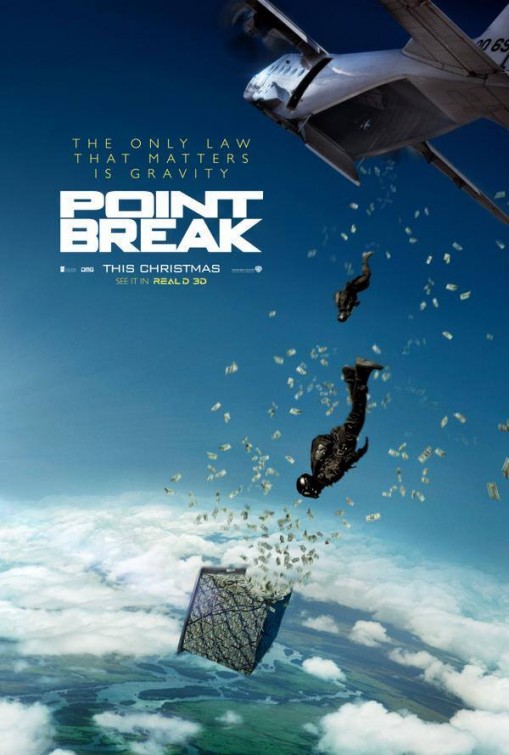
Point Break (2015)

Watch the trailer, you will have a better time than if you watch the whole movie. This unnecessary remake makes two important changes from the original. First, the extreme sports pictured are not limited to following the perfect wave around the world. Second, they jettison any charisma that the stars had in the original production. Both are bad choices.

Let’s start with the two stars of the film. Oh, I said stars didn’t I, sorry, the two lead actors in this picture because at this point, they sure as hell ain’t stars. Neither the good guy, nor the bad, can hold the screen. Fortunately for the director, who was also the cinematographer, there are a lot of scenic vistas and rivers and oceans to take the focus of the film goer. The guys have no ability to sell a line, and if you thought Keanu Reeves line readings were unintentionally hilarious in the original, be prepared to discover that he was at least trying to act.

The extreme sports are shot nicely, but you can see a lot of the same kind of footage on YouTube, done with a GoPro camera, and then you can skip the pseudo-intellectual philosophy of Bohdi and Utah. It’s as if “Occupy Wall Street” was taken over by Morpheus from “the Matrix”, and it is really not about economic inequality but saving the planet. I can’t begin to describe some of the stupidity that is trying to pass itself off as profundity here. When the girl in the story, wearing the kind of garb you might expect to see at a commune, explains that the eco-warrior who created the extreme sports metaphysics that are being pursued by the gang, was killed trying to put himself between a whaling boat and it’s prey, I almost burst my gut in laughter. It was funnier than anything said in the Tarantino film from yesterday. This dialogue is jaw-dropping bad.

The original film is notorious for being a “good” bad film. It is enjoyable hooey that is sparked up by Patrick Swayze and Keeanu Reeves and is propelled by action director Kathryn Bigelow. It was stupid, but fun stupid and it knew that it was just a piece of entertainment. This version seems to have higher aspirations and lower ability to reach them. I saw fewer movies this year than usual, but I was more selective and saw fewer turkeys. This one fills my quota of crap for the year. I did not expect much, and I got even less. The one pleasure that the film affords me is that it provides a target for me to mock for a few days.


Let me finish by giving you one quick example so you can mock the movie without seeing it. In the original, Johnny Utah catches Bohdi on the beach at the end and lets him paddle out to meet his fate. It was corny but almost plausible in a physical sense. Here, Utah descends from a helicopter, onto a small boat in the middle of the ocean, while a storm the likes of which would have done justice to George Clooney and Mark Walberg. There he has a seventy-five second conversation before zipping back up to the sky. That’s right, the F.B.I agent basically uses a huge amount of resources, and risks the life of his pilot and others on the chopper, to deliver a cliche. DUMB!!!

The Hateful Eight

There are fans of Quentin Tarantino who will love everything he does and have an issue with any criticism. There are critics as well, who find his approach to film making to be infantile and sensationalist without much discipline. Lovers and haters, welcome to the latest film from the man who re-invented independent cinema and has copied himself repeatedly ever since. “The Hateful Eight” is exactly titled. There are no characters that are redeeming in the main cast, and the secondary characters may have sufficient drawbacks for you to dislike them as well. This three hour plus version of the movie is as indulgent as anything in the “Kill Bill” films but without the same level of bravado as those movies. The camera does not make itself an extra character, the violence is standard for a film from Tarantino, and there are long passages of dialogue that lack the wink and smile that made earlier films such a treasure. There are still plenty of things that make it worth seeing, but it may be the first film of his since “Death Proof” that cinema fans may not see as essential.

Let’s start with those things that are confusing, wasteful, annoying or just plain dumb about the film. We saw the road show version of the movie and I have great fondness for some of the trappings that go along with such a presentation. An overture and an intermission provide a special feeling to the experience you are undergoing. The Ennio Morricone music during the overture was great, but it took two hours to get to the intermission, and it the first real action beat of the movie. Everything else has been set up of character, story points and setting. It was the right moment to break for the intermission, but it was an odd tone that lead up to it. There is some pretty awful plot development that leads to the moment of action. It is implausible, distasteful and designed to inflame racial animus not only between characters in the movie but for those watching as well. The story is supposed to be provocative, but the language and tone are anachronistic, and the visualization that goes along with it was gratuitous. We are lead to believe that no one in this group will be deserving of any respect, and Samuel L. Jackson makes sure that whatever empathy we might have had for his plight as a black man in a white man’s world is dissipated by his lack of any decency or humanity. I saw a couple of younger kids in the theater, and while the violence that comes later is disturbing, the cruelty exhibited in this flashback moment of incendiary personal history was hard to bear. Not so much for an indignity being imposed on a white man by a black man, but for the galling brutality that one human being might be willing to impose on another. It’s bad enough to imagine Eli Wallach as Tuco, forcing Clint Eastwood’s “Blondie” to cross a desert without water in a Spaghetti Western from fifty years ago, it’s another thing to layer on excessive humiliation on top of the torture. Layer that with spiteful and vivid imagery and yes, as Jackson’s character says, we start to get a picture in our head. Tarantino makes sure we see that picture, not that we simply imagine it.

The story spools out as if it is going to be a version of Agatha Christie’s “Ten Little Indians”  (and when you know the original title, you will see why Tarantino must have wanted to use t as the basis of a story). It plays out as the long form version of his favorite trope “the Mexican Standoff”. From Reservoir Dogs to Django Unchained, Tarantino has filled his stories with faceoffs of antagonists and built tension and suspense with them. The basement sequence in “Inglorious Basterds” is probably the pinnacle of his story telling skills using this tool. That scene played out over a twenty minute time span, not a hundred and eighty seven. He is going to this well too often and too long in this film. While there are some great moments in the process, it feels exaggerated and overdone. The eloquence with which Oswaldo Mobray explains civilized justice is worth listening too but it lacks the same flair that it might have had if the character were played by a Teutonic Christoph Waltz rather than an effete Tim Roth.  Kurt Russel inexplicably disappears through the whole set up of the first gunplay in the film and Michael Madsen  makes laconic look like an active status. The characters don’t get to do anything for the first two hours, they just listen, and many of them, we never see any reaction from. When there finally is some confrontation between characters, it is resolved with some pretty disgusting screen moments. It will provoke a laugh and a gag reflex at the same time.

If there is one perfect vehicle for the dialogue that Tarantino writes, it is Samuel L. Jackson. He conveys the irony and viciousness of the words with great effect. He is given a good run for his money by Walton Goggins. His inflection is almost enough to raise the language to the heights we have come to expect from a QT film. The script though robs him of the poetry that his character in “Justified” might have used. Had the colloquial terminology of Charles Portis been more of a presence, this would have been eloquent and memorable. None of the lines are really quotable, and the impact they have is mostly dependent on the reading provided by the actors. The conversations just do not snap they way they did in any of the  previous seven films from Tarantino. They are still better words than you will get in ninety percent of the scripts you will see on the screen, but it feels like a step down.

The last confusing or disappointing element I want to mention is the decision to shoot in 70 mm. I heard Goggins speak about the lenses and cameras used to make the film being the same ones used in widescreen epics like “Khartoum”. This would lead you to believe the story will be a spectacular visual treat with David Lean like shots. Instead, it is a stage bound single set piece, which makes the Panavision 70 mm seem like a strange affectation rather than a bold attempt to capture the grandeur of a big scale story.

OK, now for the stuff that works. Goggins, Russell, Jackson are the jewels in the crown. Jennifer Jason Leigh has to wait until the last hour to sparkle, but when her character gets the chance to become part of the story, it is finally clear why they need to have an actress of her type, tough and intelligent. The shoot outs and special effects eviscera are enough to satisfy even the most demanding gore hounds. There are also some nice twists that are revealed in the non-sequential formatting of the story, another Tarantino trademark, and they work great. The music is also worth wading through the movie to get to hear. There are very few snippets of the music cues that Tarantino is used to relying on, this is a much more traditional score and it is beautiful. There is a sense of closure that seems appropriate to the characters, but you will still want to take a long shower after spending so much time with these types. In the end, I liked it, but it may be one of the least successful of  stories in his filmography. Like “Death Proof”, you have to meander through a lot of narrative that goes nowhere to get to the stuff you have been waiting for. Take it or leave it, I doubt it will have the repeatability of any of the other seven films from Quentin Tarantino.

A Merry “Die Hard” Christmas

 A few years ago, a post on a movie site I frequented asked the debate question, “Is ‘Die Hard’ A Christmas Movie”?  Why such a question was necessary is hard for me to fathom, of course it is! The author had made a concerted effort to analyze the  film using quantitative measures. I thought his results proved the opposite of his conclusion that the movie was not a Christmas film. Regardless of any of that data, the reasons that “Die Hard ” qualifies as a Christmas film are the same ones that qualify “It’s a Wonderful Life” and every version of “A Christmas Carol” as Christmas films. What follows is a edited view of my response to that post.

The true reason that Die Hard is a Christmas film is the theme of the characters. The main characters have the same thread of redemption in them that “A Christmas Carol” has. The setting of the story at Christmas encourages the deep questioning of our selves much like the Christmas spirit encourages us all to ask why we are not as charitable and kind all the year long. The Christmas season provokes a contemplative thought process that might otherwise be dismissed during the rest of the year.

We have three characters that represent redemption, the kind that is life affirming and important especially during the holiday season. While redemption is certainly a theme in other films, it is the Christmas season that provokes the redemption of our characters here. Primary among these characters is our lead, John McClane himself. He is using the holiday as a justification to reach out to his wife by traveling all the way across the country to see his family in L.A.. The coke sniffing by Ellis and the casual workplace sex going on in the offices are a reminder that people in the work place take advantage of others during the holiday season. For many at that party it will be the only holiday spirit that they get. You know Ellis is not going home to cookies and carols with his family after the party. It is clear he’d like to be going home with some Holly wrapped around his tree. John sees this and gets angry, which drives a wedge between he and his wife just when his very actions of coming out to the coast started to bridge their gaps. Later, he does the best he can to save Ellis from himself, despite having plenty of motivation to be happy that he will be out of the picture. That is one of many redemptive acts. He gives Hans a chance on the roof, even though he doesn’t give him a loaded gun. Patience with a stranger is another act of redemption. His devotion to his wife is incredibly strong despite their estrangement, this is another. He consoles a fellow police officer that he has never seen, and takes him to his heart because Powell needs the support just as much as he needs Powell’s. That is an act of mutual redemption. All of this takes place during the Christmas season but more than that is influenced by the spirit of the season. No such redemption is being offered in the first sequel which is also set at Christmas, but for which you will not find many if any adherents of the premise that it is a Christmas movie.

Powell and Holly are the other characters who seek redemption and gain it because of the Holiday. Powell, gets involved in the whole set up because he was willing to work Christmas Eve. A sacrifice in part that is certainly brought on by his guilt over being a “desk jockey”. His reason for being behind a desk most of the time is tragic, the kind of tragedy that Christmas story themes are designed to help us confront. (It’s a Wonderful Life, A Christmas Carol, One Magic Christmas as illustrations). His holiday redemption is completed with his restoration to real cop by helping McClane in the tower, and rescuing them with the same act that had condemned him in the first place. Holly has let her home life suffer for her vanity at work and her pride in disagreeing with her husband. She stands up to Hans, that is an act of courage, she is given hope by the frustration of the terrorist/criminals, that is a restoration of her faith. Finally, she reclaims her married name at the end when she is being introduced to Powell, that is the sign of redemption in her marriage, much like Jimmy Stewart crying “Merry Christmas” after seeing what life would be like if he had never been born.

Hans and Thornburg are the Marley and Potter equivalents in this story. Each is selfish and indifferent to the suffering of others. Each is given opportunities to act in a manner that is consistent with the spirit of the holiday, and each rejects those chances. As a result, they each get a comeuppance that is commensurate with their acts. Hans gets shot and dropped off a building, and Thornburg is publicly humiliated. The spirit of Christmas in the form of a naughty or nice list is kept by the outcome of the story.

We are all on the nice list because this movie was left in our Christmas stocking for us. I know that we would not be discussing it here and now, if the Christmas theme were not an essential part of the plot. The very fact that we are having this discussion at Christmas time, 24 years after the movie came out is also proof of it’s lineage as a Christmas film.

You may still disagree if you like, but to do so may put you on Santa’s naughty list. Merry Christmas.

Trumbo

Well here is a movie that I don’t have to worry about spoilers for at all. “Trumbo” is a biopic that follows a well known chronology concerning events that occurred about sixty years ago. Film fans will be familiar with the lead character, they know the end of the story and the villains for the most part are identified early on. Hedda Hopper would be the main figure of evil in this piece but there is plenty of vitriol to be spread around, and most of Hollywood gets some on them. The script plays it as if Trumbo were a saint with magical powers and a short sighted ego that crushes his family as much as the events that take place do. As with all stories, the history is more convoluted than the film is and we will not in that direction here. Instead we will focus on the film and it’s many fine qualities and few weaknesses.

The greatest asset the film has is it’s star, Bryan Cranston. In the last few years he has moved from being the excellent but often overlooked comic performer in “Malcolm in the Middle” to a celebrated TV performer, who impressed for multiple seasons of “Breaking Bad” and enjoyed the endorsement of many in the industry for his fine work there. He has worked effectively in an ensemble including the award winning “Argo”, but he has not yet shined as a movie star, that is no longer the truth, he fills the screen with talent in this movie. His line delivery is distinctive and works well with many of the grandiose passages of dialogue that have been written for him. Even when he is in simple conversation he sounds as if it could be a speech he is delivering to an audience. That fits the character quite well. His sly smile, furrowed brow and mannerisms with a cigarette holder all feel genuine for the outlandish egocentric that Dalton apparently was.

The supporting cast is also excellent, ranging from Elle Fanning as the apple that does not fall far from the tree to John Goodman as the crass studio head that exploits the blacklisted writers but also respects their work. The film is a who’s who of Hollywood talent. Diane Lane is effective as Trumbo’s wife Cleo and she gets a juicy scene with Cranston when they fight over his behavior. Helen Mirren is Great Britain’s answer to Meryl Streep, always cast well and always excellent in her scenes. With the exception of Dean O’ Gorman as Kirk Douglas, most of the actors portraying famous performers from the period have little resemblance to their real life counterparts. Some nice digital work inserts O’Gorman’s face into a scene from “Spartacus” and that did enhance the believably of that sequence. While John Wayne would probably be considered on the wrong side of the issue, the screenplay makes him a fairly sympathetic adversary, at least one who has a true sense of morality concern the human beings involved. Trumbo is shown to have flaws (although they are largely skimmed over) when he uses Wayne’s military status during the war as an attack point and then self righteously suggests that he be allowed to remove his glasses before being punched by a man whom he has just invited to do so. It was one of a few ugly moments that Trumbo as a character is allowed to have.


Not faring quite as well is Edward G. Robinson, a supporter of the Hollywood Ten until his career is mangled by the blacklist.  Another opportunity to show Trumbo’s vindictive side occurs when he confronts Robinson, who ultimately testified as a friendly witness, and Trumbo dismisses Robinson’s justification for his actions, despite the fact that he gave many of the same justifications earlier to fellow refusenik Arlin Hird ( a very solid Louie C.K.), an apparently fictional character that espouses some of the true philosophies of the Communist Party of the United States. Whether the confrontation took place or not, it must surely have been endemic of Hollywood at the time since there were so many people effected in some way by the blacklist.

I am usually suspicious of a movie that works in a speech to an audience as a story telling device, it seems a lazy way to sneak in narrative with an emotional content, but the speech given at the end to the Writer’s Guild appears to have been genuine and it is suggested that it went a long way to healing the wounds of the blacklist. That makes it all the more odd that after finishing with an effective dramatic moment, the film turns polemic with a series of screen scrolls that start the argument all over again. The sour tone is probably designed to make the political message more important, but it feels like the screenwriter simply felt like the drama had failed to do so and therefore a post script was required. I thought it undercut what was to that point a human drama that showed the turmoil of the times and the confusion of the figures involved. That’s too bad because for the most part, what came before really was compelling.