You’ve Got Mail (1998) / Empire Records (1995) Paramount Summer Classic Film Series Double Feature

You’ve Got Mail

Tom Hanks and Meg Ryan were the epitome of screen couples in the 1990s. They made three romantic comedies together and all of them are worth a look, but my personal favorite is their last one, the Nora Ephron directed and co-written “You’ve Got Mail.” The film is a remake and update of the 1940 Classic, “The Shop Around the Corner”. It is extensively inspired by the then new phenomena of electronic communication. America On-Line (AOL) was the portal that most users of the internet in the mid to late 90s were found on. Instant messaging and e-mail were sparkling new toys that enticed people into communities, chat rooms and ultimately on-line relationships. 

Although the movie holds up pretty well when it comes to story, the technology has developed so much in the last thirty years that several things seem incredibly quaint to older viewers and foreign to younger audiences. The dial up tones for connecting to the internet have vanished and they are only a memory for early users of the internet. The notification in the mailbox that there were new messages, was probably useful in 1998. I recently covered “Eurotrip” on the LAMBcast, and the audio notification on e-mail there is quite different, just six years later. Of course today, if I had an audio notification for every new email, my phone would never shut up. 

The original film featured Jimmy Stewart and Margaret Sullavan. Hanks has frequently been compared to Stewart for his aw shucks personable style and open faced handsomeness. Of course he has a quick wit and can dash off a line with flare, which is different than Stewart’s deliberate and often halting delivery of lines. The two actors have different styles regardless of personality or physical similarities. Meg Ryan is completely different in her character than Sullavan was in the 1940 film. Kathleen is quiet and deferential at the start of the film, it is only after she gets advice from Joe Fox that she is able to actually confront Joe Fox. The realization that her words might be cruel, is a lesson that most people on the internet should learn.

This is a big spoonful of nostalgia for me. Like “Sleepless in Seattle” from a few years earlier, I experienced this movie with my late wife who adored it. The DVD was one of the first DVD purchases after we acquired a player late in 1998.  There was a promotional sale at “Comp USA” an long defunct computer store, which had a location about ten miles from our home and I remember driving over there on a Saturday, with the kids in the minivan, to buy the movie for the low price of $14.99. It has some Christmas sequences, but I have never thought of it as a Christmas movie. This is a romanticized view of New York Movie. It’s sort of funny that there is a joke about Rudy Giuliani as mayor because it was largely his policies that allowed the idealized view of New York to flourish in the 1990s. If this film had been made in the seventies, it would have been set in San Francisco rather than NYC.

Empire Records

This was a strange pairing for the double feature. The tone of the two films is very different, and although they came out in the same era, it is very clear that they were seeking very different audiences. “Empire Records” is the antithesis of “You’ve Got Mail” in a number of ways. Both films feature a ton of needle drop musical moments, but “Mail” is all about established and well worn songs and moods, “Empire” is contemporary and focused on clashing subcultures of music. The former is all about polish and smooth story telling, the later is chaotic and frenetic. 

A dozen characters are featured with storylines in the film. They are not background but main arcs of the movie. The film bounces around all of those stories and barely lets us know the characters, much less develop any affinity for them. The cliched stereotypes are the short hand way in which we are expected to connect with these young people. The store appears to have more employees than customers and all of the employees have quirks that are off putting to some degree, regardless of whether they have other traits that might endear them to us. 

I suppose it is the retail workplace setting that makes this combination of films feel any sort of theme between them. Both the “Shop Around the Corner” and “Empire Records” are businesses on the brink of collapse due to competition from newer business models. It is a little ironic that youth lead internet culture subsequently consumed both industries to a large degree. Books and  Music were first, but movies are in the same buffet, and will soon be swallowed up by on-line users who will be soulless and will crush the individuality of all of us.

This movie was not a success when it was released but it has become something of a cult film as a result of cable exposure over the years. I can see why. Watching this in a theater reveals all of the films flaws, and makes it a chore to get through. This is one of the few films I think works better on a small screen and at home viewing. You can tune in and out of the dialogue without losing anything because most of the dialogue is not very good. The sequences don’t really build on one another, so if you miss something while answering the door, going to the bathroom or getting a snack, it won’t matter. This is not a film that was mad for my generation, but it tries to take the attitude of a touchstone film from my era like “Caddyshack” or “Animal House” and apply it to the millennial audience.   Unfortunately, from my point of view, that is a fail. 

Asteroid City

Somewhere over the last decade, I became a fan of Wes Anderson movies. I have enjoyed them all but not all of them are great. The previous film from the director, “The French Dispatch” is the least interesting of the films for me. It’s style is elegantly in line with the visual flair of Anderson, but the content just seemed a little too on the nose for me. It was a movie filled with references to language and the way that we use words was the focus of the film. It did at least have that to hold it together. “Asteroid City” does not have these kinds of ambitions. There is a singular story told through multiple levels that will keep us amused and detached simultaneously,  and for me it worked a lot more effectively because I could not detect a point or theme, i only saw an entertainment. 

Once again, if you are not willing to be presented with artifice being passed off as a story, you should skip this, but if you look at the crystal blue sky and the phony desert horizons in the opening part of the film, and they make you laugh, then you are in the right place. This film cruises on the look Anderson can achieve in the circumstances he and his cowriters have conceived. This is a film, conceived as a play, being described by a documentary about the creation of the story. Every step we take leads down a different path and sometimes, just as you are getting involved with something that is happening on screen, the camera pulls back and we see the story from a completely new perspective, although the attitude and the moods remain the same. 

The film is filled with the usual suspects. Anderson has developed a company of players that he wants to have in his movies and when you see how they fit in, you can’t blame him for wanting to keep some consistency. Jeffery Wright returns for what I think is his second Anderson film, and his delivery of General Gibson’s speech is perfection. I’d love to have the laminated version that all of the attendees were promised, I think I could read it everyday and still laugh out loud. Jason Schwartzman is back for his seventh film with Anderson, and he has his biggest role since being the star of “Rushmore” back in 1998. He has mastered the deadpan delivery that is a signature of  Anderson’s words. Even when he is supposed to be reacting strongly to a moment with co-star Scarlett Johansson, he still manages to keep the reaction dulled down to fit with the character. Edward Norton, Bryan Cranston, Adrian Brody and Willem Dafoe all show up for repeat appearances in one of these unusual films. Tom Hanks shows up in his maiden voyage on the good ship Anderson, apparently replacing the usual presence of Bill Murray who is surprisingly not in the film. Although he is in the movie for only a couple of seconds, I really want to believe that Jeff Goldblum was in the alien costume, although it is clearly some of the animation that has been used in Anderson’s two best films, “Isle of Dogs” and “The Fantastic Mr. Fox”. 

I mentioned the production design early on. The black and white sequences are fine, with some effective lighting and clever use of backstage tropes. As usual though, the colorful and cinematically electric visuals in the sequences that are in color are the thing that will hypnotize you. There is a filter on some of the scenes that will make you feel like you are driving through the desert on a summer evening, cruising Route 66 in 1956. There are two or three moments with some blue shading that are subtle but make the actor’s eyes pop on screen. Cinematographer Robert Yeoman has done a fantastic job of bouncing between styles, and evoking moods with the lighting of this film. Also, as usual, the production design team should be given all the awards this year for their fake sandstone towers, two lane blacktops and especially the train that opens the film. This movie is just a visual delight. 

The story dances around grief as a subject, but it also touches on authoritarianism, love, music and family. None of the subjects are really the point of the film. This is a bauble, made to look amazing, with a stack of nesting doll type storytelling that reveals one new thing after another. It is not so much emotionally engaging as it is visually and intellectually evolving. Don’t get caught up in whatever plot you might pick out, just sit back and watch the circus perform. If we are going to get movies that are all about the spectacle of how they look, this is a nice alternative to the CGI worlds of James Cameron. Both can be breathtaking, but one feels warm while the other simple seems to celebrate technology.  

A Man Called Otto

I understand why film buffs get irritated when there is an English language remake of a well regarded foreign film. It seems disrespectful to the original and it suggests that American audiences are too lazy to read subtitles. The former is always going to be in the eye of the beholder, although most adaptions are probably done out of affection for the original work, if there are too many changes it would support that conclusion. The later is in part probably true. It does seem that foreign language films have difficulty reaching American audiences because subtitles are distracting and require a different sort of engagement. The biggest reality though is that you need to adapt to the audience. American audiences are not so much unsophisticated as they are locked in their own paradigms. We relate more to familiar surroundings, to experiences that we are likely to encounter. We are a racially mixed culture but there are enclaves within the broader culture that have limited experience with some parts of the world. Every writer, speaker and artist who is trying to reach a particular audience knows that they need to craft their work in a way that the intended audience will respond to. 

The source material for this Tom Hanks vehicle is a well regarded Swedish film that was the highest grossing foreign language film in the U.S. the year it was released. It was nominated as the Best Non-English film by the Academy Awards that year. It brought in less than 3.5 million at the boxoffice in the States. Assuming an average price of $10 a ticket, that means that it was seen by about 35,000 people in a theater in America. That is a small segment of the potential audience, regardless of why so few got around to seeing it. An English language remake gives the story a second bite of the apple and a chance to let the audience find it. If you want to criticize the film and compare it’s artistic merit to the original, that is fine, but first evaluate the film that you are criticizing, rather than it’s reason for existence.

I have to admit that I did not see the Swedish film. I wish I had. Whether it played outside of my range of theaters, or was released in an inconvenient window, I don’t remember. I did hear about it but resigned myself to catching up with it another day. “A Man Called Otto” will not be a substitute for seeing “Ove”, but it is the film that is in front of audiences now, and that is the context in which I will offer my opinions.

Most people probably think of Tom Hanks as the avuncular nice guy that is his public persona. He has played roles that have made him very popular but not all of those parts were happy go lucky characters. Some of them are quite dark. Otto Anderson is a much darker character than might be suggested by the trailer for the film. To begin with, he is not just a crotchety old man, he is a man who has lost something in his life that propped him up and helped him balance any anti-social inclinations with a more practical attitude. Robbed of the main source of happiness in his life, he has allowed despair to take over and guide him. We can recognize that this is a bad choice, but someone in the midst of his situation is not likely to be thinking in different terms. I can say from personal experience, that without some intervening force, depression and self destruction are paths that might be taken without much effort.  Fortunately, the right kind of force is what is the catalyst for this story. 

Otto has been forcibly retired, in a period of great need to feel useful, and the consequence is that he sees nothing ahead that would be worth waiting for. Suicide seems a delicate subject to use for comedy, but it has been done before. Otto seems serious in planning his exit, but the intervention of an unexpected force, bad timing, or poor quality materials foil his attempts and point his life in a different direction. The movie has fun with those moments but it also builds a character that in spite of his brusque manner, we hope can be redeemed. This is a sentimental heart tugging story that works on both the comedic and the dramatic playing fields. I have no problem with a crowd pleasing film and this is engineered to please the audience.

There were three or four spots that I  had to close my eyes and take a deep breath to get through. That is not due to any disturbing visual in the film, but rather because I was recalling moments from my own life that parallel Otto’s. Younger audiences can still relate to the experience, but when a moment plays as if it were a repeat of your own life, it takes a second or two to recover. A couple of small coincidences contribute to that, the car Otto drives is the same model and color my daughter dives and the car parked on the street in front of Otto’s house for every exterior shot, is the same color and model of the car I drive regularly. Substitute old dog for feral cat, and multiple illnesses for one terminal disease, and it just hit close to home. 

This is a mainstream film, made to appeal to adult audiences and gain as wide acceptance as possible. Not having seen the original yet, I have nothing to take umbrage at, and I am happy to say that in this “steaming” heavy world, where these kinds of movies usually end up, I saw it in a full theater with mostly adults in attendance. Maybe I liked it more because I related to the subject so much and I have no reason to look down on it as a remake. I just laughed, cried and thought about my own life a little more hopefully after the movie was done. 

A Beautiful Day in the Neighborhood

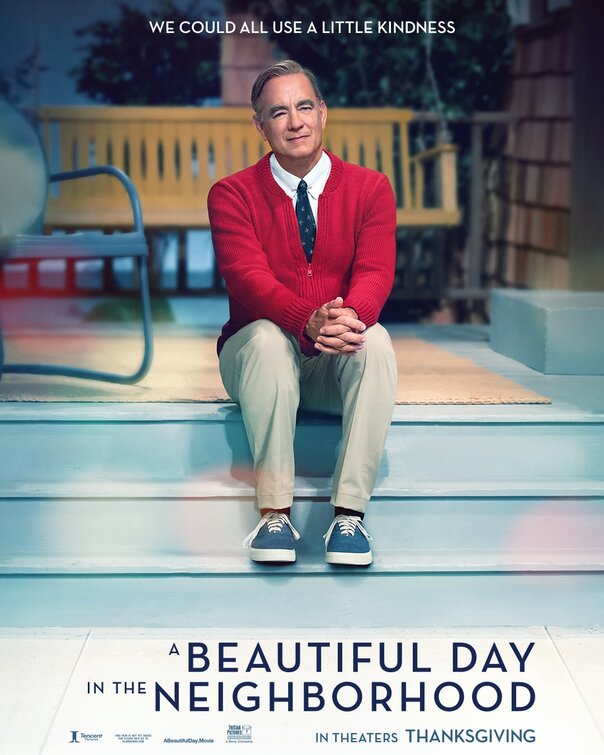
It was just over a year ago that we got a documentary about Mr. Roger’s Neighborhood with the title “Won’t You be My Neighbor“, and it was very satisfying. So that begs the question, why are we getting another film on the subject?  The answer is complex. While this film has the trimmings of a biopic, the subject of the biography is less Fred Rogers than investigative reporter Tom Junod who is called Lloyd Vogel in this film. His fictionalized story is really about the impact of meeting Mister Rogers had on his life. When a movie is “inspired by” real events, there is probably a great deal of difference between the story and reality. I am sure this is the case here, except when it comes to the sincerity of how Fred Rogers moves us.

The film is told in a truly original and interesting style. The writers,  Micah Fitzerman-Blue, Noah Harpster and the director,  Marielle Heller, have chosen to make the film as if it is an extended episode of “Mister Rogers Neighborhood”. The main character is introduced by Mister Rogers on his program as a friend. He then tells the story of Lloyd as one of the direct, simple and profound stories that you could find on the show.  Ultimately it gets embellished with elements of the show including songs, puppets and the neighborhood made of miniature houses and buildings. This is a full blown drama about a man’s life, but it is being told by another man who better understands the issues being faced than the protagonist does.

Tom Hanks embodies Fred Rogers in a pitch perfect rendition of his voice and demeanor. When moments come up that suggest from the magazine writer’s point of view that something is off about Fred Rogers, Tom Hanks calm, grounded and moral persona reclaims the ground and makes us a little embarrassed for even thinking as the writer did for a minute. This is a reflection of the original article that Tom Junod wrote for Esquire “Can You Say…”Hero?“.” We writes in Mister Rogers voice and relates incidents that reveal who Mister Rogers is, in the same soft manner as the subject himself. That this is successfully transferred to a film is a admirable achievement and the work of the director, writers and Tom Hanks is responsible for this.

A number of plot points will seem a little conventional to seasoned movie goers. There is estrangement between father and son. A parallel story concerns the relationship a new father is building with his son. Death inevitably creeps into the narrative as a dramatic tool to pull us in to the world the actors are portraying, but it all works very well. Chris Cooper is an actor I am always glad to see in a movie and he shows up here as a cliche, but finishes as a crescendo. Matthew Rhys plays the writer/son/bio-subject and he is also fine in the film. There are many moments of drama that he has to carry, but there are moments of levity that he manages to make real as well.

I really liked this film. I can’t say that it is one of the best of the year, there is a lot about it that is strange and may be a little too abstract. If you can buy in to the premise, it will take you to some emotional points that are worth experiencing. but without the element of Fred Rogers, they would come across as cliches. I felt better as a human being after seeing it, and I’m not sure anyone needs a better recommendation for seeing it than that.

AMC Best Picture Showcase Day 2

So just a few random thoughts on the Best Picture Selections this year. Last week we watched two films with Lucas Hedges back to back. He was in “Lady Bird” and “Three Billboards”. Timothée Chalamet was in “Lady Bird” and today’s “Call Me By Your Name”.  Nick Searcy was in “Three Billboards” and “The Shape of Water”. Today we had Bradley Whitford in back to back “The Post” and “Get Out”. Finally Michael Stuhlbarg was in “The Shape of Water, “Call Me By Your Name” and “The Post”. These actors have got to have great agents to get into the top pictures of the year not just once, but two and three times.

“Phantom Thread” and “The Post” were the two films I needed to catch up on, and while I admired them both, I don’t see either of them as a likely winner in the big category. “Phantom Thread” lacks anybody likable in the cast of characters, and “The Post” is so traditional that it won this award two years ago when it was called “Spotlight”.

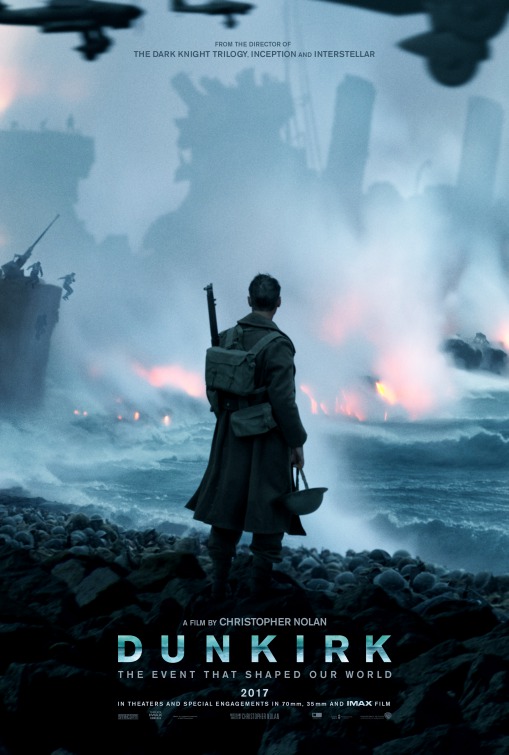
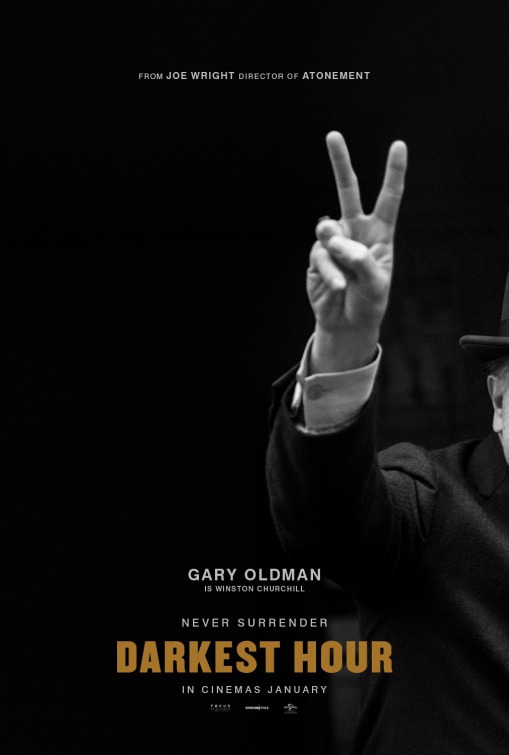
Speaking of actors who appeared back to back in some of the films on the program, we had a historical event do exactly the same thing. “Dunkirk” was followed by “Darkest Hour” and it was almost as if Joe Wright’s film was just another segment of the Christopher Nolan film. It’s Title Card would read Parliament: Two Weeks.

I feel confident in my choice of “Dunkirk” as the best film of last year but I am not at all confident that the Academy will go along with me. 

Dunkirk   Christopher Nolan’s film was the most visually impressive, forward moving, and meaningful film of the lot. Listening to the score and watching how he masterfully integrated three separate time lines into a single narrative with clever overlaps and great timing, I know that this was the best directing job this year. Nothing against Guillermo Del Toro, but this complex story, logistical nightmare and historical memorial is simple better constructed than the odd fish love story. This is a film that tells a real historical story that will last long after the fashion of the fairy tale set in a mythological era in U.S. history, is a charming oddity. 

Some people complain that the characters here are not well developed, that is true. This however is not a character piece but a prism on the events that were taking place during a military disaster that became a turning point in a manner that was most unexpected. 

Darkest Hour  This film was even stronger the second time I saw it. The first viewing I was overpowered by Gary Oldman’s performance. He will surely be the winner in the acting category. I admired the film before but I have come to really respect it on this second encounter. Joe Wright manages to make a tale of political intrigue into a fascinating study of a character and the country who’s character he came to represent for the duration of the war. The one clumsy moment is a scene set in an underground train car. The only reason it is clumsy is that it feels so distinct from everything else, like a deliberate movie moment. That shows that the rest of the movie does exist as something more than the typical fare.  But even that scene works emotionally because it bespeaks of a real sense of what the British people felt at the time. 

Call Me By Your Name  I am being a little facetious when I say this film is a pain in the neck. That’s because in the first half I went to sleep and got a crick that is staining my muscles still. My least favorite of the nominees, this film is slow moving, meandering and confounding. I felt like I was listening to a play frequently, with dialogue written eloquently but sounding artificial. A couple of podcasters that I listen to love this film and especially the sequence with Michael Stuhlbarg as the father of Elio, consoling his son on the “special” friendship he had with Oliver. It ends on s deliberately false note when the Dad tells his son that he doesn’t think that Mom knows about the nature of their friendship. The mom had just picked up a near weeping Elio at the train station and she dropped hints for the previous hour that she knew how special Elio thought Oliver was. When Mr. Perlman says he never had a relationship with anyone like Elio had with Oliver, we can believe him because he so obtusely ignores how insightful his wife is. This will probably win the Screenplay Award, and it shouldn’t, if it takes the big prize I might yell loud enough to ruin my voice for a month.  

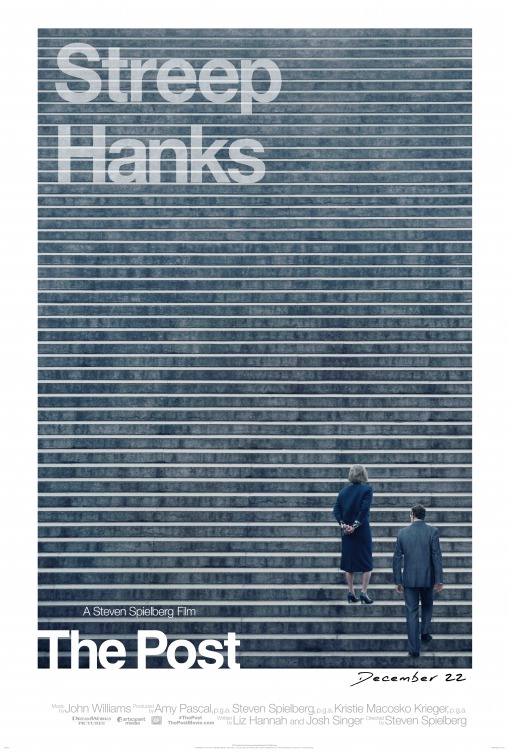
The Post  So this was the one new film we saw on day two. This has the phrase “Oscar Bait” pasted all over it. It features Tom Hanks, Meryl Streep, a ton of high end supporting players and it was directed by Steven Spielberg. The subject matter concerns the fight of the press against preemptive shut down of news publication. It is a first amendment issue that was understandably important, yet at the same time it ignores some pretty egregious behavior. We can always applaud someone after the fact when their actions seem just and there was no blow-back,  but there were issues regarding the acquisition of the Pentagon Papers that probably still need to be discussed.  Spielberg and co-screenwriters Josh Singer and Liz Hannah, manage to make a bureaucratic legal process look and sound like a courtroom drama with some mystery tied in.  Singer in particular is working on familiar ground since he won an Academy Award two years ago for a very similarly structured newspaper story “Spotlight”.

This is supposed to be a resistance film, about the Media vs. the President in a time when everyone wants to be standing up to the current administration. The parallels are not really there to give this much resonance. This is a two hour commercial for the Washington Post and the heavy handed feminist slant in some of the visuals makes it feel too much like a lecture at times. That said, it is well made and the John Williams score is excellent as usual. Because “Bridge of Spies” and “Spotlight” are just a couple of years old however, this feels like it is old territory and not quite as distinctive as it needs to be. 

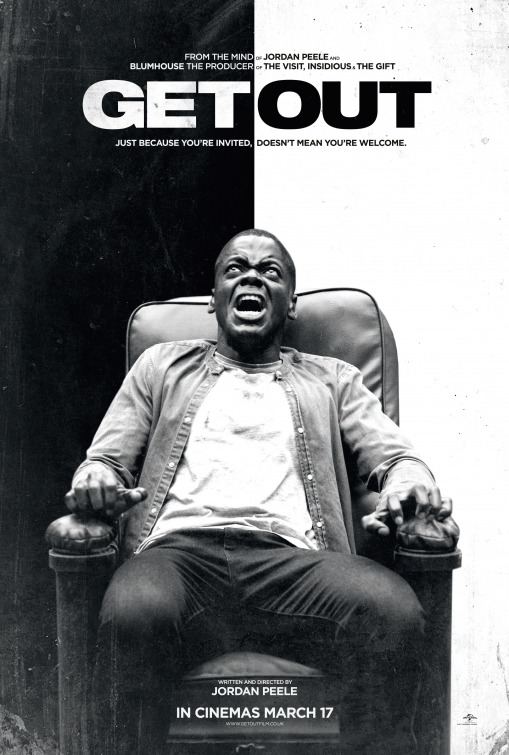
Get Out  This one is the outlier. You rarely get a horror film nominated for Best Picture, but if you do, it is usually more of a big budget film. This Jordan Peele written and directed film seemed to come in under the radar, it made a huge splash, and it is getting some end of the year accolades. The intersectionality of this film is in keeping with all the film buffs who are much more woke than I am. I just enjoyed the twist and the characters in the film. Rod from TSA is a saving grace that adds more straightforward humor to the mix. Instead of a haunted house we get a upscale suburban plantation. The need for subtlety on the race subject is probably eliminated by the DNA of the movie. Being an outsider in an nearly all white environment makes Chris, our lead character played by nominated actor Daniel Kaluuya, mildly uncomfortable but also keenly aware of how different the culture he is visiting is. 

While most people will consider the “Sunken Place” to be the most horrifying image in the film, to me it is the silent auction with bingo cards. We still don’t know what is going on, but the suggestion is truly awful. Seeing it for a second time, I could pay more attention to some of the interesting choices that were made. Grandma and  Grandpa are certainly clever twists, although it seems strange that for the duration of Chris being a guest, the force required to hold those characters would be counter-intuitive to the actual plan. The creepy factor also takes Chris a little too long to respond to. His buddy is right, and he should be listening to him sooner. There is an outside chance this could take the award, the voting system gives weight to the number of ballots a film appears on, and this would be a popular ad to the list but not necessarily high on the list. Should it when I expect to see some “Get Out” Memes that mine the fertile teen speak use of the terminology. 

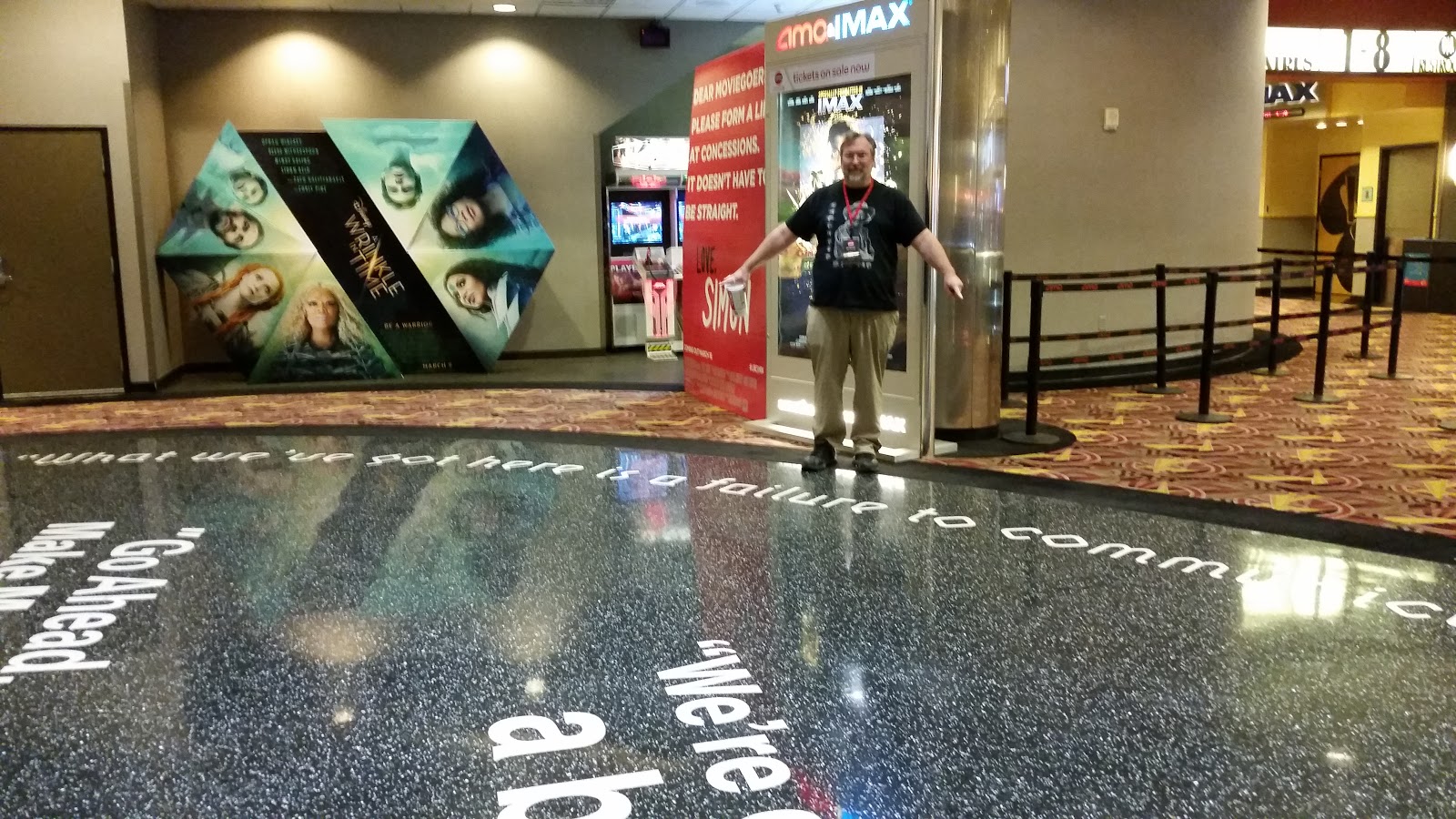
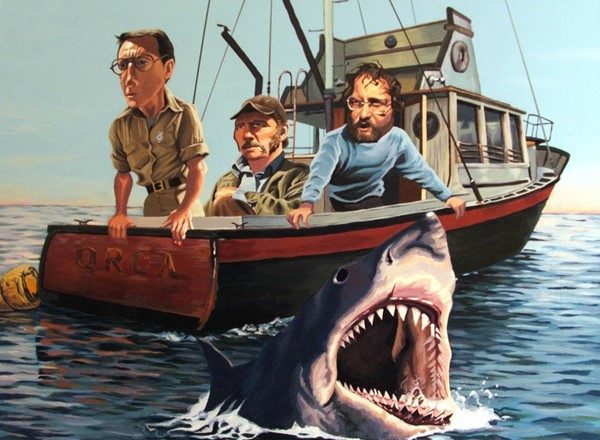
As an aside, let me rant about the misquotes being used to decorate the entry way to the theater. Both “Cool Hand Luke” and “Jaws” are misquoted in the floor below. 

Sully

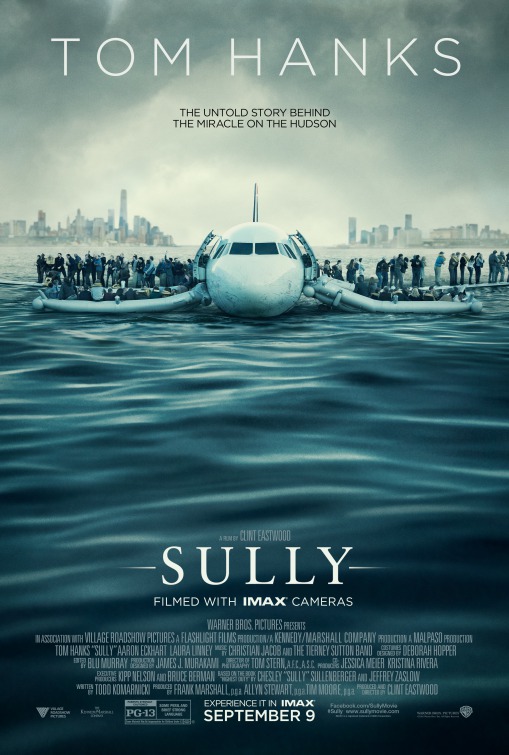
Tom Hank”s character, the real life hero Chesley “Sully” Sullenberger, has a fortune cookie fortune that he looks at in one scene of this film. “Better a delay than a disaster”.  I feel a little bit as if this describes my relationship with the movie, I wanted to see it but put it off for almost a month. After the screening, I felt as if it would have been a disaster if I’d missed this movie. This is a film and a story right up my alley. It is a true life drama, with a humble hero and a group of people who all did whatr they were supposed to do. The outcome is one of the amazing stories of modern aviation.

Having recently listened to a lengthy podcast in which the work of director Clint Eastwood was somewhat criticized, I may have lowered my expectations a bit. I did think “Jersey Boys” was a misfire but “American Sniper” was an effective film about the Iraq war and the toll it took on multiple people. It was dramatically shot and there are some incredibly tense scenes in it. This film is directed in a straightforward manner as is most of Eastwood’s work. The fact that the near disaster at the center of the story remains clear and coherent is mostly a result of choices the director made about how to film it. One criticism that came up was that the side stories that explored some of Sully’s background were confusing in time and story placement, well I did not find that to be the case at all. [That is mostly the screenwriter’s responsibility]. There is a little bit of ambiguity about the process of the NTSB and how long that hearing process took, but that is hardly confusing to the story.

I did think that the script went a bit of a ways to create drama from the investigation but you have to have a little dramatic license to give the film a narrative backbone. The real themes of this film are about self doubt and doing your job. Until Arron Eckhart and Tom Hanks know what the voice recorder and aviation data reveal, there is enough doubt for even a confident man to wonder if something else could have been done. “Sully” and co-pilot Jeff Skiles knew they did the right things but only from the inside. There is plenty of PTSD to go around between them, but except for some nightmares about what might have happened if they had acted differently, we all feel confident as well.

The other theme of this movie was well expressed at the end by Captian Sullenberger when he deferred credit. It was not he alone who was the X factor. Every crew member did their job well. The cabin crew remained calm as they prepared the passengers, the passengers followed directions and helped each other, the ferry captains acted immediately and saved lives by doing so, the water rescue tem from the NYPD was in place and doing their jobs as well. I recommended another Aaron Eckhart film from a few years ago based on the same premise. “Battle L.A.” may not be a great movie, but it was great at showing how when people work together, and do their jobs to the best of their ability, the outcome is more likely than not to be success.

Hanks and Eckhart both are low key and credible as the professionals who made a difference that day on the Hudson and above. They also rock those mustaches that the real heroes appear to favor. Laura Linney as Sully’s wife does not get to do much more than talk on the phone, but it worked pretty well as a dramatic device, especially that first call after the landing. The technical crew who shot the effects and then put together a set to work on in the water are deserving of some respect as well. This was a very realistic depiction of the “forced water landing”.  In the long run, the movie does not have deep messages to impart to us, it just gives us a good condensed version of events that we can marvel at and appreciate, as we look at real people who deserve to be called heroes, even if they don’t see themselves that way.