Marty Supreme (2025)

Timothée Chalamet is an actor who has made a big splash in the last few years, appearing in art house films like “Call Me By Your Name” and blockbusters like “Dune” and “Wonka”. I can’t say he has always been an appealing character on screen because some of his roles have required him to be a bit of a heel, but I can say he plays the biggest jerk I have seen in several years in the new film “Marty Supreme”. He is not an uninteresting character, but no one should ever trust him and don’t expect to have a happy experience if you encounter him in your life. 

I have not seen and of the previous films made by the Safdie Brothers, but I recognize their style from the trailers and the reviews that I have read. Josh Safdie is on his own here, but I have no doubt that what I am seeing is emblematic of their style. It is frenetic, fast paced, and a combination of dread and humor. Believe it or not, this is not a film about drug dealers, jewel thieves or for the most part, other underworld characters. This is a film about ping pong, set in the early 1950s, with a sense of style that many will embrace but some may hold at arms length.

Count me in the later category. I did not dislike the film, but it is not really something for me. The lead character makes endless mistakes that other pay for, and he is indifferent to the consequences for the most part, even when the consequences effect him. Most of the time however he is a narcissist of  limited human emotions. You can admire his single minded pursuit of excellence in his chosen field, but you will probably be embarrassed by his behavior. Much like John McEnroe in 1980s tennis, his skills as an athlete are matched only by his arrogance.

The storytelling consists of personal disaster porn. Every choice Marty Mauser makes, professionally or personally, leads to some crisis that escalates out of hand and requires the next choice to try and address it. Of course, that choice then results in it’s own complications. The film is two and a half hours long, and I don’t think I could count the number of sudden shifts occur in the story. Bathtubs create havoc, gas stations explode, dogs get lost and found, and the people involved are rarely benevolent. Gwyneth Paltrow shows up as a former movie star who gets involved with Marty, and disaster strikes her as well. Marty’s friends lose cars, money, and get physically attacked because of his recklessness. Oh, and there are some great table tennis matches along the way.

Chalamet is excellent in the film, and if you care about awards season, I suspect he may take some of the prises home with him this year. Of course you would not want to share in his characters exploits, because you’d spend all your time trying to escape the consequences of his pig headed arrogance. The final scene tries to redeem the character, but I did not believe it for a minute. Lots of people will love the film, I am glad I saw it, but it is not my vibe.

A Complete Unkown (2024)

Like the previous film, I have yet to have a chance to provide complete thoughts on this film. I liked it quite well, and I will share those thoughts later this week. I am simply trying to keep my 2024 time line complete with this post.

UPDATE

Sorry, it has taken me a month to get back to this. I have been traveling from one coast to the other and doing the podcast in-between, so I have just been busy.

The best thing about the movie is the original music, re-recorded for the film by the lead actor. The songs are classics, and most of them are delivered in the folk style that Dylan first emerged thru. I can’t say how much fidelity was paid to the story surrounding the creation of the songs, but it feels quite realistic and I think people who are interested in this kind of process will enjoy the film quite a bit. The film really does seem to be immersing us in a time and place.

One of the problems I have seen in biopics is that in trying to cover too much territory, they spread the interesting elements too thin. Trying to get to everything means you skimp on what might be more important. This film does not make that mistake.  The director James Mangold did a great job covering Johnny Cash over his lifetime in “Walk the Line” but wisely chose to focus a specific period in Bob Dylan’s career. Dylan arrives in NYC in 1961, with a guitar and a dream to connect with singers he has admired, especially Woody Guthrie and Pete Seeger. The opening scenes of Dylan singing with Seegar are sort of magical in the way it dawns on the established Folk legend, how the young newcomer is fully formed. 

Timothée Chalamet does the heavy lifting by not only acting the part of a reclusive songwriter, but he also performs the music and plays the instruments. This is a fully committed performance and not just casting of someone who matches Dylan’s physical appearance. In the personal relationships with women, Dylan remains an enigma as to his feelings. The women in the story act as muses but can’t get him to emotionally engage like a true human being. Elle Fanning plays Dylan’s main girlfriend named Sylvie Russo for the film. Her attraction to and frustration with Dylan are completely understandable based on the screenplay. Monica Barbaro portrays Folk singer Joan Baez, known as an activist in social causes, and Dylan’s on again off again affair with her is a catalyst for some of the fireworks that accompany the story. She is also excellent.

If you are not familiar with the pop scene of the early 60s, this will be a revelation to you. That folk music was thought of as more pure and honest than Rock and Roll will be new to audiences who have thought of the rock era as the defining part of mid-century culture. Pete Seeger, played wonderfully by Edward Norton, sees the rock elements creeping into Dylan’s music as an apostasy. Those who don’t know the story of the 1965 Newport Folk Festival and the upheaval that Dylan presented will get a good look at the kinds of infighting that purists can engage in. It also works as a metaphor for the political realm with Dylan surprisingly being the realist and Baez and Seeger representing the true believers and their prejudices. 

“A Complete Unknown” was always destined for awards recognition, given the track record of the cast and director. I found it a satisfying film that I will probably revisit soon. It just missed my end of year top ten favorites, although in terms of quality, it certainly deserves to be in the mix.

Dune Part 2 (2024)

Completing one of the great film projects of my lifetime, Director Denis Villeneuve delivers a terrific part two to the “Dune” stories he began three years ago. Actually it was four years ago, we got delayed a year by Covid, and this film was delayed by six months due to the actor’s strike. Maybe those were not bad omens but rather good luck charms. My original review of the first film was positive, but muted by some less than favorable comparison to the David Lynch version. As a film, “Dune Part One” is more successful, but less vibrant than I had hoped. 

The biggest reservation I had about the first film, was the surface level storytelling of the Harkonnen adversaries. That flaw has been redeemed substantially by the story choices made with this film. To begin, Baron Harkonnen, played by Stellan Skarsgård, is more than a floating figure in the background. We finally begin to see the long game he is playing. The murderous political life of Geidi Prime is revealed, and when he indulgences in his vices, we get a significantly greater reason to have distaste for this fearsome antagonist. The complexity of the Harkonnen plot is extended when Feyd-Rautha’s character appears on screen. Feyd is the figure actually being groomed to take over Arrakis and maybe a lot more. That he is the Baron’s nephew does not eliminate the subterfuge that takes place in the family, and is an additional plot that the Baron ids cooking. I might be a little critical of how vociferously he is cheered by the crowd, especially when we see his murderous behavior towards his servants, but the culture seems to be a martial one , so maybe the actions are viewed in the same way the Spartans of ancient Greece might view their own behavior toward the weak. 

Back on Dune, Paul and Jessica are finding their way into the Freman culture, which is frankly also brutal, but without being cruel. The Fremen are more fatalistic and many of them are fervent believers in the narrative that has been set out over thousands of years by the Bene Gesserit sisterhood. Fanaticism is very dangerous when mixed with messianic expectations. The fact that Paul’s genetic background is leading to fulfillment of both Freman Prophecies and Bene Gesserit genetic manipulation, is probably an unexpected consequence of Jessica’s disobedience in providing a son to the late Duke Leto.  I liked the slow way that the prophetic arrival of a messiah is being introduced to the native population of Dune. It is much clearer in this version of the story that the Bene Gesserit have nurtured this mythology with the intention of using it. One of the differences in the film version and the original text, is the way that Chani is depicted in the context of this prophesy. She is something of a heretic by rejecting the story, and she turns the religious drive behind it, into a suspect of political proportions. It is her contention that adhering to the religious fundamentalism is what has held the Fremen down. The awkwardness of that attitude however is revealed as it is the prophecy that finally liberates the forces of the Freman as an army capable of being lead by the outsider Muad’Dib. It is also a little strange that she can accept Paul’s prescience, but reject the description of that very thing in the stories of her people. 

The slow take on the prophesy is not limited to Jessica and the Freman. Paul does his best to resist the call of becoming the Kwisatz Haderach. He has visions of the devastation his ascension to power will result in. Having followed his story, we want to see justice for House Atreides and revenge on the Emperor and especially the Harkonnen. It is clear that the Harkonnen are evil, and that at the very least the Emperor is a Machiavellian ruler with no moral compass except power. The problem is that it looks like Paul will fall into the same patterns, and do so for the sake of Fremen Paradise. In the end, Paul is not the hero of the story, he is an instrument of chaos, the likes of which will change the universe, the question is, will it be for the better? The sequence where Paul takes the Water of Life, is dramatically well played, but it is the moment when he confronts the Fremen Cavalcade that his threat becomes realized. It is both awe inspiring and frightening, a fact that he recognizes with his own words in the script. Screenwriters Villeneuve and Jon Spaihts have adapted Frank Herbert’s novel in a more expansive way than was done with the David Lynch version. Having twice as much time, they still trimmed elements that are not essential for this story. The timeline in this film is different, and the easiest illustration of that is Jessica’s pregnancy and the fact that Alia only appears in a flash forward for a brief few seconds. 

When it comes to the technical aspects of the film, I found nothing deficient. The sequence when Paul conquers the Sandworm is one of the most impressive scenes in a science fiction movie. The sense of realism is overwhelming, with the sound design of the moment a big part of that.  The scope of the visual, combined with the enveloping sound, lets the audience experience the ride, almost as a participant rather than just an observer. The power of the worms also comes up in the conclusive battle as they crash though the shield walls and mountains of Arrakeen. The story, for those of you unfamiliar, will not be spoiled here, but suffice it to say, we get a clear sense of what desert power is.  

There are still many production touches that I prefer in David Lynch’s vision of the story, but the choices that Director Villeneuve makes are completely appropriate for his. I think the desert environments, the tents and Sietches of the Fremen, are vastly superior to what we have had before. The black and white palate of Giedi Prime is startling, but when we enter the halls of the palace, the slight color pops make it all much more intriguing, and there is a sense that the culture reflects the supposed black sun of their system. 

It is easy for me to predict that this will be one of the top films of the year, since it is unlikely that anything comparable is likely to be released any time soon. 

Wonka

To say I was dubious about the new Wonka film starring Timothée Chalamet would be an understatement. The original film with Gene Wilder is of course a favorite of my childhood, and even the Tim Burton version with Johnny Depp is well liked in this household. I’ve never been a huge fan of 

Chalamet he seems to be a little wan and a sort of the Hipster version of what’s hot right now. This has led me to be skeptical of any of his films.

Chalamet was however, solid in the Dune film and I look forward to seeing the second part next year. So it was with uncertainty that I approached this movie. I tried to avoid reading reviews before I see a film for myself, but sometimes the general tone of a review can come across in a single sentence on a Facebook post or in an Instagram message. The ones that I did see in regard to this film we’re a lot more promising. Most of the comments seem to suggest that the film was exactly what it was supposed to be a light frothy holiday entertainment. To my great pleasure that is an accurate assessment. Wonka was a complete delight and exactly the kind of film that a family can enjoy in the holiday season. It may not be serious, or a great piece of art, but it was a great entertainment.

Those of you who are not aware of it, let me point out that Wonka, is also a musical. The idea that there would be singing and dancing through the film raise some suspicion, but our lead is talented enough, and the songs for the most part are tuneful full of play and fit the story. I was especially impressed by the opening song and the choreography that went in putting together the dances that accompany it. As it is, the director of this film, Paul King, directed two of my favorite films from the past several years. He is responsible for putting “Paddington” and its sequel “Paddington 2” up on the big screen and both of them have a wondrous, friendly, attitude which made them completely delightful. Although there are hateful villains, and obstacles to be overcome, the optimism and positive attitudes of the lead characters of all three films make each of these movies so much easier to enjoy than other films in the family market.

Happily this film is not merely a repeat of the story that we have come to know. It is in fact it kind of prequel story so that we get a sense of what Willy Wonka was like as he started his chocolate factory. The idea presented here is that Wonka has always loved chocolate as a result of his mother’s care and recipes. He has become a world Traveler by working on cargo ships traveling the seven seas and finding amazing ingredients to add to his chocolate concoctions. At the start of the story he is prepared to join the chocolate producing community in the heart of the big city and is trying to connect with his potential customers. This stacks him up against three rivals who have in essence, created a cartel to reduce competition. The three owners of the of the competing chocolate companies are clearly the villains of the piece, they have no connection to their customers and see them as somebody available to fleece rather than people that they want to please. This means that Wonka’s approach will be completely different and a threat to their status.

One of the complications that Willy Wonka faces is that he has become indentured inadvertently to a cruel mistress and a thoughtless Brute. He has in essence been Shanghaied into working in a laundry, under slave-like conditions. So his approach to trying to begin a chocolate Empire also requires him to overcome these circumstances. The woman who has him in her thrall is played by Olivia Colman and she is impressively vile and funny. Wonka finds himself in the company of others who have become similarly trapped, and they form an alliance to both escape their circumstances and create a candy Utopia.

There are several nods to the original Willy Wonka and the Chocolate Factory, some of which are very noticeable but a few of which are very subtle. Among the most noticeable is the design of the chocolate store which strongly resembles the main room in the original film’s Chocolate Factory. Also Willy is dressed in the same kind of velvet purple set of tails that adorned Gene Wilder back in 1971. Here he also walks with a cane that is in affectation rather than a necessity. Much like the magician that he is suggested to be, the cane becomes a prop that he uses to Dazzle his customers and to establish an identity. I did notice that the start of the film does have a similar kind of setting that Paddington did. Alone in a strange city our protagonist is taken in by strangers. Of course in the Paddington stories The Strangers turn out to be a benevolent family, but here in Wonka, it is a much darker turn.

Throughout the film there are many clever characters who provide humor and something for Willie to struggle against. Much like the original film Slugworth, is presented as a competitor and a threat. In this film it is much more direct in the way the character of Slugworth is presented. There is also a police official who is bribed by the cartel to run Wonka off. He is bribed by chocolate, because he has a sweet tooth that can never be satisfied. Hysterically his character gains weight throughout the film to the point where he actually has difficulty moving, standing up, or getting out of a car. It may be a little indelicate to present a character as having a weakness that makes him fat, but it does make us laugh and the actor, Keegan-Michael Key, plays it hysterically.

Production design is another big selling point of the film. Some of the candies are whimsical, the boarding house/laundry, is grim, and the Chocolate Factory at the end we’ll make everybody who is a fan of the original film happy. Also the musical score borrows heavily from the original films songs and we get a reprise of Gene Wilder’s showpiece song from 1971, presented with genuine affection and respect by Chalamet.  I have no hesitation and suggesting this movie to any of my readers. You will be very happy walking out to the theater with a smile on your face, even if it is just from the cantankerous Hugh Grant playing an Oompa Loompa who has attitude and his own individuality. I think a little Hugh Grant adds in measurably to the Delight that this film creates. He is not overused, but the CGI transformation of him into the character is amusing, and contrasted with his lines and behaviors should make you laugh.

I was not expecting it, but I’m happy to say that Wonka will be going on my list of favorite films from 2023. And in the long run Timothy Charlemagne Maybe making even greater inroads in my opinion toward him. However director Paul King is in my opinion a real treasure, and I hope that he and his co-screenwriters continue to come up with enjoyable fanciful ways to entertain the audience, I appreciate it.

AMC Best Picture Showcase Day 2

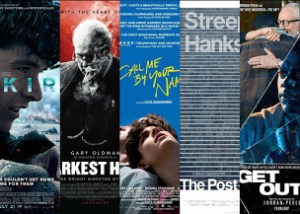
So just a few random thoughts on the Best Picture Selections this year. Last week we watched two films with Lucas Hedges back to back. He was in “Lady Bird” and “Three Billboards”. Timothée Chalamet was in “Lady Bird” and today’s “Call Me By Your Name”.  Nick Searcy was in “Three Billboards” and “The Shape of Water”. Today we had Bradley Whitford in back to back “The Post” and “Get Out”. Finally Michael Stuhlbarg was in “The Shape of Water, “Call Me By Your Name” and “The Post”. These actors have got to have great agents to get into the top pictures of the year not just once, but two and three times.

“Phantom Thread” and “The Post” were the two films I needed to catch up on, and while I admired them both, I don’t see either of them as a likely winner in the big category. “Phantom Thread” lacks anybody likable in the cast of characters, and “The Post” is so traditional that it won this award two years ago when it was called “Spotlight”.

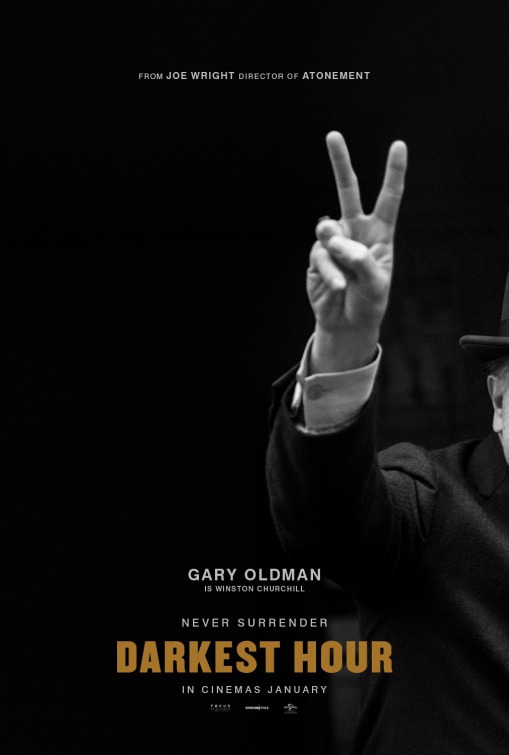
Speaking of actors who appeared back to back in some of the films on the program, we had a historical event do exactly the same thing. “Dunkirk” was followed by “Darkest Hour” and it was almost as if Joe Wright’s film was just another segment of the Christopher Nolan film. It’s Title Card would read Parliament: Two Weeks.

I feel confident in my choice of “Dunkirk” as the best film of last year but I am not at all confident that the Academy will go along with me. 

Dunkirk   Christopher Nolan’s film was the most visually impressive, forward moving, and meaningful film of the lot. Listening to the score and watching how he masterfully integrated three separate time lines into a single narrative with clever overlaps and great timing, I know that this was the best directing job this year. Nothing against Guillermo Del Toro, but this complex story, logistical nightmare and historical memorial is simple better constructed than the odd fish love story. This is a film that tells a real historical story that will last long after the fashion of the fairy tale set in a mythological era in U.S. history, is a charming oddity. 

Some people complain that the characters here are not well developed, that is true. This however is not a character piece but a prism on the events that were taking place during a military disaster that became a turning point in a manner that was most unexpected. 

Darkest Hour  This film was even stronger the second time I saw it. The first viewing I was overpowered by Gary Oldman’s performance. He will surely be the winner in the acting category. I admired the film before but I have come to really respect it on this second encounter. Joe Wright manages to make a tale of political intrigue into a fascinating study of a character and the country who’s character he came to represent for the duration of the war. The one clumsy moment is a scene set in an underground train car. The only reason it is clumsy is that it feels so distinct from everything else, like a deliberate movie moment. That shows that the rest of the movie does exist as something more than the typical fare.  But even that scene works emotionally because it bespeaks of a real sense of what the British people felt at the time. 

Call Me By Your Name  I am being a little facetious when I say this film is a pain in the neck. That’s because in the first half I went to sleep and got a crick that is staining my muscles still. My least favorite of the nominees, this film is slow moving, meandering and confounding. I felt like I was listening to a play frequently, with dialogue written eloquently but sounding artificial. A couple of podcasters that I listen to love this film and especially the sequence with Michael Stuhlbarg as the father of Elio, consoling his son on the “special” friendship he had with Oliver. It ends on s deliberately false note when the Dad tells his son that he doesn’t think that Mom knows about the nature of their friendship. The mom had just picked up a near weeping Elio at the train station and she dropped hints for the previous hour that she knew how special Elio thought Oliver was. When Mr. Perlman says he never had a relationship with anyone like Elio had with Oliver, we can believe him because he so obtusely ignores how insightful his wife is. This will probably win the Screenplay Award, and it shouldn’t, if it takes the big prize I might yell loud enough to ruin my voice for a month.  
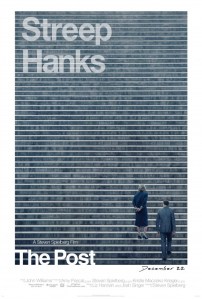
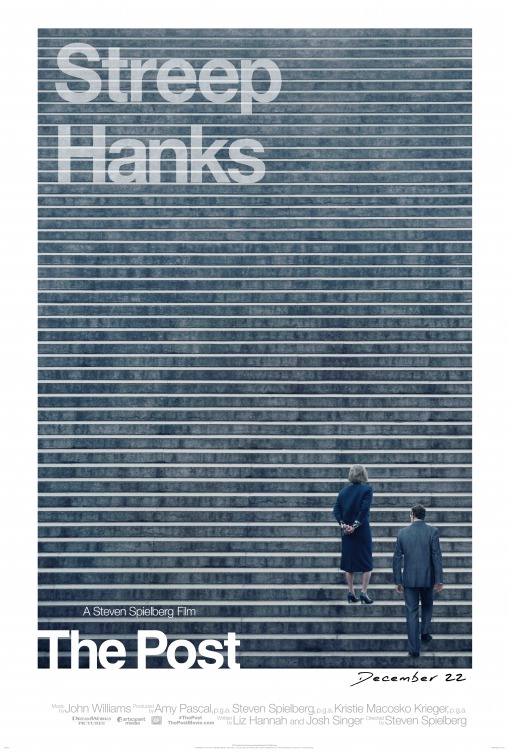
The Post  So this was the one new film we saw on day two. This has the phrase “Oscar Bait” pasted all over it. It features Tom Hanks, Meryl Streep, a ton of high end supporting players and it was directed by Steven Spielberg. The subject matter concerns the fight of the press against preemptive shut down of news publication. It is a first amendment issue that was understandably important, yet at the same time it ignores some pretty egregious behavior. We can always applaud someone after the fact when their actions seem just and there was no blow-back,  but there were issues regarding the acquisition of the Pentagon Papers that probably still need to be discussed.  Spielberg and co-screenwriters Josh Singer and Liz Hannah, manage to make a bureaucratic legal process look and sound like a courtroom drama with some mystery tied in.  Singer in particular is working on familiar ground since he won an Academy Award two years ago for a very similarly structured newspaper story “Spotlight”.

This is supposed to be a resistance film, about the Media vs. the President in a time when everyone wants to be standing up to the current administration. The parallels are not really there to give this much resonance. This is a two hour commercial for the Washington Post and the heavy handed feminist slant in some of the visuals makes it feel too much like a lecture at times. That said, it is well made and the John Williams score is excellent as usual. Because “Bridge of Spies” and “Spotlight” are just a couple of years old however, this feels like it is old territory and not quite as distinctive as it needs to be. 
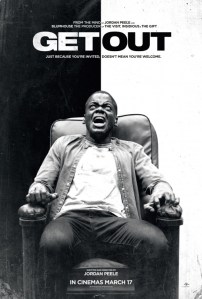
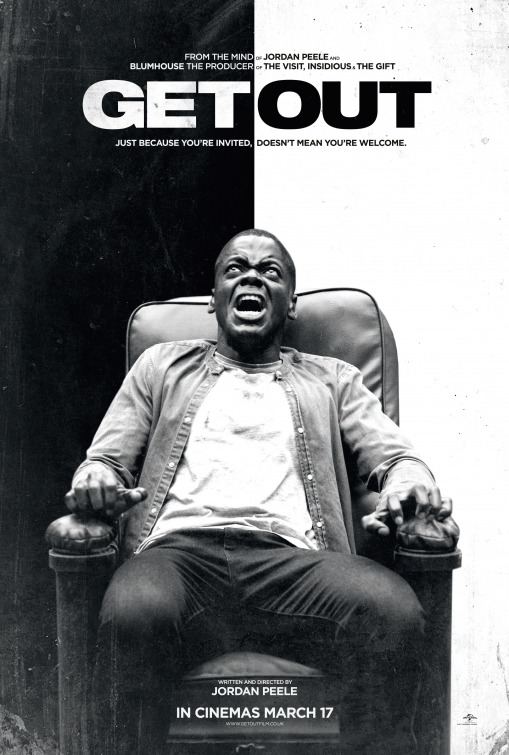
Get Out  This one is the outlier. You rarely get a horror film nominated for Best Picture, but if you do, it is usually more of a big budget film. This Jordan Peele written and directed film seemed to come in under the radar, it made a huge splash, and it is getting some end of the year accolades. The intersectionality of this film is in keeping with all the film buffs who are much more woke than I am. I just enjoyed the twist and the characters in the film. Rod from TSA is a saving grace that adds more straightforward humor to the mix. Instead of a haunted house we get a upscale suburban plantation. The need for subtlety on the race subject is probably eliminated by the DNA of the movie. Being an outsider in an nearly all white environment makes Chris, our lead character played by nominated actor Daniel Kaluuya, mildly uncomfortable but also keenly aware of how different the culture he is visiting is. 

While most people will consider the “Sunken Place” to be the most horrifying image in the film, to me it is the silent auction with bingo cards. We still don’t know what is going on, but the suggestion is truly awful. Seeing it for a second time, I could pay more attention to some of the interesting choices that were made. Grandma and  Grandpa are certainly clever twists, although it seems strange that for the duration of Chris being a guest, the force required to hold those characters would be counter-intuitive to the actual plan. The creepy factor also takes Chris a little too long to respond to. His buddy is right, and he should be listening to him sooner. There is an outside chance this could take the award, the voting system gives weight to the number of ballots a film appears on, and this would be a popular ad to the list but not necessarily high on the list. Should it when I expect to see some “Get Out” Memes that mine the fertile teen speak use of the terminology. 

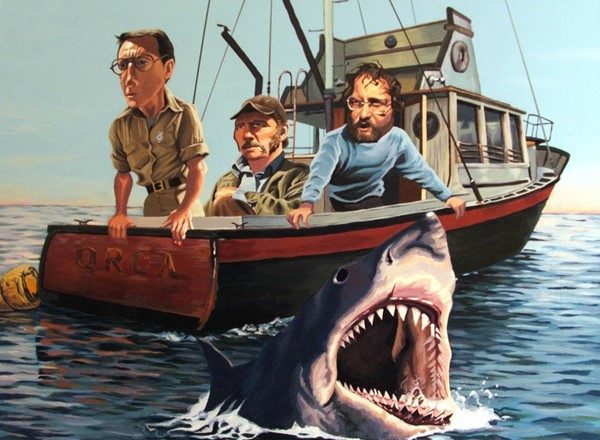
As an aside, let me rant about the misquotes being used to decorate the entry way to the theater. Both “Cool Hand Luke” and “Jaws” are misquoted in the floor below. 

Call Me By Your Name

This film is getting a lot of praise for the performances of the two leads, Armie Hammer and Timothée Chalamet. It is a love story between an older man and a 17 year old boy, but Kevin Spacey is nowhere to be found. The pace of this film is leisurely to say the least. The story is set in Northern Italy during the summertime so there is plenty of lovely scenery to surround the two attractive leads as they engage in a protracted dance of “love that dare not speak it’s name”.  The nature of the romance is about the only reason I can think that the movie is set in 1983, except for the ubiquitous presence of the Psychedelic Furs.

The story meanders through a whole lot of plot points that end up going no where. Elio, the boy, gets nosebleeds. Don’t worry, there is no terminal illness coming, it is simply an incident that has no bearing on the characters and their relationships, but it does allow the movie to add two minutes to it’s running time. There is also a seemingly competing romantic interest for each of the young men. One is more developed than the other, but again, neither has much to do with the central relationship.

Michael Stuhlbarg and Amira Casar are Elio’s parents. They are erudite, sensitive and well educated. They are the kind of family that sits together in the afternoon, and has Mom read out loud 16th Century literature, which she is translating from German for them, and which also happens to pose the exact philosophical question facing Elio at this moment. Should the Knight reveal his affection for a forbidden love?  This screenplay is too precious for it’s own good. Near the end of the film, Professor Perlman has a long talk with his son, which reflects his deep understanding of romance, human experience and poetry. The words sound like they were composed with great care but they are delivered as if they are random thoughts that a warm hearted parent can trickle off the tongue at a moments notice.

In addition to the slow pace of the movie, and the erotic theme, there are two or three other clues to show you that this is the indie darling of the moment. There are at least seven company credits at the start of the movie, which are of course referenced then in the title. Three sections have the obligatory cruise through the countryside accompanied by an indie alternative pop tune that is slow and meditative. If you thought that Rooney Mara eating pie in “A Ghost Story” was the weirdest food moment you would get in films this year, well be prepared to be surprised by Chalamet and his peach.

The actors are fine. Armie Hammer is appropriately casually arrogant in the way a young American must be. He flexes and poses in all the right ways to get the girls in the story hot, and of course it has the same effect on the lead. Elio is an artist, musician and intellectual with a brooding demeanor that suddenly warms up in a much too unclear manner. Staring out the window and  saying nothing is visual but it does not reveal the inner needs of the young man. Some of the events that take place are more useful at doing so, but they are often randomly distributed and the movie never seems to develop and dramatic urgency until the last ten minutes. It was a interesting story, that was told in a loose manner. A few good performances can’t overcome the issues with the screenplay however.