We lost Val Kilmer this last year, and that is certainly a tragedy. He is best remembered by most as Iceman from the Top Gun films, and he was Doc Holliday in the best performance of his career in Tombstone. It is unfortunate that his role in “Kiss Kiss Bang Bang” is sometimes overlooked . Gay Perry, the private detective, is one of the great sarcastic narrators in film noir. When you add Robert Downey Jr and his sardonic delivery to the narration, you have what should qualify as a classic.
Shane Black is created two of the best Neo noir films of the century. “Kiss Kiss Bang Bang” along with “The Nice Guys”, is the perfect mix of mystery, thriller, and comedy. There’s a seemingly convoluted plot that is the basis of the mystery in this film . If you get to the end of the movie and you are still confused, don’t worry about it. The real joy in the film is just watching the characters be smart asses in the face of danger and their own stupidity.
The dialogue for this movie is pinnacle Shane Black. He should probably only write for action movies, and film noir. Although his version of the Predator does undermine his action credentials a little bit. Still,l this movie gives him enough excess status that he can burn a little bit of it on some failed outings. Downey Jr plays Harry Lockhart, a loser and small-time crook who somehow gets caught up in the film business and is being mentored on how to be a private eye by Perry Von Schrieke, Kilmer’s character. When real murders start to happen, Harry insists on trying to solve them and tries to muscle Gay Perry into helping him. The by play between the two of them consists of some of the wittiest back and forth you will see on the screen since the days of the screwball comedies of Preston Sturgis.
Well not a parody in the pure sense of the word, “Kiss Kiss Bang Bang” certainly plays on the tropes of the traditional film noir. A detached detective, a femme fatale, and enough tough guy suspects to fill an arena for a fight to the death. We frequently get those fights as well. The deadpan delivery of the two stars, along with the outrageous plot points and coincidences, keep this film intriguing and lively.
One of the best illustrations of the biting and sarcastic dialogue comes when Perry in the fit of frustration asks Harry if he knows what he’ll find when he looks up the word idiot in the dictionary. Harry gives a smart-ass answer which would have been the end of it in the lesser film, but Gay Perry puts a button on the joke and dialogue rises to a new level.
Michelle Monaghan is also quite good in the film as the not quite good girl that Harry has always been in love with. She is both funny and sexy simultaneously. She is also pretty resilient in spite of her flighty character traits. As usual it’s not too hard to figure out the mystery, when a pretty substantial character actor is introduced early in the film, and then remains on the periphery during the exposition. Let’s just say that you will know who the bad guy is the minute he appears on screen. Again that isn’t really important, since the plot is mainly designed to put Harry and Perry in awkward situations and allow them to quip their way out.
It’s a little hard to believe that this film is 20 years old, and they’re only a couple of pieces of technology that give that away. Otherwise this movie remains as fresh as it was in 2005, and although I don’t think it quite qualifies as a Christmas film, it does its best to try.
Most of the entries coming up will be brief, I am still trying to catch up on posts for all the theatrical screenings in the last couple of weeks. I cannot however, skimp on my opinions about this particular film. “Zodiac” has been one of our family favorites since we saw it in it’s original theatrical release. Over the years, it has become a default movie for us. Whenever we have trouble deciding what we should watch , someone inevitably suggests “Zodiac” as an alternative and nine times out of ten, we are watching it again. This screening at the Paramount Theater was the first time I have seen it in a theater since 2007, and it is the first time since I started blogging, that it gets included on this project.
I was eleven years old when the Zodiac killings started drawing press attention across the state of California. So I was old enough to be aware of the story, but still young enough that it did not obsess me the way that it did the characters portrayed in the story. Robert Graysmith , as portrayed by Jake Gyllenhaal, is a cartoonist for a San Francisco newspaper, one that received messages from the killer. His tangential connection lead to an intense desire to know who the killer was, and he wrote the book this movie is based on. Director David Fincher, portrays the writer as an innocent bystander, watching the horror play out around him. Gyllenhaal looks like a baby-faced kid among the police and newspaper professionals that surround the case. His sincerity is achingly displayed on his face as he asks questions of his colleague Paul Avery, who is covering the Zodiac for the paper. Avery is played by a pre-Iron Man Robert Downey Jr. Avery is also presented as an obsessive, but his pursuit is more professional and it consumes him in a different way than Graysmith.
The third leg of the tripod that the story of the investigation rests on is Dave Toschi, a police inspector in charge of the S.F. part of the investigation. Mark Ruffalo plays Toschi as an overwhelmed professional, frustrated by jurisdictional impediments and inconsistent evidence. The two newspaper guys supplement and interfere with his task, but ultimately, it is Toschi who gets to chillingly interrogate a suspect that seems to fit the information that they have. All three of these men get moments of horror as they confront individuals or places that may be a key to solving the crimes. Downey Jr. is playing a character who descends into alcohol and drug use as his paranoia and professional life collide. There is an honesty about those destructive forces that may be a reflection of his real life struggles in the years that preceded this film. Ruffalo seems to be calmly frustrated reacting to both the killer and his amateur pair of Zodiac hunters.
Everyone in the movie is top notch in their performances, but I will single out two of the supporting players to show how well the movie is put together. Toschi has a partner, Bill Armstrong, played by Antony Edwards. Armstrong is a dedicated professional but he remains more impartial than Toschi. He is analytical but not obsessive. Edwards exudes competence with an aura of detachment. He wants to solve the case as much as his partner, but he doesn’t let the frustrations of the case overwhelm him. Edwards is the cool straight man to Ruffalo’s, only slightly warmer counterpart. They make a great team.
The second outstanding secondary performance is by John Carrol Lynch, who plays the eventual main suspect, Arthur Leigh Allen. We only see Allen in the context of the investigations. There are no scenes where he is depicted as the killer engaged in the crimes. We learn about his character in interviews with his former friends and family. When Toschi, Armstrong and two other law enforcement personnel question him at work in the break room of the facility he works at, all sorts of alarms are going off in our heads as the cops listen with gapped mouths to the explanations and information that Allen shares. Lynch is calmly aloof as he spills suspicious conduct and details to the investigators. His face never reveals a fear that he is trapped, or that he is on alert in the face of the questions he is getting. His quiet comment “I am not the Zodiac. And if I was, I certainly wouldn’t tell you.” is as chilling as some of the murders that we see depicted in the film.
The verisimilitude of the film is found in a thousand places in the movie. The location shots are all consistent with the era. There is a sequence with Melvin Belli, a famous attorney who was a celebrity because of the lawsuits and clients he was involved with His depiction reflects the commercial television practices of the time. Toschi is shown attending a special screening of “Dirty Harry” which is a film that has a character inspired by the real life criminal he is pursuing. One of the most haunting and realistic uses of music of the time occurs in the attack on the couple in a car at the start of the film. Donovan’s “Hurdy Gurdy” man plays out over the scene, and you can almost smell the aura of the 1960 descending on the moment.
I would not classify this as a horror film, just as I would not say “The Silence of the Lambs” is a horror film. There are certainly frightening moments but the key is realistic suspense. These are thrillers with horror elements. The creepiest scene takes place in a basement, and there is no blood, weapon or violence shown, but the hair on the back of your neck will certainly stand up at the moment. Charles Fleisher, who is best known as the voice of “Roger Rabbit”, provides an additional supporting character to make this movie the masterpiece that it is.
“Zodiac” was not a huge success when it was first released, but there has been a lot of reassessment in the last two decades and I think you will find that this movie will hold your attention, frighten you and haunt you for a long time. I am happy to have had a chance to see it again in it’s natural habitat and I encourage everyone to spend some time with this excellent film.
When a Christopher Nolan film opens, you can count on a fan base to show up, regardless of the subject matter. Nolan has established himself as the preeminent film director of the last fifteen years. Ever since “The Dark Knight”, film fans have looked forward to a film with his name attached, regardless of the acting talent involved. His technical excellence, commitment to film and theatrical presentation and his intricately plotted films have given him a reputation deserving of respect. That said, there is such a thing as overhyping a film, and that is exactly the defect that I had with this movie.
“OPPENHEIMER. The best, most important film of this century. If you see one film in cinemas this year it should be Oppenheimer. I’m not a Nolan groupie but this one blows the doors off the hinges,” wrote Paul Schrader. This sort of statement will raise expectations beyond reason, and should be a flag that the writer has an agenda in his praise. My guess is that the subject of the first Atomic Bomb and the impact that achievement had on subsequent weapons development, is what generates this type of enthusiasm. Look, no advocates a nuclear war. Everyone recognizes the dangers to the planet should such an event occur. This has not been a secret for the last 78 years. So a movie that warns us of those dangers, is not groundbreaking, and how important it is depends a great deal on what issues matter to you personally. Writer/Director Paul Schrader has tipped his hand at what he sees as critical, I don’t know that the film lives up to that standard.
None of the reservations I have expressed so far are intended to suggest the movie is unworthy, quite the contrary, it is an excellent historical biography about a misunderstood giant of science from the last century. You should certainly go and see it, just tame your ambitions for the film to a practical level and focus on the film making and story telling. The people who are writing about how gut punched they were by this movie, must not have seen a Cold War Thriller in the last fifty years. “Nuclear War=Bad” , got it.
Nolan’s films are famous for the use of time manipulation to tell the story. In this film, there is the smallest amount of that approach in any of his films since “Insomnia”. There are black and white segments that distinguish timelines in the story from the vivid color sequences, but it is more a technique for indicating flashbacks and flash forwards than it is for advancing the plot. The plot of the movie is basically the rise and fall of Robert Oppenheimer. This is surely a valid project because Oppenheimer was indeed a critical figure in science and the key figure of the Manhattan Project, which developed the first atomic bomb. His complex life lead to his successes and ultimate embarrassment in being denied an extension of his security clearance, in spite of his service in creating the bomb.
The first third of the film is a long recap of his academic and personal quagmires. Many of the incidents are relevant to later criticism of him, but as a film subject, they feel like they are slowing our progress to the subject of the Manhattan Project itself. As a biography, these segments are acceptable, but the film is sold in part as a thriller concerning the development of the weapon, and that part of the story takes a long time to arrive on screen. The time at Los Alamos is the most effective act in the film. This is where Nolan’s expertise with visuals seems key to the movies success. Seeing the film in the large screen IMAX format with the XD enhancements, made the audience feel like they were there with the other observers at Trinity. The sound design is outstanding and the visual largely eschew CGI in favor of more practical effects.
Other than the weapon itself, the two hearings that bracket the story, provide the fireworks for the plot. Lewis Strauss, from the Atomic Energy Commission, becomes an antagonist to Oppenheimer, and his plotting to deny the security clearance produces blowback several years later in his own hearings when nominated to be in Eisenhower’s Cabinet. It is the crossing of these two men’s paths that sustains the film since we largely are familiar with the bombs results. The drama surrounding Oppenheimer takes place in the early fifties and the Strauss confirmation hearings were in the late part of the decade.
Cillian Murphy is Oppenheimer personified, with his thin and tall build he is a physical match for the scientist. The makeup team does a terrific job helping him play a character that moves across thirty years of time. His youthful gaunt looks in the early years are echoed by a more skeletal visage in his later life. Murphy has a way of speaking that sounds authoritative, cocky, and inquisitive. The one time that it is suggested that Oppenheimer was showing off was when he demeans Strauss’s reservations about sharing isotopes with a friendly country. Otherwise, Murphy plays him as respectful of other physicists and intellectuals, although in private he could be dismissive. The personal moments are the least clear in the film. He has a passionate affair with Jean Tatlock, played by Florence Pugh, but other than their physical connection, it was had to see how these two triggered one another. Oppenheimer’s wife is played by Emily Blunt, and she is seen as a fragile woman with deep problems, but one who is fiercely committed to her husband and his legacy. Her best scenes are in the hearings where she listens to derogatory information about her husband and she looks like she wants to stab the people testifying, without having to move.
The cast is packed, and I won’t take time to salute everyone who probably deserves it, but there are two other performances that stand out. Matt Damon, in a second film this year (Air being the first) is terrific as Leslie Groves, the military commander in charge of the project. He has to be persuasive, belligerent, patient and intelligent in a lot of sequences in the film, and he nails it every time. If I were taking bets on the Academy Awards for the year, I’d put a large wager down on Robert Downey Jr. for supporting actor. I literally did not recognize him in the film, I did not even know he was in it until the credits rolled. As Lewis Strauss, he is venal, powerful and ridged in his persona. The conniving scheme may be an exaggeration of the real events, but Downey Jr. sells us on Strauss as a villain, at least in regard to his dealings with Oppenheimer. Nolan as writer/director and Downy combine to make an accomplished man with insecurity issues, feel like a vindictive bureaucrat with petty personal animus toward Oppenheimer.
So the film is overlong, over praised, but still a great achievement. Like his other films, especially “Interstellar” and “Inception”, Nolan is showing off his intellectual credentials a bit, but it would not be undeserved. He has clearly put in the work to understand the basic physics of the atomic process, as well as the political landscape of Washington D.C. . The movie could have been as compelling as “Dunkirk” was, if we had a little more story devoted to the competition with the Nazi group that the Manhattan Project was trying to catch up to and beat, instead of the personal drama that does not feel very clear in the long run. The technical details, production design and performances compensate a bit for the flagging story, but if you have a realistic expectation of the film, you will enjoy it a lot more.
This is designed to make all the bloggers out there jealous. An evening with two Shane Black films and Shane Black himself. Since it is the Christmas Season, it only seems appropriate that Kiss Kiss Bang Bang is the main feature here. If you haven’t had enough of the question whether Die Hard is a Christmas movie, get ready for the encore with this sour seasoned greeting. It is a delicious mixture of violence, comedy and tragedy, all told around the Christmas Holiday. It will certainly not be everyone’s favorite pudding, but it will make a lot of people laugh at the holiday season and remember why they hate the holidays.
I love seeing films at the Egyptian and the American Cinematique has created some great programming for the month of December, including a new 70mm print of Lawrence of Arabia which a certain youngest child and I will most certainly be taking in during the upcoming break. Tonight however is all about the marvelous Robert Downey Jr./Val Kilmer action comedy. Written and directed by Shane Black.
From the beginning, I was reminded that I love this movie for it’s idiosyncrasies. The titles are animated with shadow graphics and in a flash back sequence we see young Harry (The RDJ character) in his magician mode. The second character in this sequence who plays a major role later in the film is a little girl who grows up to be Harmony (the Michelle Monaghan character). That we pass the next twenty years in a few brief seconds is one of the marvels of how movies can be told.
The accidental nature of Harry’s arrival in Hollywood and the guilt that trials him sets up the rest of the plot. This is a plot that is pretty complicated and may at times leave some gaps that are never completely filled. The Choice by Black to keep moving forward without lingering too much over the dangling threads is one of the things that keeps the film from getting bogged down in logical consistency at the expense of narrative drive. When “Gay Perry” is introduced and becomes a foil for Harry for the rest of the film, we get a buddy comedy layered on top of a modern noir. Val Kilmer may not have had as good a role as this in the last fifteen years, and he was great.
The big question that film fans have concerns what is Black’s thing about Christmas. Most of his films are set around the holiday and make explicit references to it. As he explained, “”it’s like falling asleep in the back seat of the car with your father driving and singing a tune as the lights flash past your window. It is a feeling of childhood security knowing your Dad is taking care of you. When you get to L/A. The Christmas references are different, a broken figure of a saint or lighting that looks slightly out of place, but it’s still Christmas. It’s a culturally shared experience.” He credits “Three Days of the Condor” with inspiring the Christmas motif in his films.
Black was modest and honest in describing his freshman directorial effort. He was happy to give credit to improvements in the dialogue to actors who improvised during rehearsal. He also noted that some of the photographic effects were a result of accident rather than planning. He uses the term “running and gunning” as the description of their filming schedule. One person asked if he had plans to film any other movies with different holidays and he joked about his time bomb race against the clock set during Breast Cancer Awareness week. There was also a question about the design of the story being a reverse “Chinatown” where the incest angle is different and not what you think it is going to be. “Every assumption you make is wrong and at the end you are faced with an old man bedridden that you beat on.”
The second film on the program was “The Long Kiss Goodnight” and he frankly admitted that he wrote it alone in part as a way of coping with some depression. He was complimentary about director Renny Harlin but admitted there were some things that he would change about the film, which is one of the reasons he wanted to direct himself.
He strongly advised us to stick around for the second feature, which only about a third of the audience did, but we were rewarded with a great over the top serving of 90s action film that featured Geena Davis and Samuel L. Jackson. He debunked the notion that the plot has any 9/11 foreshadowing, as he put it, “it’s just a movie.”
Both films were on 35mm but Black’s parting comment was that 35mm bows in the middle and is fuzzy, so he is happy with digital projection.
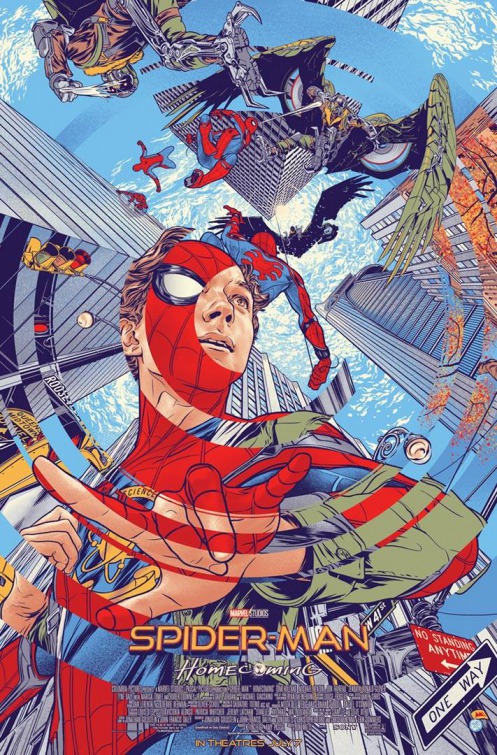
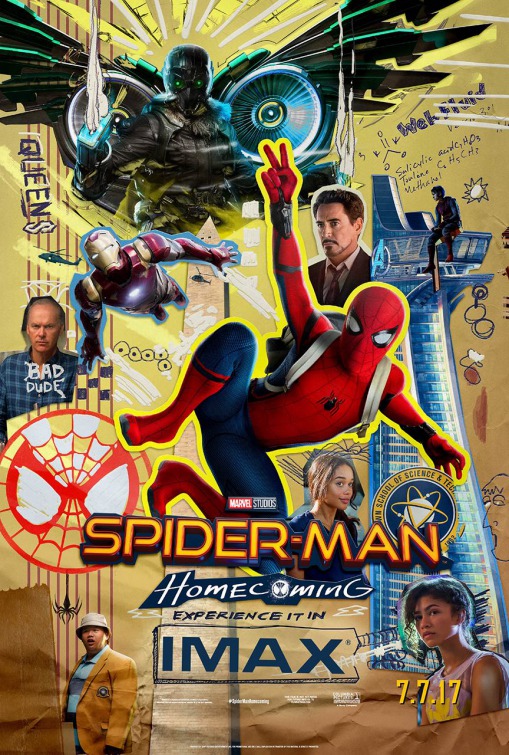
Everybody knows that Sony Pictures botched their re-boot of the Spider-man movies with the last two outings. “The Amazing Spider-man” in 2012 was a satisfactory start to a new series but seemed to be covering a lot of familiar territory. The sequel, “The Amazing Spider-man 2” was a complete mess which screwed up the storyline, wiped out an important character prematurely, and basically repeated every mistake made in the third film in the original Spider-Man trilogy. When Marvel and Sony worked out a deal to get Spider-Man into the MCU, they took a huge step in fixing the things that were wrong with the films. The arrival on the scene of Spider-Man in the terrific “Captain America: Civil War” showed the promise of a young new actor in the part. The story can be about a teenager.
I think that Tobey Maguire and Andrew Garfield were well cast but played the role much more maturely than the character was originally supposed to be. Since Peter/Spidey show up in Civil War without having another version of the origin story, we get to skip that as well and get right to the fun stuff. Here, young Tom Holland (21) can pass for a fifteen year old. He has a baby face and a voice that certainly will not intimidate anyone, so it works. What also works is his desire to be an Avenger. Even though he has incredible powers and a history with the Avenger team, he still feels like a wannabee and that motivates him to act in a manner contrary to the advise of his “mentor” Tony Stark. Holland is completely believable as a nearly ADHD genius who wants to rush home from school and do some good. His desire to be one of the big guys reminds you of a puppy, anxious to please it’s owner but so clumsy in doing so that it upturns the furniture and cocks up the works. The first trilogy and the reboot, all focus on romance, but this film focuses on Spider-Man himself and his struggle to find a place in an era of super-heroes. There is a romance with a surprising turn, but it is not the main point of Peter Parker’s life in this film.
The side characters in this story all add to the freshness of the film. They are not merely cutouts to be plugged in for narrative purpose but real flesh and blood people who matter to the story. Jacob Batalon plays Peter’s friend Ned, another nerdy kid who accidentally discovers that his friend is the neighborhood hero that he has seen on YouTube. Ned is nearly irrepressible in his enthusiasm for sharing in Peter’s secret. He wants to share it but even more than that, he wants to be a part of it. He offers advice, asks annoying questions and genereally plays Jiminy Cricket to Holland’s Pinocchio. Since they both attend a school for gifted students, Ned is certainly as bright as Peter, but he and Peter are still young and they make social mistakes and act on impulse sometimes. Marisa Tomei, plays the youngest version of Aunt May yet. She is just in her late forties or early fifties and even the committed Tony Stark has sexist things to say about her. Tomei has been an excellent actress in films for almost three decades. Anyone who thinks her Academy award for “My Cousin Vinnie” was a fluke, did not see that movie. Her May is not to far a stretch from Mona Lisa Vito. She is more streetwise, flirty and sharp than any of the actresses who have played this character before. I won’t spoil the quote but I will say she has the final line of the story and it will bring a big laugh. Jon Favreau as Happy Hogan has appeared in three of the “Iron Man” films but has barely registered because there was not much to his part [even though he directed the first two]. Happy is a happy addition to the Spider-Man story. As the contact for Peter Parker to the Avengers, he is the perfect balance between exasperated and impatient. He gets a laugh on screen every time from simple facial expressions.
As with most action stories, whether they are set in a comic book universe, the spy world, or everyday dramas, the villain is a tipping point for the direction of the story. Since Iron Man is the template they are following somewhat with this approach, let’s use those films as examples. The Iron Monger in the original film had a great actor and a well developed part, the film is stronger as a result. Whiplash is a cipher in Iron Man 2 and The Mandarin is a red herring in 3, both films are less successful from a narrative position. “Spider-Man Homecoming” does not have those weaknesses, instead it has the strength of the first Iron Man, a great actor in a well developed part. Michael Keaton plays a third winged character, after two turns as Batman and a self referential role as Birdman in the recent Academy Award winner. Adrian Toomes is a character that we can feel empathy for early on. He is pushed in the direction of crime by circumstances that are outlined at the start of the film, but his actions are not driven by revenge but rather the need for financial security for himself and his crew. While it is not clear how he expects to keep a low key presence, given the nature of his new enterprise, the so called “Vulture” is not really malevolent. His threats to Spider-Man are dire, but in the context in which they are issued they are really negotiation points. There is no spite or lust for revenge, this is a character who is taking advantage of the skills he has and the opportunities that are presented to him. The main caper at the climax of the film is something he enters into very reluctantly. He is not a monster, and Keaton is a great choice to play this working class villain who aspires for so much but also chooses to fly under the radar. Frankly there is a twist in the film that I did not see coming, but looking back it might make sense to those who have closely followed the Spider-Man Franchise. That twist gives Keaton a chance to strut some of his best stuff. He has those great facial ticks and a range in his voice that can go from jocular to threatening in an instant. I thought he added immeasurably to the success of this film.
The screenplay balances the intimate story of Peter Parker and his family and friends, with the two parallel plotlines of the Vulture and The Avengers. Peter is an effective hero occasionally but he also makes the kinds of brash mistakes that any headstrong kid might make. Robert Downey Jr. as Tony Stark, knows all to well the trouble he can be getting himself into by aiding in Peter’s development as a hero, but he lacks the requisite supervisory capacity to guide Parker correctly. Happy and Tony together are the indifferent parents that need to put their foot down but also need to listen empathetically. Stark is too narcissistic to realize this and happy is too busy. There is great humor throughout the story and it comes naturally in the incidents that crop up and the characters that have been developed. There are the usual story patches that allow Spider-Man to be around when it is necessary, but they do not show too much and with all stories in a comic book universe, they need to be forgiven a little.
I have heard talk of a potential backlash on comic based films. There is a danger of burnout in the audience. That will certainly be true if every film in the genre has to invent or resurrect an alien threat, a maniacal genius bent on revenge, or a scientific accident that creates some kind of chaos. When you have a film like this or the recent “Wonder Woman” where the settings are fresh and the characters compelling, you don’t have to have burnout. The creators of the MCU have found compelling stories about half the time. The hope for the immediate future is that “Thor Raganok” will be closer to “Ant-Man”, “Guardians of the Galaxy” and this film rather than Iron Man 2 and 3 or “The Age of Ultron”. WW holds out the hope that DC is on the brink of making the same discovery. What entertains us is not emptyspectacle but stories that are involving with characters we can like or identify with. If you get some well deserved humor in there without shoehorning it in, all the better. “Spider-Man Homecoming” was not a film that I was particularly desperate to see or hopeful for. It turns out to be a wonderful re-invigoration of not just that character, but of our whole desire for comic book films. There are little details in the movie that add to the experience and I don’t want to spoil them for you, but from the moment the Marvel Logo streams on to the screen, if you listen, you will know that the film makers want you to be entertained, and they find some good ways to do that.
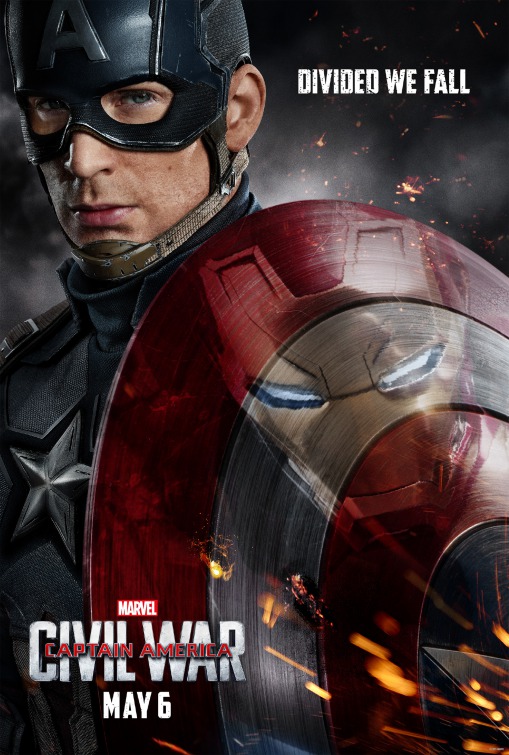
We have come to rely on Marvel to kick off the summer movie going season with a big splashy comic book adventure. Ever since “IronMan” eight years ago, there has been a steady stream of comic book product from this creative team. Fortunately we have been provided compelling stories and great characters for the most part. From my point of view, the weak link has been the standalone “Iron Man” sequels. Tony Snark, oops, Stark, is a great film personality who has often had to flounder in average material. Traveling in the opposite direction for the most part has been Steve Rogers. Cap has gotten more effective plot lines and more interesting dilemmas to deal with. The Avengers movies have been a good way to bring these characters together, but this is the best mash up of these two characters so far. Lots of other Avengers appear, but this is an “Iron Man” “Captain America” film.
As usual, I will dispense with a recap of the plot, you’ll go see the movie and why would you want someone else to tell you the story you are about to pay $15 bucks to see? I will mention as few plot points as necessary to convey the idea of the film, so that yo have a bit of context for the commentary. The world gets a little paranoid about the collateral damage that occurs when the Avengers are called on to act. The idea that someone in charge should be calling the shots, rather than the extraordinary people who make up the team, has surfaced, and it seems like a necessary compromise to some of the Avengers, but others disagree. This is not a political blog and I don’t want folks to be too irritated by what I’m about to say, but it seems very obvious to me. Tony Stark and Secretary Ross are stand ins for an ascendant view of foreign policy and military intervention. Extreme caution and world wide consensus before acting. Steve Rogers and his allies are the old school version of cowboy diplomacy, act when yo see a threat and live with the consequences of your actions. “Civil War” is not just a clash between the superheroes, it is a clash over ideologies. The film is also not subtle about which side it favors, probably because we want super heroes to act rather than debate in our entertainment.
Neither side is blameless in the confrontation that ensues and neither is malicious in their position. One of the things that makes this movie so much more fun than the recent “Batman V. Superman” is that the characters recognize the righteousness that their opposition feels and the awkwardness of the confrontation. Only The Winter Soldier seems undisturbed by having to face down and fight friends. Of course he has not got the same investment in relationships that the other characters have. In one fight sequence, a character accuses another of pulling their punches, and in essence that is what all of them are doing. No one is trying to destroy their former partners, it is just Bucky Barnes that has the full force of one side directed at him. Everyone else is trying to walk on egg shells (OK, maybe not Black Panther either). As an illustration of the conflicting tones that the film manages to walk a tightrope on, two new characters are brought into the Avengers Universe and end up on opposite sides. Both provide comic relief and still fight with all of their skills and both also know that they don’t want to do permanent damage to the opposition. Paul Rudd is charming and a bit star struck as he backs up the Captain. Somehow, Disney has managed to wrestle Spiderman away from Sony’s complete control, and the new guy, Tom Holland, has the potential to get that franchise back on track as long as the creatives in this universe can keep control. [There is great hope that they will do so given the final credits crawl.]
With every welcome appearance of another loved character, the audience was responsive but the movie really does come down to the Tony/Steve relationship and confrontation. I know that Robert Downey Jr. was born to play this part because even in the weak sequels he is the compelling feature. He does a nice job selling the idea that there is some vulnerability behind that cynical facade he projects. The absence of Pepper Potts actually makes him a warmer character because he notices how much her absence effects him. He even recognizes that it is his faults that make their relationship a rocky one at times. Chris Evans continues to impress at bringing dimension to what might have been the flattest character in the original source material but one that has become the moral center of this Universe. The fight that is the climax of the film involves a confrontation that we saw early in the first Avengers movie. Captain America and Iron Man are two strong willed individuals who are willing to throw down for their beliefs. The resolution of this fight is tempered by the motivation that one character has for pressing it. No one wants these two to be defeated, but a conflict like this needs an outcome to keep credibility. I found the solution to be very satisfying.
This film is clearly a success. No one will have to offer half-hearted justifications for it like I heard so often for “The Age of Ultron”. It is not perfect; I found the underlying plot that motivates the mysterious figure behind some of the events to be murky and sometimes implausible. There are characters that would have been fun to have in the film a bit more organically. I thought the willingness to concede to a group of authorities outside of the team, despite whatever guilt he felt about Ultron, to be out of character for Tony Stark. Once again, I am a little dismayed at the amount of mayhem in large cities is required to keep audiences coming to the cinemaplex. To counter those minor misgiving, we do get a discussion of the morality of that mayhem, and we have an intriguing new character in Chadwick Boseman’s Black Panther. As long as the “team up” movies live up to this standard, and as long as we get some breathing room with well placed and reasonably plotted stand alone films, I will be able to stay with the “Mighty Marvel Marching Society.”


 Kirkham A Movie A Day