Paramount Summer Classic Film Series-Superman II

We had a special trip to the Paramount this evening, see Superman 2, but that was not the thing that made the trip so special. We were invited to a tour of the theaters projection booth before the movie. This tour was supposed to be for several guests over the course of the evening, but we were the only ones who showed up and as a result we got a special personal tour, including a half hour conversation with tonight’s on duty projectionist Chad. More about the tour in a minute, first a few words about the movie.

Superman 2 is one of the first movies that I heard people say as a sequel, it was superior to its original film. For a number of years I’ve believed that it was certainly a good film and maybe it rivaled the original film. This evening though, looking at it through fresh eyes, I have to say it’s not nearly as good as I remembered it being. There are still some great sequences, and Christopher Reeve continues to be the definitive Superman, but so much of the movie is spoiled by clunky exposition, cartoonish bits that have been soldered onto the good action sequences, and a severe shortage of Gene Hackman as Lex Luthor.

Mr. Hackman’s hammy performance as Luther was one of the joys of the original Superman. His scenery chewing and one-liners were enough to make the film feel fun, even well a truly dastardly plot was being carried out. Hackman gets to flex his muscles a little bit in the early part of the film, and then disappears for the entire second act of the movie. He does get a few zingers in during the last section of the film, but he should be getting more screen time. Maybe if there were fewer jokes about ice cream cones flying into faces, or roller skaters being forced backwards by the breath of the villains, or worst of all a guy continuing a phone conversation as the phone booth is knocked over and blown Away and he keeps talking while lying on the ground. These were dumb bits that could have been disposed of, and then Gene Hackman could have a little bit more screen time.

Unfortunately that kind of humor permeates several sections of the film. The opening sequence of the three escaped villains from The Phantom Zone actually plays pretty well even when there are some jokes. They never seem hokey. Once we get to Earth however, the hicks that the villains encounter in a town called East Houston, seem like stereotyped caricatures from the very beginning. We are supposed to be laughing at them even before they do anything funny. I never felt like laughing during this sequence. I did like the scene where General Zod and his two accomplices come to the White House to confront the president. When the president finally steps forward and takes a knee in the hopes of protecting human life, he utters the phrase “Oh God”, and the general corrects him by simply saying his own name… Zod, now that was funny.

After establishing Lois Lane is a fearless reporter in the first act during the terrorist take over of the Eiffel Tower, she and Clark gets sent to Niagara Falls to cover a story for the magazine section of the Daily Planet. This is really just a justification for building the romance between Lois and Superman and setting up the dilemma that Kal-El faces when he has to choose between being Earth’s protector or Lois’s lover. Some of it works, some of it is a little too clunky. You do feel Clark’s frustration and desperation when he has given up his powers and discovers that the three villains from Krypton are now on Earth. The trek he makes back to his Fortress of Solitude, is a little on the nose and of course unrealistic for a mere mortal. Those are questions however that don’t really matter, because there’s a bigger story coming.

A fight in New York City/ Metropolis is actually pretty nicely staged given the effects that were possible at the time. The problem is that the director, Richard Lester, keeps inserting moments of humor which take away from the drama of the sequence because they don’t reflect something witty, but instead something that is too on the nose and preposterous. In the final act, Superman manages to accomplish several things with powers that we never knew he had before and that just feels a little too easy as a way of resolving the conflict. Oh, by the way, we are left wondering what happened to Gene Hackman’s character after the villains are dispatched. We really don’t know. But everyone was happy to cheer Superman returning the flag to the roof of the White House.

Back to the tour for a minute, we arrived promptly at 6:00 p.m. believing that that’s when we were expected, but it turns out that it was open for an hour and that any group could arrive during that time for the tour. We waited a few minutes for somebody else to arrive and while we waited we chatted with several of the employees of the Paramount Theater. Krystal was one of the guides/ hosts for the tour and she was happy to listen to my stories about old movie theaters and the kinds of movies that Amanda and I like to go to. Danielle, who’s in charge of the fan services for the Paramount was also quite happy to talk to us as she turned us over to one of the other employees to take us upstairs to the projection booth. Wendy was responsible for giving us the tour of the projection booth, and she introduced us to Chad who is the digital projectionist, and is working on becoming more proficient with the film projectors. They have some 35mm projectors and are also going to be doing five 70 mm presentations during the summer.

Chad was very good about telling us the history of the projectionists at the theater and he balanced the history with some nice technological information about the spotlights, the projectors, and the other equipment that we were getting a chance to see. When we got back downstairs we got a chance to chat with Monica who was the bartender in the Houdini Lounge area where the guests were supposed to congregate. It was a smaller crowd than I was expecting in the theater, and it was an even smaller crowd upstairs in the lounge, since it was just Amanda and me.

The employees were all interested in listening to us as we talked about theaters and movies and streaming and assorted other cinematic issues. I was very grateful that they took the time to pay attention to us. We felt special just getting a chance to do the tour, and when it winded up that it was just the two of us, we felt even more special. We got to hear a couple of ghost stories, see the scary bathroom for the projectionists, and got treated to some new friends at our favorite place in Austin Texas, the Paramount Theater.

Paramount Summer Classic Film Series- This is Spinal Tap

When I wrote about this movie 10 years ago, I suggested in my post that the songs from this movie should have filled all the categories for best song at the Academy Awards. I stand by that statement because these songs do what a music piece in a film is supposed to do, advance the story, illustrate a problem faced by the characters, or tell us more about the characters themselves. All of the songs played by the band Spinal Tap in this movie do those things. I was reminded of this as I watched the film last night, and found myself tapping my toes and mouthing the words while simultaneously laughing.

This Is Spinal Tap is a documentary/ Mockumentary that tells the tale of a band that went from 60s pop to 80s heavy metal and suffered ups and downs like all musical groups do as the fads that they ride go in and out of fashion. Rob Reiner, Christopher Guest, Michael McKean, and Harry Shearer accomplish the task of making characters that we can laugh at and simultaneously identify with, at least to a point. Everyone has felt stupid doing something that others applaud, at the same time we love doing stupid things because we get to get away with it. Rockstars is a notorious for doing exactly this.

When this film came out we were at the height of hair metal popularity, and aging bands playing the nostalgia circuit. Spinal Tap may not have been a real band before this, but after this movie came out the actors who are also the songwriters discovered that their characters had an exterior life, and they have done subsequent tours and special events, and there’s even a sequel in the works. Frankly this movie produces more laughs per minute than most other films are able to accomplish in 90 minutes. The only other movies that I’ve ever felt comparable to the laugh ratio are Mel Brooks films, Monty Python films, and a few early seventies gems. I sure hope that Tap can sustain the laughter in a new entry.

Once again I was at the beautiful Paramount Theater in downtown Austin enjoying a classic movie on a summer evening with several hundred like-minded folks. The audience at last night’s screening laughed continuously and they all seem to get the joke. I could tell that several people in the audience were seeing this for the first time because their laughter was simply too spontaneous to reflect any memory. The movie is a brisk 90 minutes, with several performance set pieces that will leave you chuckling. If the shenanigans that take place during the Stonehenge number don’t make you laugh, you probably have no sense of humor.

Let’s be happy that metal music still exists, that rock bands from the 70s still make the rounds, and that fans of that genre can laugh at themselves when watching a film Like This Is Spinal Tap. Let’s face it, if you can’t enjoy someone else’s amusement at your own foibles, then you were too stuck up to really be a rock fan. Let’s tap into the next great song.

Paramount Summer Classic Film Series -The Godfather Part 2

If you look elsewhere on the site you will find a list of my 10 favorite films. I cheated on one of the entries by listing both The Godfather and The Godfather Part 2 as a single unit. That’s because I always think of them as one big movie that just got separated by 2 years. The stories integrate so incredibly well, and the casting of the younger versions of characters that we come to know in the first Godfather is so spot on, that it feels like it was planned from the very beginning.

I’m so happy that the Paramount scheduled Godfather Part 2 on its 50th anniversary, because this is a movie that should be celebrated regularly. I don’t usually wait for a round number to rewatch the film, I think I saw it just a couple of years ago when I was doing my binge on “The Offer”, the streaming series based on the creation of the original Godfather. I like to catch up with this movie as often as possible although it is 3 hours and 20 minutes, which means that I’m not sitting down for a casual watch. Fortunately this is an opportunity to see the film on the big screen and once again it is as impressive as I remember.

Actor John Cazale famously made only five movies, all of which were nominated for Best Picture, and three of them won the award. It’s amazing to me that Cazale  himself was never nominated. The only reason I can think that his performance in this film was overlooked is because there were three other supporting performances that were also pretty spectacular. It would have seemed odd at the Academy Awards if four out of the five slots had been taken up by actors in this film. Regardless Cazale’s performance as Fredo, is both heartbreaking and frustrating. If you’ve never seen the movie I certainly am not going to spoil it for you, but let’s just say that Michael never lets an offense to the family go unpunished.

The parallel structure of the two stories in this film starts with the rise of Vito Corleone as he and his family build a foundation in the early part of the 20th century in New York City , it is phenomenal. Robert De Niro, who did win this supporting actor award for his role in this film, actually looks like Marlon Brando might have looked in his leanest and hungriest years. He starts off as a naive waif, uncertain of where he fits in among the immigrants that he lives with and works around. When he encounters a young Clemenza, played with great personality by the late Bruno Kirby,  Vito finds his way to his true destiny. Young Don Corleone was building his family up, but Michael Corleone in his desire to control his family completely, basically dismantles its core. In Godfather Part 3 we will get to see how it all plays out, but even without that pictures existence, we have a pretty clear idea of the wasteland that Corleone’s life had become.

It’s hard to imagine that Francis Ford Coppola was reluctant to do a sequel to the movie. He had so much success and a natural affinity for the material that it seemed inevitable that he would take on the task. The fact that he was able to use the studios desire for him to continue the story as a way of financing the film that he made between the two Godfathers, “The Conversation”, is just an extra bonus. When you watch the scenes of young Vito Corleone stalking Fanucci across the rooftops of the Italian neighborhood that this supposed member of the black hand was in control of, it’s like watching a tiger follow its prey. Inevitably there is violence, but Don Corleone does his best to keep the violence away from his family all of whom are all incredibly young at this point.

Michael’s story is of course a huge contrast, he starts off with all kinds of Power, but can’t keep the violence from intruding on the most personal parts of his life. The machine gun attack that takes place near the beginning of the film, highlights for his wife Kay, that the family is not really capable of going legitimate. Michael’s inability to confront problems with his son, or understand his wife’s pleas, makes him seem cold-hearted, when what he really is is a rock hard leader of a criminal organization. He lacks the warmth that his father had with his associates. There’s a great scene where he seems to be calling his adopted brother Tom Hagan on the carpet for fielding a job offer from another Institution. He comes across as bitter, and unsympathetic. Contrast this to the scene in the first Godfather when Vito actually comforts Tom when Sonny is killed. The difference between Father and Son is subtly displayed in these two scenes. Vito always played the humble part very well. Michael on the other hand is arrogant and self-assured, and never once allows anybody to see him sweat. Hell even in Cuba Michael has a hard time relaxing a little with his brother or the business associates that he is working with.

Coppola gives us fantastic set pieces, featuring hundreds of extras in elaborate costumes with distinctive music that clearly sets the time and place of the scenes that are playing out. The street festival where young Vito is stalking Fanucci, the confirmation party in Lake Tahoe, and the New Year’s Eve Revolution in Havana, are all spectacularly staged and probably a big part of why Coppola received the directors award that he was denied two years earlier. This was a big picture put together beautifully, with a huge degree of thought and care as to how the story was going to integrate the two lives.

I’ve told the story before of taking my girlfriend to see The Godfather and The Godfather Part 2 playing together back in the late 1970s. When the first film ended as we got up for an intermission to use the bathroom and maybe get something to drink, but the lights went down again and the second movie started immediately. We both sat down, skipped getting a drink, skipped going to the bathroom, and watch the second movie. We were hypnotized by the artistry of these two films. The fact that this woman sat with me for six and a half hours without a break only cemented my certainty that she was the woman I should spend my life with. So there’s that story again, hope you enjoyed it.

Paramount Summer Classic Film Series-Young Frankenstein

50 years ago was the start of a wonderful relationship for me. This was the year that I discovered Mel Brooks. Both “Blazing Saddles” and “Young Frankenstein” came out this year, and I saw them with my high school friends who all laughed as loud as I did. We knew we were in the presence of somebody who knew how to be funny, especially to high school boys. “Blazing Saddles” was the first of these two films to be released in 74, and it’s raucous, irreverent, and some times down right offensive. It was also a western, which I have a deep abiding Love for.

In spite of my admiration for “Blazing Saddles”, I’ve always felt that it was the second best Mel Brooks film of 1974. “Young Frankenstein” goes beyond silly parody, to be a genuine tribute to and echo of the classic Universal horror movies. Of course it is hysterical, there was little doubt that with the input of Brooks and co-screenwriter Gene Wilder, that this is going to be incredibly funny. It turns out that it is also incredibly sweet, with a soft spot for all of the characters in the film, even some of those loathsome villagers who think it’s time for a riot. There is something to laugh at and embrace in just about every scene.

To start off with, they made the film in black and white. In 1974 that was not very typical. Sure there were a few other films at the time that used black and white to suggest the past. Films like “The Last Picture Show”, “Paper Moon”, “Lenny” and a few more, They all use black and white to draw attention to themselves in a way that made them stand out in the crowded ’70s field. But in the field of comedy, you don’t get a lot of black and white films that are contemporary, until Woody Allen gets going a few years later. The truth is, this movie wouldn’t have worked in color, because our collective memory of the Universal films is black and white. Boris Karloff may have had green face makeup when the original Frankenstein was created, but we only saw the black and white and that’s what we remember. It would have been disturbing to have Peter Boyle on screen as the monster with a green face. Besides, all those great sets that were being used to make the movie wouldn’t look nearly as Gothic and creepy if they were in color. The villagers walking through the forest with fog rising from the ground in black and white just makes sense.

It would be pretty hard to go wrong with a cast that includes Gene Wilder, Marty Feldman, Madeline Kahn, Teri Garr, and Kenneth Mars, but when you add a surprise guest performance by my favorite actor in a completely unexpected role, I’m just going to have to say this film approaches perfection. Let’s face it Gene Hackman, as an avuncular blind man stumbling his way through making a new friend, may be the funniest 5 minutes in the whole movie, and that saying something.

The John Morris score is also something pretty special. It recalls Frankenstein with its limited score, Dracula with its borrowed themes, and classical source music. The little horn section gets its own joke when Marty Feldman as Igor, plays his little horn to accompany Inga on the violin. It’s guaranteed to get a chuckle for you. Next to the sequence with Gene Hackman, the dance routine with Gene Wilder and Peter Boyle to “Puttin’ on the Ritz” maybe one of the most bizarre, ridiculous, and ultimately perfect realizations of the absurdity of this story. Super duper.

As family-friendly as Young Frankenstein is, there are a couple of raunchy jokes built into the movie, especially at the end. Most of these will sail over the heads of kids, but teens and adults will smile at the sexual innuendo that is never explicitly stated. The film is certainly not as ribald as Blazing Saddles, but it’s not G-rated for a reason. We are reminded once again how sadly we miss Gene Wilder on screen, his performance is one for the ages. The moment of his frustration when he can’t get his two assistants to understand what he’s asking for as he’s being strangled by the monster, is both pantomime perfect, and then when he gets his voice back vocally hysterical. I have no patience for anybody who doesn’t think this film is funny. It’s so funny that I was amused by the slot machine that was based on it and was ubiquitous in Vegas two decades ago. Too bad you can’t find those slots now, I’m really in the mood for dropping some coin and hoping to get a bonus.

The Paramount 50th Summer Classic Film Series Phantom of the Paradise (1974) Revisit

Hope Springs Eternal that seeing “Phantom of the Paradise” on the big screen will be an annual event. It has been for me for at least the last 2 years, now let’s keep our fingers crossed and pray that the streak can continue. This particular screening was opening weekend at the 50th Anniversary of the Paramount Theater Classic Summer Film Series. Since I got to Austin in the middle of the pandemic, I’ve discovered that the Paramount Theater in downtown Austin is my true second home. The theater is busy most nights with comedy shows and concerts from a variety of artists. In the summer however, especially during the week, the theater is filled with film fans who get a chance to enjoy some old classics in the way they are meant to be seen, on a big screen in a beautiful Movie Palace.

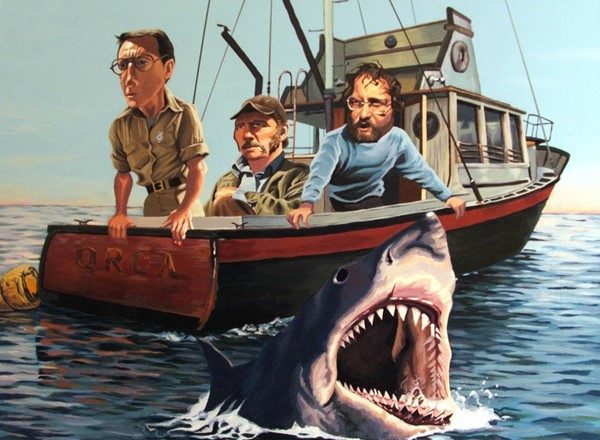
I started coming to the Paramount Theater in 2020 at the end of the summer when the lockdowns and the theater closures were finally dissipating. As it happened, the first two films that I saw at the Paramount were two of my favorite films of all time, Jaws and Lawrence of Arabia. Ever since then I have looked at the schedule for the summer series with anticipation. Last year my daughter and I sprang for the annual Club membership that allowed us to attend almost all of the film screenings in the summer series, as well as the Halloween “Panic at the Paramount” and the Christmas season offerings. This year we had no problem in deciding to renew, because this is how we live, and it’s how I roll.

Last year’s screening of “Phantom of the Paradise” was at an Alamo Drafthouse with an edited edition of the film done according to the specifications of director Brian DePalma. This version is unofficial, and the studio probably doesn’t really approve of it being shared. The version we saw this week was the one that played in theaters in 1974. It includes some of the bad floating matte work that was required to cover the “San Songs” logo, which was a copyright issue with the band Led Zeppelin.  Steven Janice, the programmer at the Paramount, pointed out that the movie only made about $20,000 in its first week of release back in 1974. I’m pretty sure the $3.50 of that came from me, because I saw this film at the UA Theater in Pasadena in the fall that it came out.

It is hard for me to contain my enthusiasm for this movie. Brian DePalma was one of the most reliable directors in my formative years as a movie fan. This was the first of his films that I saw, and I loved it then as I do now. In addition to the outrageous premise the wild costumes and the over the top performances of some of the supporting cast, we have a fantastic score and a dozen songs from The Genius Paul Williams, who also happens to star as Swan, the villain of the movie.

I can never get “Goodbye Eddie” out of my head after hearing it in this movie. It’s the opening song played under the titles, and if you look at the promo that I’ve posted here for the classic summer film series, you’ll hear that it is the soundtrack for this ad. Winslow Leach may not approve of the “Juicy Fruits” but I was perfectly happy with their upbeat parody of a a 50s style lament about a rockstar who takes his life in order to increase his fame. Later on, the same band bastardizes Winslow’s Faust score to present a Beach Boys Style parody song “Upholstery”. This is another one of those Paul Williams tunes that gets hooked in your head and won’t go away. This movie is full of earworms.

I was a little brought down by the opening weekend of the summer classic film series because our annual pass was only good for one of the three screenings. We could have bought tickets separately for Casablanca or for Star Wars, but we did have other films that we were seeing that weekend so we limited ourselves to the Phantom experience. It appeared that a lot of other film fans felt the same way we did because they were out in mass on Sunday for this movie. The reception to the film was enthusiastic, and frankly I was sad that it was over because I wanted to do it all again immediately.

I’ve written about the film in a couple other places here on this blog so I will give you the links for those posts, so if you are interested in knowing more about the movie and the things that make it so special you can visit those musings. For now let me just say at the summer season is off to a rousing start and I have the Paramount Theater, Brian DePalma, and Paul Williams to think for my elevated mood this week. I’ll be seeing you regularly down on Congress Boulevard, if you see me say hi I’ll be the guy with a big smile on his face wallowing in classic movies.

Paul Williams and the Phantom of the Paradise

Phantom of the Paradise Remastered 

The Princess Bride: An Inconceivable Evening with Cary Elwes

It’s rare that you find a perfect movie. A few years ago I had a post up about three films that I thought fit that category. When I say perfect I don’t mean that it’s the best film of all time, or that it’s essential for everyone to see it, although I could never understand why somebody wouldn’t want to go and see a perfect film. What I mean by perfect, is that it could not be improved by any changes made to it. The parts that are there, have been assembled in the correct way, they all fit together, and they work exactly as they are supposed to. “The Princess Bride” certainly belongs on the shelf with any film that could be described as perfect.

Once again I had the opportunity to see this perfection on the big screen with a receptive audience. On top of that, it was screening at my new favorite theater, The Paramount in Austin Texas. And just to add frosting to the cake, the star of the film Cary  Elwes, who wrote a book about the making of the film a decade ago, was there to share some stories after the film was finished. What can I say about “The Princess Bride” that hasn’t been said by hundreds of people before me? This movie is funny and dramatic, full of the swashbuckling kind of adventure that I have loved since I was a child. It also has a heart to it that beats and moves us like no other film I can think of. When I was asked by my daughter what my favorite moment in the film was, I had to admit it’s the last line when the grandfather, played by the great Peter Falk, says to his grandson, when asked to return and read the book again to him tomorrow,” As you wish.”

That moment gets me every time, because I think of my own children and my parents and grandparents and everybody who cared for those who came before them or after them. This is a story for everyone. And it’s a story about true love, the rarest thing in all the world. And I’m not just talking about Wesley and Buttercup. We all get a chance to feel embraced by and loved by this film. It makes a Giant feel like a human being that we would want to be friends with, it makes us cheer when the bad guys get their  comeuppance, and we’re all willing to sit through the kissing parts in order to get to the good stuff.

I saw this film originally when it was released in 1987, after my parents had gone to a screening at the studio. They enjoyed it but we’re not overly impressed by it. My father’s half sister Cherry Ann worked for Norman Lear, and she had arranged for my parents to go to the early screening. My wife and I were really jealous because we had looked forward to the film. In spite of my parents’ lack of enthusiasm, we rushed to see the film as soon as it came out. And like those who have come after us, who scratched their heads and wondered why this wasn’t a bigger hit, we could not understand why the movie was not being embraced by audiences everywhere. Frankly we loved it from the moment we saw it.

This was the middle screening of three showings of the film with guest Cary Elwes at the Paramount Theater this month. Of course we had bought our tickets when the first show went on sale, and then two shows were added, one in front of and one behind the screening that we were going to go to. A decade ago we went to a fantastic screening, also with the star of the film, when he was doing a signing of his newly released book,” As You Wish”. It was one of the best outings I had with my wife in the last decade of her life. You can read the story of that event here.

Mr Elwes, I’m sure, has told the stories that he shared with us many times before. However, as with all good storytellers, he enthralled us with details, spoke with voices that recalled the people he was talking about, and was thoroughly enthusiastic about the moment. There was nothing artificial at all about his conversation, even if it is something he’s done a thousand times before. He recalled the story of his injuries on the set, and took full blame, even when others may have contributed a little bit to his on-site mishaps. He recalled with great fondness everyone’s friendship with Andre the Giant, and he does a great impression of both Andre and director Rob Reiner. It feels a little bit after having listened to him, as if we were on the set as well and went through the adventures with him. Which is exactly how you want to feel in an event like this, with a movie that’s perfect.

One of the great things about seeing a movie that you have already seen dozens and dozens of times, is experiencing it with others who feel the same way about it as you do. Last night a capacity house, laughed and cried and cheered as “The Princess Bride” took us on the adventure that we all know so well. We were all a little incredulous when we heard that Mr Elwes had only watched the movie three times. After all, collectively among the people in this audience there may have been a million views of the film. It’s doubtful that any of the 1,000 or so people there had seen the film only a single time. Okay so maybe a million is a little hyperbole, but you get the idea, this audience knows the movie.

Like many of the films of this era, the special effects, production design, and cinematography make the film feel so much richer than it would be if it had been produced in the era of CGI. The Cliffs of Insanity and the Fire Swamp, looks so real yet it’s clear that it is artifice. And we the audience are swept up by the fervor of those Charming effects, and the spectacular, beautiful, cinematography. Watching The Man in Black chase Fezzick, Vincini, Inago Montoya, and Buttercup up the cliffside, is thrilling. It’s also funny, and filled with some of the lines that people have memorized over the years. It was easy for me to foresee that this film would have long-term legs, I once judged at a speech tournament where one round of the impromptu speeches were all quotes from this movie, and that must have been in 1989.

The sound of laughter was also highlighted by regular applause when our heroes were introduced and our villains taken down. The occasional lone applause clap when Mr. Elwes was telling a story would be amusing because sometimes it was for something completely incongruent. For instance one member of the audience happened to have lived in the area where the movie was filmed. Mr. Elwes laughed at the single clap, and was gracious in acknowledging the beauty of the area. When questions were submitted by the audience ahead of time, they were read out loud by the interviewer, and Cary answered enthusiastically. The host called out one question in particular as his favorite, and asked where the little girl was who had submitted the question. Her family was quick to wave their hands, and Cary, left the stage and went over to talk to her personally to answer her question. But she was young, maybe eight or nine and the thought that a thousand people would be looking at her made her even more shy, Mr. Elwes did his best to minimize her discomfort, and draw attention away from her and back to the question. It was a moment of warmth from the star who was being considerate both in trying to see the girl personally and in withdrawing from her because of her shyness. It was a moment of complete sweetness, in keeping with the whole evening.

The Muppet Christmas Carol (Revisit 2023) Rockin’ Around the Paramount

No apologies, no excuses, no doubt, The Muppet Christmas Carol is the best version of the Charles Dickens story and as a result, the best Christmas movie out there. Years ago on the LAMB, we had a voting bracket that established this film as supreme over all other holiday movies, including “Die Hard”. The reasons are very straightforward, Michael Caine and the Muppets.

Michael Caine is not a singer by nature, but then neither was Rex Harrison. Both of those actors can do a walk through of the songs in their respective films, and talk their way through a song with enough rhythm and inflection to fool us into thinking they sing. Harrison was acting against Audrey Hepburn who’s voice ended up being dubbed. Caine is singing opposite Kermit the Frog, Gonzo the Great and a dozen other Muppet characters, so he has to work especially hard.

Because Caine plays it straight, the film works dramatically, even though there is Muppet Mayhem everywhere. The story is one of redemption, and Scrooge’s encounters with the Muppet ghosts are really effective. The Ghost of Christmas Present is especially moving as he relates the situation of the Cratchetts to Scrooge, who suddenly seems to be awakening to his own indifference. The look on Caine’s face when he sees his nephew revealing that the unwanted creature of the guessing game they are playing is Ebenezer Scrooge. 

Getting a chance to see this heartwarming film on the big screen again is great, that it was at my new favorite spot in my new hometown was even better. The Paramount was packed to the rafters for the show. There were some pre-show activities that we skipped because we were meeting a friend for dinner, but the atmosphere was exactly the tone you want for a holiday outing. 

If there is a third component to the success of the film, it would be the songs by composer Paul Williams. The melodious transition songs are fine but the highlight is the opening number that introduces Scrooge and gives an active part to most of the Muppets in the film.  The wordplay is delightful and sets the tone for the film. 

I was shocked to hear on the Podcast the other day, that my frequent guest, occasional substitute host, and friend, Howard, has not seen this version of A Christmas Carol. If you , like Howard, have not yet found this movie, I strongly encourage you to make an effort to watch, maybe even on Christmas Eve. The Muppet Christmas Carol can put both the Grinch and Scrooge, and maybe even Krampus, in a real Christmas spirit. The fact that this was the first Muppet Project after the death of Jim Henson, makes its quality a sweet comment of the genius of the man who created the performers in this film. God Bless us, everyone. Especially you Jim Henson.

A Girl Walks Home Alone at Night and [•REC] A Twofer during Panic! at the Paramount

A Girl Walks Home Alone at Night

Two more films during the “Panic! at the Paramount” Halloween Screenings, although technically, this should be “Panic! at the State”. since they played next door at the State Theater. This was anot a double feature, but two separate shows, although I suspect many in attendance had done what we did, just plan on going to both.

“A Girl Walks Home Alone at Night” is a vampire film, set in Iran but filmed in Southern California. Directed by Ana Lily Amirpour, it tells the story of a dying town that is being drained of life by drugs and a vampire. In this case it is a lonely vampire woman. She seems to be able to be selective about her victims and chooses criminals, drug users and homeless people to feed on. All the while she is intrigued by the others she sees living in the area. She lives in an apartment filled with pop culture refernces on the walls and she listens to music that she has taken from some of her victims as she dwells on her life, alone in the dingy surroundings of the flat and her neighborhood. The idea that we might sympathize with a vampire who kills people is not new, neither is the perceived loneliness of such a life. That perspective was cover pretty well by  Tony Scott’s “The Hunger”.

Before we even meet the vampire however, we encounter Arash, a young man who seems to start the film by stealing a cat, and then proceeds to become more sympathetic in spite of his light fingered tendencies. Some of what motivates him is that he is caring for his father, a heroin addict incapable of doing anything other than remembering the past and shooting up his next dose of medicine. Deeply in debt to his pusher, a pimp who styles himself after the chic Eurotrash he wants to live like, Arash’s father allows his son to shoulder the responsibility and the pimp takes his prized possession, his car. The car becomes a keystone in the story, later bringing together an aging prostitute, the vampire and Arash himself.

The film does seem to meander a bit, but most of that is establishing the environment and circumstances of the characters. The horror elements are very limited, with the creepy apparition of the Girl, appearing in the background and sometimes following other characters in the story. The Girl wears a Chador over more Western dress, so that when she is seen in public she simply seems to be a compliant woman, but when we see her in her apartment and at the party later, she is anything but that. Maybe there is some commentary implied about the rules that people live under in Iran, although it appears that there is plenty of privilege for those with means. 

Stylishly shot in Black and White, the film creates a foreboding atmosphere without ever provoking fear, just some anxiety. Lighting and shadow effects are used well to draw attention to some emotional points, and the sadness that permeates “Bad City”, the town they occupy. My favorite scene in the movie occurs when Arash, dressed as Dracula for a party, drunkenly encounters the girl and the start of their relationship is funny as well as disconcerting. I’d seen this film before, but this was the first theatrical screening for me and I think, as usual, that the theater environment enhances the film in every way. 

[•REC]

This is a Spanish horror film that was remade in the U.S. as Quarantine. I never saw the remake and this was a first time watch for me. In essence this is a found footage film, since all of the content is recorded on a video camera by an operator we know as Pablo but who we never really see. The film starts out as an episode of a television program, that looks at everyday experiences. Ángela, is a reporter for this lifestyle news program and she is following a Fire Department crew on their nightly routine. Of course the experience turns out to be anything but routine.

Made up of edits and segments that would normally be culled down to a minimal running time, the realistic nature of the film technique enhances the excitement in the movie and it brings up the terror factor very effectively. We are only seeing what Ángela and her cameraman are able to record, hence the title of the film. She is committed to getting the truth out when dangerous things start happening in an apartment building that the fire crew has been called to. A Mysterious aliment seems to have befallen an elderly woman living on the top floor of the building, but anyone who has seen a zombie movie before, has a good idea of what is coming.

As the stakes get higher, outside authorities have closed off and sealed the building, refusing to let the occupants, the news team or the firefighters and cops inside to exit. Life threating injuries are being neglected and Ángela wants to document that neglect and find out the reasons. So often in movies, the reporters are annoying obstacles that are used for exposition and then treated as humor or fodder for the rest of the story. This film treats the press a little more fairly, although we do see that the two person team is deliberately ignoring the directions of the police during the events. 

The action scenes are quick but the after effects are shown in gruesome detail to make the film more horrifying. Towards the end of the film, we switch to a night vision viewpoint on the video camera because the power seems to have gone off in the building and at that point people are sequestering themselves inside the already sequestered building. There is a strange explanation of what might have originated the contagion causing people to become hyper aggressive monsters, but by the time those explanations arrive, they are irrelevant, except to set up a final sequence.

 [•REC] is an excellent example of both the found footage style of film making, but also the modern version of a zombies story. Actress Manuela Velasco has to carry much of the weight of the film as the on screen reporter who is essentially directing the movie by pointing her camera operator in the right directions. She does a great job of selling the character as a woman who knows the limits of her job, until push comes to shove and she levels up. This was a real discovery for me and highly [rec]ommended.  

Pearl and X Double Feature Panic! at the Paramount

These were my two favorite films last year. I treat them a bit like I do the Lord of the Rings films, they are a piece and should always be connected to one another. Getting a chance to see both of them on the bog screen again was fantastic, and delightfully, they are shown as the story chronologically, not in how they reached the audience the first time around. I am not the only one with high praise for the films, the Paramount’s main programmer Stephen Jannise, said as much when he introduced the program on Saturday night.

The audience was packed and it was a great surprise to see that more than half of the people attending indicated that this was going to be a first time watch for them. Listening to the laughter and the sound of breath being held, the audience got the picture. It sure sounded like they were responding appropriately. Having just reviewed these films last year, I will skip most of the critical analysis and direct you to those two reviews. “X” was the first to be released. It is the one set in 1979 and it owes everything to the Drive-In exploitation films of the era. Later this week we will be seeing the “Texas Chainsaw Massacre” and it would be a good companion piece to watch if you want a sense of the tone of films from this period.

Pearl” is the prequel that came after the star and director created such an elaborate backstory for the character in X, that they had basically created another movie. More ambitious in story than “X”, and although she does not get to play two roles in the film like she did in “X”, Mia Goth simply takes your breathe away with the strength of her performance. If you want to be disturbed by a character, you could just skip to the credits at the end of this movie watch her smile for four or five minutes straight. It is as eerie as anything in that other horror film from the same month “Smile“.

Watching the films in chronological order is not essential, but it does make the events of “X” a lot more understandable. Howard as a character is the one who seems to have changed the most in the sixty years between the events. If there is ever going to be a spinoff series, his story arc would probably be the place to start. Of course we are all anticipating the third film in the “X” universe. Maxxxine is currently in post production, for a release sometime next year.  Naturally, I’d hoped somehow that we would get the first drop of the trailer for that film, sadly it was not to be. There was an odd performance by a local drag celebrity prior to the first film, it seems to have been inspired by “Pearl” even if it was not particularly organic.

The Paramount did a nice job setting up some photo ops for fans. We of course took advantage and here are a few of the pictures.

Here is the teaser trailer for Maxxxine that ran at the end of “Pearl” in it’s original release, but not last Saturday at the Panic! at the Paramount .

Spy Kids Armageddon

A few weeks ago, at the Paramount Summer Film Classic screening of “Clash of the Titans”, Director Robert Rodriguez previewed for us the above trailer. The film is set to premier on Netflix later this week, but we were inviter to the World Premier last night at the Paramount here in Austin. The audience was packed with kids and people who had worked on the film and the house was raucous. The film was shot in Austin and the main contributors are members of the Rodriguez family. 

The film is the fifth in the franchise and it does not stray far from the formulas that came before it. Two young kids get involved in a spy plot because their parents are spies. They accidentally release a video game virus that combines with a program partially developed by Dad that will allow the designer to control all electronic mechanisms. The become spies themselves and fight back using the tech that has been given to their parents by the spy agency they work for. 

One of the reasons that the audience at the “Clash of the Titans” was specifically invited is because the film is filled with Ray Harryhausen images, including sword wielding skeletons and crab like robots. This is a lot of fun and reinforces the fantasy elements as much as the gadgets do. The story is thin, like a kids film is likely to be, but it does have some values about family that are certainly admirable. It is clear this is a movie for families to enjoy together. The fact that parents were at the show last night, who had grown up watching the original films, and they were now bringing their own children to the series is part of the reason Rodriguez has returned to the stories.

We had a great time and the movie is light and breezy, so go ahead and stream it when it drops this week.