Hope Springs Eternal that seeing “Phantom of the Paradise” on the big screen will be an annual event. It has been for me for at least the last 2 years, now let’s keep our fingers crossed and pray that the streak can continue. This particular screening was opening weekend at the 50th Anniversary of the Paramount Theater Classic Summer Film Series. Since I got to Austin in the middle of the pandemic, I’ve discovered that the Paramount Theater in downtown Austin is my true second home. The theater is busy most nights with comedy shows and concerts from a variety of artists. In the summer however, especially during the week, the theater is filled with film fans who get a chance to enjoy some old classics in the way they are meant to be seen, on a big screen in a beautiful Movie Palace.
I started coming to the Paramount Theater in 2020 at the end of the summer when the lockdowns and the theater closures were finally dissipating. As it happened, the first two films that I saw at the Paramount were two of my favorite films of all time, Jaws and Lawrence of Arabia. Ever since then I have looked at the schedule for the summer series with anticipation. Last year my daughter and I sprang for the annual Club membership that allowed us to attend almost all of the film screenings in the summer series, as well as the Halloween “Panic at the Paramount” and the Christmas season offerings. This year we had no problem in deciding to renew, because this is how we live, and it’s how I roll.
Last year’s screening of “Phantom of the Paradise” was at an Alamo Drafthouse with an edited edition of the film done according to the specifications of director Brian DePalma. This version is unofficial, and the studio probably doesn’t really approve of it being shared. The version we saw this week was the one that played in theaters in 1974. It includes some of the bad floating matte work that was required to cover the “San Songs” logo, which was a copyright issue with the band Led Zeppelin. Steven Janice, the programmer at the Paramount, pointed out that the movie only made about $20,000 in its first week of release back in 1974. I’m pretty sure the $3.50 of that came from me, because I saw this film at the UA Theater in Pasadena in the fall that it came out.
It is hard for me to contain my enthusiasm for this movie. Brian DePalma was one of the most reliable directors in my formative years as a movie fan. This was the first of his films that I saw, and I loved it then as I do now. In addition to the outrageous premise the wild costumes and the over the top performances of some of the supporting cast, we have a fantastic score and a dozen songs from The Genius Paul Williams, who also happens to star as Swan, the villain of the movie.
I can never get “Goodbye Eddie” out of my head after hearing it in this movie. It’s the opening song played under the titles, and if you look at the promo that I’ve posted here for the classic summer film series, you’ll hear that it is the soundtrack for this ad. Winslow Leach may not approve of the “Juicy Fruits” but I was perfectly happy with their upbeat parody of a a 50s style lament about a rockstar who takes his life in order to increase his fame. Later on, the same band bastardizes Winslow’s Faust score to present a Beach Boys Style parody song “Upholstery”. This is another one of those Paul Williams tunes that gets hooked in your head and won’t go away. This movie is full of earworms.
I was a little brought down by the opening weekend of the summer classic film series because our annual pass was only good for one of the three screenings. We could have bought tickets separately for Casablanca or for Star Wars, but we did have other films that we were seeing that weekend so we limited ourselves to the Phantom experience. It appeared that a lot of other film fans felt the same way we did because they were out in mass on Sunday for this movie. The reception to the film was enthusiastic, and frankly I was sad that it was over because I wanted to do it all again immediately.
I’ve written about the film in a couple other places here on this blog so I will give you the links for those posts, so if you are interested in knowing more about the movie and the things that make it so special you can visit those musings. For now let me just say at the summer season is off to a rousing start and I have the Paramount Theater, Brian DePalma, and Paul Williams to think for my elevated mood this week. I’ll be seeing you regularly down on Congress Boulevard, if you see me say hi I’ll be the guy with a big smile on his face wallowing in classic movies.
Hitman is a Nifty little Neo Noir from director Richard Linklater and his star Glenn Powell. It is based on the case histories of an actual informant in Houston Texas. The movie is based on an article written in the Texas monthly, which chronicled the numerous incidents in which a college instructor impersonated supposed Killers for hire in order to arrest those trying to hire someone to murder another person.
Incredibly they were over 187 cases where this police informant managed to interact with potential customers sufficiently to incriminate them adequately to have them arrested. Most of the arrests resulted in convictions. The problem with this fantastic true story, is that it is basically a series of incidents where our protagonist portrays himself in multiple different ways so as to convince the contracting client that he really was a hired killer. Now, the movie contends that outside of cartel or Mafia connections, The hired hitman is a myth. So most of these people bought into a fantasy that they could solve their problems by finding someone who is willing to kill for money. As interesting as that might be, it’s not a narrative that would sustain a movie. What’s happened here is that Powell and Linklater have created a Noir to go along with these real incidents.
The film is primarily a comedy but it does go into some traditional Noir territory when it introduces a femme fatale who gets involved with our main character. This results in comedies traditional structure of one person trying to hide something from another person and going through desperate measures to do so. The conceit in this film is that the character that our informant creates in order to draw in this woman, becomes a persona that he inhabits a little too comfortably, and with comic consequences. The film is actually quite funny with several ironic components to it. The jealous police officer who has been replaced in these kinds of sting operations by this previously milk toast college professor, is turned into a dangerous rival with an agenda straight out of a 1940s film. Of course it also has a comedic element to it that is quite amusing.
I’m not sure if you can call it a Neo Noir if the result of the story turns out to have a happy ending. That doesn’t really fit with the traditional dark themes of that classic format. But because this is a comedy take on the form, it doesn’t really feel disingenuous to go in the direction that it does. The characters that we encounter are for the most part very likable, and it would seem unjust for them to end up in the negative for the experiences that they’ve gone through. Powell and his co-star Adria Arjona, have good chemistry together and they make us care about the outcome. When we meet her husband, the man that she originally wanted to hire someone to kill, we kind of understand that she is not the bad person that we might have assumed simply because she wanted to hire a hitman.
The early part of the film drives most of its comedy from Powell’s disguises, characters, and the potential clients who are is inept, venal, and delusional as you might expect. The second half of the film the comedy derives from Powell’s attempts to keep his true identity secret, and to hide the romance that has grown between him and the woman that he is steered away from committing a felony. The final third of the film does take a darker turn, but not so dark as to diminish the romantic comedy that has been growing up inside of this movie.
I found this movie to be completely delightful, cleverly acted and very intricately plotted so that it is engaging throughout. It may not be to everybody’s taste but it’s certainly fit mine, and as far as I’m concerned it is one of the critical hits of the year. This is a Netflix film that is getting a limited theatrical release, which is the reason that it got covered on this site. The screening that I went to was actually the premiere in theaters, and included a live broadcast to other theaters around the country, featuring the tars Glenn Powell, Adria Arjona, and director Richard Linklater. It was a lot of fun to be in the theater with the creators of this film and listen to their stories about how the movie was put together. Hopefully you’ll get a chance to see this in a theater, but if you don’t go ahead and take advantage of its availability on Netflix, it’s better than hiring a hitman.
It’s hard to believe that 45 years ago “Alien” opened and I saw it at the Egyptian Theater in Hollywood California. I was preparing to graduate from USC, and begin a graduate program in rhetoric of all things. I’d had a period of difficulty in my last semester as an undergraduate, including losing a close friend in a horrible car accident, and my debate partner also being severely injured in the same accident. I was in a mood to recover from the end of the term and some of the tragedies that life throws at you. Interestingly enough I’ve always said that the summer of 1979 may have been my favorite. That’s because I didn’t have to work, I had no active School responsibilities, and my girlfriend graduated at the same time and had her own place and a job that was taking care of her. Despite the fact that the recent past had been tough, the immediate future looked bright. That summer I did two things consistently, swim in the pool at our apartment building everyday, and go see “Alien” multiple times.
I’ve said it before in other posts, my favorite between Alien and Aliens is whichever one I’ve seen most recently. That means for this week at least, Alien is my favorite. Seeing it at a 45th anniversary screening, during a week in which it reappeared on the box office charts 45 years later was a lot of fun. It’s easy to get caught up in nostalgia, because I always equate the movies that I see with the times in my life that I saw them. Of course they have their own qualities that make them memorable as well, and “Alien” is certainly memorable.
Thank goodness this was the original theatrical cut and not the enhanced Edition that has been released in several forms since the movie came out. Those versions add information and sequences that are unnecessary and frankly distracting. I found it much more mysterious and frightening that Dallas simply disappeared. Although there is some setup for a future film in those deleted scenes, I don’t think James Cameron thought they were necessary when it was time for him to direct the sequel. So we’ll stick with the best things about the original version. That’s how I’m going to spend a little bit of time on this post.
The music score for Alien was created by my favorite composer Jerry Goldsmith. The theme, which plays as the title is slowly being spelled out, letter segment by letter segment, is mysterious and creepy. It’s not, however the theme that makes Goldsmith’s music so effective here. He created some mood sequences that are very effective. The excursion onto the planet, where they encounter the alien egg, is filled with suspense and fear in the background score. Toward the end of the film there is a torrid, energetic, and frantic musical sequence that accompanies Ripley’s desperate attempt to destroy the ship and to cancel the destruction. When she’s not successful stopping the self-destruction process, there’s another musical sequence, as she prepares for a long rest, and is interrupted one more time by the unwelcome visitor. This score can be played over and over and you will get those images in your head, this is the way that film music should work.
Once again it’s probably unnecessary to point to the fabulous production design of this film. The H.R. Geiger inspired look of the alien vessel, and the used space pallette that had been adopted to some degree from Dark Star, is just terrific. We have a very clear sense of the differences in the work responsibilities of the crew. Parker and Brett are trapped working in a dark environment with grease and steam all around them, and they’re doing the tough work of keeping the ship and processing centers functioning. The resentment that they feel that their Shares are not equivalent to the rest of the crew is completely understandable. This adds a little bit of social reality to what otherwise would be a nondescript group of astronauts. The jobs of all of the space travelers, matter.
When we discover that the real monster is the corporation that all of them work for, it is a gut punch to these laborers, who have trusted their employer with their lives. The added surprise that one of them is secretly working on behalf of the company, and in fact is an artificial person, is another terrific element in this reality based setting. Yeah it’s science fiction, but it’s grounded in the economics and social systems that most of us encounter on a regular basis.
A 100 other voices have said it more effectively than I’ll ever be able to, but Ellen Ripley is one of the Great Movie heroes of American Cinema. I think her role in this film reflects some of the issues faced by women in the workplace in the 1970s. In the sequel, the issues have more to do with military adventurism, and distrust of corporate profit seeking. Both versions of the character are excellent, but the second does require the existence of the first.
There are still jump scares that work, even though I’ve seen the film dozens of times. The race against the clock at the end, may be an overused plot device but it works anyway. All of the actors don’t get as much screen time as they probably deserve, but they all make great use of what time they do get on the screen. Director Ridley Scott has come back to this franchise a couple of times with much less success. As a producer he will be overseeing a new episode that opens later this summer. We can only hope that it comes closer to “Aliens”, then it comes to any of the subsequent films.
The TCM Film Festival is now in our rearview mirrors for a couple of weeks. I traveled back from Southern California to Texas by car, and then immediately got on a plane back to Vegas the day after I got home. When I left Vegas I went back to Southern California and spent 3 days packing the shed in my backyard into a storage pod in preparation for tearing down the shed and replacing it. I then flew back to Texas, and spent three days trying to catch up with the Lambcast episodes that needed to be edited, and posted, and then have a YouTube video made for them. Oh and then I had another Lamcast to record. I also saw three other films in this time. I still need to post about them as well. All of this is by way of an explanation for why this post is not more timely.
After missing the festival last year, because of a pet emergency, I was happy to be back in Hollywood among people that love movies the way I do. The Thursday night opening film for the TCM Film Festival was Pulp Fiction. This 30-year-old film may not be considered a classic by many of the attendees, because it doesn’t come from the Golden Age of Hollywood. I think however that the passage of time helps put into perspective what the definition of “classic” is. This was a game breaking film and the collection of guests there to talk about it was very impressive. We had had dinner at Musso and Frank before the movie and almost missed getting to walk on the red carpet. We did get in at the tail end and got to wave at the fans in the stands as if we were celebrities as well. We did manage to find seats, but they were much further back than we usually sit for these events. Still, just being in the room is enough to make you satisfied that you spent the extra money to get the pass that allows you to attend the opening night film.
Pulp Fiction may have single-handedly created a market for independent films at a much broader level than had existed before. The nonlinear storytelling, the oddball conversational passages, and the stellar performances of everybody in the cast make the film worthy of the title classic. John Travolta, Samuel L Jackson, Uma Thurman, Harvey Keitel, and a half dozen others were present for the discussion of the movie. All of them told stories about the making of the film, many of which I had read before but enjoyed hearing first hand. It seemed especially fortuitous that the first time Travolta met with Quentin Tarantino was at Tarantino’s apartment, which Travolta was able to describe to him before he even entered, because it was the same apartment that Travolta lived in years before. The audience was appreciative of the stories and those who were in attendance seemed very happy to be seeing the movie on the big screen in the main house the first night of the festival.
Day Two at the festival for Amanda and I started off a bit awkwardly. We had meant to go to the Vitaphone presentation, but got shut out at the last minute. Damn L.A. traffic. Instead, we went over to the El Capitan and got in line for 101 Dalmatians which was introduced by Mario Cantone and he interviewed animator Floyd Norman. We’d seen Norman 2 years ago in the same venue, but that didn’t lessen the pleasure of getting to listen to him tell stories about the making of this film, and working with Walt Disney. Maybe the most pleasurable thing about the experience was the Wurlitzer organ
performance before the movie started, and then the lowering and raising of multiple curtains as if what we are seeing was something special that needed to be revealed and reveled in not just experienced
We only stayed for the first half of the movie because we were anxious to get into the presentation across the street for “Them!”, which was being hosted by Ben Burtt and Craig Barron. These two have been the most interesting, informative, and entertaining presenters at almost every Festival we have attended.
This presentation was no different. With a great deal of humor they introduced themselves, and proceeded to pull out a grab bag of visual Treasures to Thrill the audience with. It was an extra Delight to discover that the actress who plays the young girl at the beginning of the film, Sandy Descher, who has been traumatized by the ants killing her family, was there for this presentation and spoke about her experience. Even more exciting was the fact that she had brought home movies that her mother had made while she was on the set. We got to see clips of behind the scene moments, conversations with the directors and the co-stars, and just a short tour of the studio, all silent of course but all fascinating. There was an extensive discussion of how the giant ants were created and manipulated on screen, and as usual Burtt and Barron provided a ton of entertaining commentary about it all.
Scheduling at this Festival this year was tight, so we didn’t stay for the whole film of them, because we needed to get our queue tickets for the screening of the “Silence of the Lambs”. This presentation was also in the big house, and the main guest was star Jodie Foster, who, while we had been in seeing “Them!”, had got her hands and feet put into cement in a ceremony in front of the theater. Miss Foster was one of the most articulate and intelligent guests, and she answered the questions thoroughly and with great thought. As we watch the movie, several of the things that she had mentioned during her conversation or noticeable, and even more interesting as a result of her insights. Once again, this is a film from a more modern era, that some might not think of as a classic, but age and the fact that it won the five top Awards at the Academy Awards that year, I think qualify it again for the title.
Our final film of the second day of the festival was “Close Encounters of the Third Kind”, also presented in the big house. One of the reasons that we make the extra effort to see a film like this at the festival, despite the fact that it’s not from the earlier age of Hollywood, is the fact that the festival is able to get guests of the caliber they did for a screening of this nature. The guest for this presentation was none other than the writer and director of the film, and one of the greatest directors in Hollywood history, Steven Spielberg. It was interesting to hear Spielberg talk about the film because it was so personal to him. Having seen his movie The Fable men’s, which is almost an autobiography, it was fascinating to see the way in which he morphed into the character played by Richard Dreyfuss in the film. It’s hard to be anything other than Starstruck, when Steven Spielberg is talking. I’m sure he said many memorable things that others will hold on to, once again I was just happy to be in the room. In the movie is fantastic, as was the John Williams score.
The Third day of the festival, we actually got to see all of the movies in their totality. Instead of having to leave halfway through a film in order to get to another screening, we largely stayed in the Hollywood Chinese Multiplex complex. I was a little disappointed that we couldn’t make it over to the nitrate screening of Annie Get Your Gun at the Egyptian Theater, but trade-offs always have to be made at a festival like this
I had looked forward to seeing the first movie of the day, Dirty Harry, since it was announced as part of the film programs. What I didn’t know was that the guests they were going to have, was Andy Robinson, who played the villain in the movie, in an iconic performance that is truly Unforgettable. It was not just his performance though that we appreciated in this screening, but it was his Vivid recall of moments during filming, and his history of being included in the film that made the discussion so fascinating. He genuinely seemed excited to be talking to all of us, and excited about the film itself. I have been a fan of Dirty Harry since it came out in 1971. It was the first R-rated film I ever saw, and it has been an annual staple ever since the Home Video Market began. The story of a cop who is more interested in Justice than following the rules, became a template for 100 films that followed. Eastwood’s iconic role led to force equals, one of which he directed himself. The film we’re almost certainly draw criticism from viewers who are not born before 1990. Harry’s attitude and the whole Law and Order vibe, will probably be at odds with the perception that many in younger Generations have of the police. Has someone who lived through the seventies, I know how frustrated many average citizens were with the amount of crime that existed and the frustrations that newly enforced civil rights laws sometimes created in fighting those crimes, it occasionally felt as if the law was not on the side of the citizens, and Harry became a stand-in for our frustrations. The movie contains some of the most familiar moments in movie history, especially the scene where Harry confronts a bank robber and quizzes him about the number of shots that he has fired during the confrontation. Seeing it in a theater and hearing the audience react to it once again was a complete pleasure for me. The presentation by Andy Robinson was maybe my favorite thing about the festival, his enthusiasm was contagious and I was happy that he made the effort to be there for the early morning screening.
No less delightful was the next film in our schedule, A Little Romance, starring Lawrence Olivier and Diane Lane. Olivier of course is passed on, but Diane Lane was only 13 when the movie came out in 1979 and she was there to talk about the movie and her experiences working with the legendary actor. A Little Romance is a sweet Love Story about a couple of adolescents who are struggling to find their place in the world and find each other in Paris but are determined to go to Venice to fulfill a fantasy that they share. The movie is full of sweet moments, including embarrassment at the kind of film they managed to sneak into, the geeky friends who established their own connection, but most especially the revelations about their older friend played by Lord Olivier. Lane was very generous in sharing thoughts about the film and about her career. She seemed to be particularly laudatory to director George Roy Hill, a man who despite having one an Academy Award and having directed three of the great films of the era, is frequently forgotten.
After this incredibly enjoyable interlude, we got in line to get back into the big theater to see my favorite Hitchcock film “North by Northwest”. To me this is the prototypical wrong man scenario that Hitchcock did so well in many of his films. Cary Grant is it the height of his charm, and some of the lines that he delivers will only work because he is the person who is delivering them. Eva Marie Saint was simply Delicious in the role of a bad girl turns spy, who really simply longs for true love. There are impressive scenes every few minutes in North by Northwest. The moment that Cary Grant ends up with the knife in his hands at the UN, or the ridiculous bidding war at the auction in Chicago, and of course maybe most iconic of all, is the attack by the crop duster on Grant in the middle of nowhere. There are many more events that are special in the climax of the film In fact there are so many scenes I love, I may be seeing this again at the end of the month in a Fathom presentation, just because I can. The guest for this presentation was writer/director Nancy Myers.
She had no direct connection to the film, and talked about it mostly from the point of view of a fan. There was however one highly significant element to her experience that made her one of the perfect people to have as a guest at this screening. She told the story of going with a friend of hers to meet Cary Grant at an interview that her friend was doing. Mr Grant, not quite understanding her relationship with her friend or what she was doing at the interview, included her in an invitation to fly to Palm Springs for the weekend. With no luggage or additional clothes, she put it this way, “who is going to turn down the chance to spend the weekend with Cary Grant?” The most memorable thing that she mentioned, was how Grant said that she was the first girl he knew who didn’t spend an hour putting on her makeup when she first started the day. Of course she didn’t have any, and it is at that point that the two of them laughed about the whole experience, and she had a memory of spending time with maybe the greatest star that Hollywood ever produced. And she shared the story with us.
We capped off the third day of the festival with a screening in the big house of the “Shawshank Redemption”. The guests were the two stars of the film Morgan Freeman and Tim Robbins. What a pleasure to see and hear these two gentlemen talk about a film that both of them think was pivotal to their careers. Each of them had slight variations of the story the other one was telling, but never in a manner that suggested the other person was wrong, just trying to fill in some gaps or reorganize a moment or two.
The final day of the festival began with an event that was both sweet and bitter. The sweet part was returning to the Egyptian Theater, which had been closed for the final two years that I had been in Southern California, and was not used in the last few TCM film festivals because it was undergoing renovation. Netflix has done a beautiful job restoring the theater improving the size of the screen, replacing the seats, and reconfiguring the theater so that it feels more intimate while still accommodating a large number in the audience. The lobby includes a much more functional concession stand now, and a much easier access and egress from the theater. Which leads to the bitter, we were seeing Lawrence of Arabia, has anybody who has read this site knows one of my favorite films, but like day two of the festival, the schedule is such that we had to leave early in order to make it to another screening. This meant that we only got to see 2 hours of Lawrence of Arabia instead of the full four,:-( .
The other screening that we were rushing off to was for the “Bingo Long Traveling All Stars and Motor Kings”, where the guests would be Billy Dee Williams, who had been honored earlier in a ceremony at a different presentation and venue of the festival. Those of you not familiar with the movie, need to arrange to see it because it is one of the Forgotten gems of the seventies. The story of negro league baseball players, trying to get a leg up on a monopolistic set of owners, who in spite of being black, are just as greedy and exploitive as the white owners of the Major Leagues. The cast included James Earl Jones, and Richard Pryor. I also saw in the cast actor Tony Burton, who had been a customer of my late wife’s boss when she worked for the insurance company in our neighborhood in Alhambra. The story is largely lighthearted although there are some dark moments in the telling, but the baseball shenanigans are a lot of fun. Billy Dee Williams talked a lot about his career and he had maybe the sunniest attitude about being in movies of anybody that I saw at the festival. His memories of being cast in films or missing out on rolls, are not clouded with negative attitudes about the racial inequities of the times, but rather the opportunities he had to work with people he admired and do things that he enjoyed. He is older now but he still has the charisma that he had back in the 1970s, there was a beautiful little tribute film they ran before the movie extolling his career and reminding us of his place in Hollywood history.
I still think that the era between 1967 and 1977 was the second golden age of Hollywood. Whether or not you would classify films made in that time as classics, it is undeniable that they are some of the most accomplished, thoughtful, and representative of the individuals who made them. This is the era that gave us two Godfathers, The Conversation, One Flew Over the Cuckoo’s Nest, Jaws, Butch Cassidy and the Sundance Kid, and a dozen other films that anybody who loves movies will recognize as film classics. Maybe Chief among them is a film with what many consider to be the greatest screenplay ever written, Chinatown.
Before I left for the festival I read a book entitled the big goodbye and the last years of Hollywood. It is primarily about the making of Chinatown. I knew I would be seeing the film and I wanted to have as much context as possible to be able to enjoy the experience again on the premier movie screen in the world. This film was at the big house on the boulevard and deserved to be a part of the festival. Writer and director Carl Franklin was the guest invited to talk about Chinatown, and as a knowledgeable fan he gave us some good insights and told some stories of what he knew about making a film like this. Well he was not directly involved in the making of the film as a future filmmaker drawn to Noir, Chinatown is a little bit like a film School for a director. I read the book and so I knew the story the Franklin told about the score of the film. Polansky and producer Robert Evans were both surprised at how the film played in previews, despite what they considered to be a well-produced story. One of the things that they decided was that the score that they had enlisted a composer for and given specific directions to, just did not seem to work. At the last minute my favorite composer Jerry Goldsmith was asked to redo the entire score, and make it sound as if it was from the time period but the movie is set. Anyone who listens to the score knows how Goldsmith hit it out of the park with one of the most interesting of his compositions. The fact that he was not awarded the Academy Award for this accomplishment is one of the great Mysteries of that sometimes questionable Institution. The score as it is is perfection when integrated with the movie. The fact that we see everything that takes place from the perspective of Jake Kitty’s makes the movie feel more energetic and mysterious then it might otherwise have seemed. And seeing the fabulous photography, and the Glorious costumes, and the long lost Los Angeles spots, makes me nostalgic for this film every time I see it. I’m not sure how it escaped being on my list 10 favorite films but I’m willing to say right now that if it’s not number 11, it’s actually higher on the list and something will have to be displaced.
Our final film of the festival was the Buster Keaton classic Sherlock Jr. A silent comedy, it is a little bit of a meta presentation of a film lovers dream. Keaton appears as a wannabe Detective, who’s Daydreams about the movies, put him into a fantasy role as the great Detective Sherlock Jr. The film was presented with a appropriate silent film score from the Mont Alto Motion Picture Orchestra. A group of five musicians, and a composer conductor, who played live during the film. The short comedy the goat, played before Sherlock Jr, and it was equally delightful. Silent films are often not an easy reach for moviegoers, but if you have chaplain, Lloyd, or Keaton, you are probably going to have a pretty good time and you shouldn’t worry about the fact that it’s a silent film. In the end it will work for you. This one certainly did for me.
This movie is as hypnotic as any DePalma film, with the added advantage that it is straightforward and to the point. Maybe it is just good guys versus the bad guys, but when the Good Guys are lead by Kevin Costner and Sean Connery, I don’t know how anyone can turn away. Throw in DeNiro as Al Capone and you have a heavyweight fight that would break pay per view records if it were a boxing match.
Even before the first scene, the movie is pulling you in with a haunting and propulsive theme played over artistically rendered Titles. Ennio Morricone was Oscar Nominated for the score of this film and it should have been his. The background themes are great at accentuating the heroes in their glory moments, and the action scenes are supplemented with exciting motifs that come up in various sections of the film. There are plenty of opportunities for the music to make an impact on you.
The botched opening raid is a nice way to set our expectations at a different place. Later, when the group of Untouchable Law Enforcement agents swoop down on smugglers at the Canadian border, we are amped up to see the results after the earlier futile effort. The key set piece is the train station shootout with the slow build and all the closeups. DePalma has studied the Serio Leone films meticulously and lets those beats play out at the same agonizing and tension filled pace as we got in the Spaghetti Westerns. Every complication adds to the suspense, every effort to get the accountant and keep him alive makes our anticipation of Andy Garcia as Stone worthwhile. Costner plays it so cool in this scene in comparison to some of the early moments of the film. You can see the character arc in his demeanor here.
Of course Sean Connery is the lynchpin for the film. His world weary folksiness and Chicago cantankerous nature were a perfect realization of the character. The combination of his story and that of Charles Martin Smith gives license to Eliot Ness to get a little dirty, in spite of his white knight image. Charlie Martin Smith and Billy Drago are the unsung heroes of the cast, one showing the exuberance of a puppy dog and the other reflecting the darkest elements of the Capone organization. Maybe Capone doesn’t go flying to his death, but we know that his empire has crumbled because of the turning of his own tactics against him.
Filmed in the 80s, DePalma and Company make Chicago look like fifty years earlier, and the soundstage sets match up so well with the exteriors, you can believe it was all shot in the time and place depicted. This movie is just a lot of fun. Fidelity to the real story is lacking, and the conclusion in the court is a bit baffling, but you won’t care because everything else is so rousing.
I have been a little negligent as of late, keeping up with my posts as quickly as possible after seeing the movie. This post comes four days after I saw this great family film, and I am sorry I can’t do more to promote the movie and save it from the discard pile that it appears to be headed for. Mark Wahlburg and a dog should be a sure thing for most family audiences, but I suspect that the sports based setting may not be as interesting to people on the big screen, since they see this weekly on their televisions.
Frankly, I am a sucker for a dog movie. It is probably a good idea for me to create an inventory of films I have covered on the site that feature a canine co-star. A couple of years ago, Channing Tatum made his directorial debut with a dog film, simply named “Dog“. I liked that one quite well and it would make a good companion film for this movie. Both feature dogs that have some health and psychological issues, but one is a straight drama while this movie is an adventure film as well. There are some beautiful scenes of a race around the jungles of the Dominican Republic, but I did end up worrying about current events in Haiti, which shares the island with the setting of this movie.
Wahlburg plays a long time race figure, who while widely respected, has never come in first in the grueling endurance challenges that these races present. After a humiliating loss, and a two year break, he attempts to return to competition, but his resources are low and sponsors are wary. As we watch him struggle to put together a team for the race, we also see a street dog, struggling to survive in the third world nation, frequently abused and usually starving. The back and forth between these two stories is a nice parallel which pays off in the second half of the movie. When the race starts, the two characters come together in a surprising way, and it would be nearly impossible to buy it, if it had not really happened.
The race presents dramatic challenges, and the dog is included in these as the progress deepens. There are a lot of tense scenes and some lighter moments with the dog. The two both make sacrifices for each other, and at the end, the race results become less important than the survival story of a man’s hope in a dog’s lifeforce. Having recently lost a beloved pet, there were moments in the last act of the film, that I was not prepared for and which evoked some strong emotional responses from me. Even without this personal history, I think the turn that the film takes will be an emotional wallop for most audiences. In the long run, the less you know about the real story, the stronger the conclusion of this film will play.
Mark Wahlburg has become a very reliable actor, and his presence in a film like this makes the story work. Unfortunately, it looks like the audience is missing out on this, probably bad marketing decisions about the release date, and the fact that streaming is going to eat all of these kinds of movies alive in the next few years. Look, this will work on your television, but like most films, it will work better in a theater, and you should go see it now before it gets pushed off of the screens by whatever is coming next week.
You would think that a film from one of the Coen brothers would draw a lot more attention and interest from the film community than this slightly misbegotten exercise in excess has received. I didn’t hate the movie but I was surprised at how over the top some of the things were in the film, and that the director’s choices were also obviously designed to provoke and be distinctive, without being particularly creative. Ethan Cohen has created another crime drama about off-center characters, and crimes gone bad. From the makers of Fargo and No Country for Old Men, this is natural except that the comedic elements are created to accentuate the odd instead of using those odd elements to highlight small parts of the story. The result is an over full collection of vulgarities, violence, and elegant dialogue that would work a lot better if it was used more sparingly.
I had originally planned for this to be a film that we covered on the Lambcast. Unfortunately not a single one of the podcasters or bloggers of our 2,000 members signed up to talk about it. This should have been a signal to me that there was something not quite right about the project. I read after deciding to cancel the podcast, that the original title of the project was Drive-Away Dykes. The change in title was probably designed to avoid putting off people who didn’t care to have that element of sexuality front and center in their crime story. However, a title change doesn’t change the script, and we still get lots of lesbian love, phallic foreplay, and some of the most vulgar and descriptive language that you can imagine. While there are moments of nudity in the film the vast majority of those things that sexualize the film are in the dialogue. And they are not sexy but rather obnoxiously provocative.
I’m not sure that this is a film that will be embraced by the LGBTQ+ community, because the stereotypes in the film seem to be at odds with what would be a more inclusive approach. There is a caricature of a lesbian relationship that seems particularly offensive, and there are sexually based sequences that seem to cater to offensive stereotypes about lesbians. I am also dubious about the desirability of flexible phalluses as the love toys preferred by committed gay women. For a movie about the empowerment of lesbians, the perspective it takes seems to be one of amusement rather than real agency.
Margaret Qualley and Geraldine Vishwanathan, are the two leads and each of them has some pretty effective moments in the film. Qualley was familiar to me from “Once Upon a Time in Hollywood”, where she played Pussycat, the hippie girl that gets Brad Pitt’s character up to the Spahn Ranch where the Manson family is living. Vishwanathan, was very appealing 3 years ago and a fill my liked quite well, “The Broken Hearts Gallery”. In this film she plays a more innocent character to her partner’s Wild Child. The story involves a mis-matched pair of women who take a road trip and inadvertently have in their possession what at first seems like a McGuffin. Later the secret does in fact get revealed. You might think it was drugs, because of the violence involved and obtaining the suitcase with the soon to be revealed contents, but unlike the mystery of the suitcase in Pulp Fiction, we finally see what the contents are, and it’s another one of the crude jokes that the film is based on.
The girls are pursued by a team of inept criminals, similar to the pair in Fargo, or Pulp Fiction. Their dialogue is also frequently over the top, with just enough wit to make it interesting but not enough to allow it to be compared to some of those sparkling sequences in those other films. When we discover what the whole Enterprise is about, it makes even less sense, because most of this could be dismissed without anybody having to be murdered or any money exchanged. A simple denial would be more than sufficient to eliminate the risk that the ultimate antagonist seems to feel exists. We have no providence for the relics, except some perv collectors. The movie has a couple of prominent actors in secondary roles that might almost count as a cameo. Pedro Pascal shows up at the start of the movie, and then a part of him continues to be a present in the film. He was perfectly fine but I’m not sure why director Cohen thought that it was necessary to have such a well-known actor in the part. Conversely when Matt Damon shows up near the end of the film, we understand his casting because the film needs someone with some charisma, to become the antagonist that the movie needs at this point. Once again though, his motivation seems to be highly exaggerated. Denial is not just a river in Egypt, it is a legitimate strategy for public relations. It just doesn’t seem to have been considered.
I probably already given away more than I should have about the film. There are three or four transition sequences that feature psychedelic visuals and remind me of a Saul Bass James Bond title sequence. They don’t make much sense, until the end, and even then they don’t really do much to make the film interesting, they mostly just make it weird.
There are plenty of films that go over the top as a stylistic choice to try and make the movie interesting to a specific audience. I enjoyed the movie “Shoot ‘em Up”, from more than a decade ago, but by the time it was finished I was bored by the excess. This film provides excess on a different subject, and I was bored by it in the first 20 minutes. There is some clever stuff here, and I think you will laugh a few times, but I also think you’ll shake your head and say ” I’ve seen this before”. There’s nothing new to see here, it’s recycled and overdone. You’ll forget about it almost immediately, which is not something I’ve said about many Cohen Brothers films before. Perhaps Ethan needs his brother Joel, to rein in the more preposterous elements of the movie, and make it feel less like a cartoon and more like a satire of crime dramas. That is really what it wants to be. You can safely skip this, but if you watch it at home later, maybe you should send your parents to bed before it starts, trust me it’s a little awkward.
GG (Feb) chosen by Richard of Kirkham A Movie A Day! GG (Genre Grandeur) is a series Rob started a few years back where each month a different blogger chooses a genre for everyone to write a review of their favorite film (s) of the particular genre. (There is no limit or restrictions on the number of reviews)
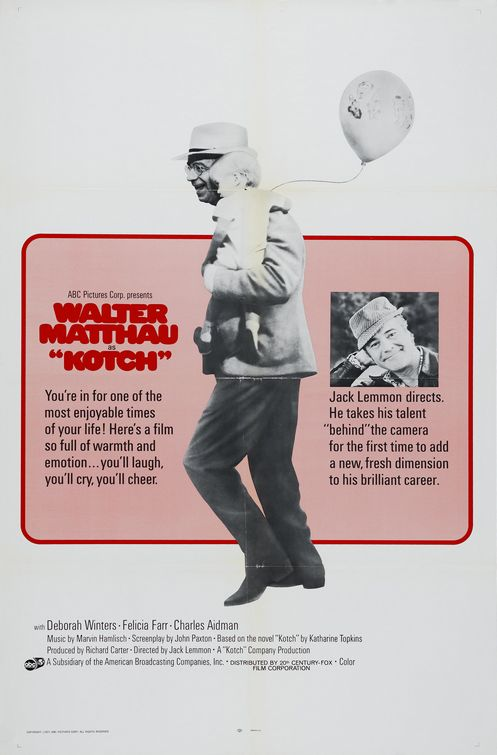
A 1971 picture that contains a nomination for best actor, by one of the big stars of the sixties and seventies, that has largely been forgotten, despite the fact that is the lone directorial effort of another oscar-winning actor. Kotch features a sentimental story about an aged man, coping with the complications of being a burden to his family, while he is still relatively active, cogent, and financially independent. It also contains a sweet story about an unwed mother who’s only 15 and is trying to navigate her pregnancy.
I saw this movie when it came out in 1971, and I remembered it slightly. The details of the story are hard to hold on to because nothing too dramatic happens in the course of events. This is really a character piece and that’s the thing that’s easy to remember here because Walter Matthau is a character in every role he plays but in particular in this one, where he is cast 30 years senior to his actual age. In fact he was only 5 years older than the actor who was portraying his son. Mathau had been in three successful sex comedies in the preceding 3 years, and was probably thought of as a comedian with the leading man’s charisma if not looks. 20 years down the road he would be playing this same part at his own age and making a big success of that as well. If you want to you can kind of think of this as a prequel to “Grumpy Old Men”.
Joe Kotcher is a 73 year old man currently living with his son Gerald, daughter-in-law Wilma, and their toddler child Duncan,in a nice suburban house in Southern California. Kotch does not have dementia, there is no disease on the horizon, and he does not pose a threat to anyone except those who jump to the worst kinds of conclusions about what an old man is doing at a park. However, anyone who has lived with a person, who has personality quirks that may be bothersome, knows that it can be stressful. His daughter-in-law, is maybe wound a little too tight, but of course Joe Kotcher is an avuncular guy who is free with information, opinions, and advice. Those things may not always be welcome and sometimes seem like a bombardment of information that’s unnecessary. Imagine a child who is telling you about their day, and tells you the name of every child that they sat with at lunch, and what they had to eat. It’s not a bad thing but it’s an unnecessary thing for the listener, it seems to be a needed function for the old man, he has to talk,and Kotch is a talker. He keeps a running commentary on all sorts of things, he has a vast knowledge of arcane information he’s happy to drop into every conversation. That’s the kind of thing that is driving a wedge into this family. Walter Matthau plays Kotch as a genial old man not as a curmudgeon, but sometimes you can just be too genial.
The son Gerald, is played by veteran television actor Charles Aidman, who anybody who has seen 70s television, will recognize from some program that they have watched. Aidman is great casting because he has the same hangdog face as his costar. Gerald is a sympathetic son and he is a little bit dominated by his wife who is struggling under the pressure of having her father-in-law live with them. At one point they have the delicate moment when the father and the son have to confront the possibility that Joe is going to relocate to a retirement community. The daughter-in-law is not a monster, she sees how tough this is for her husband and his father. She is the one in fact who sheds tears at the thought that this has become necessary by the way, she is played by the director’s wife). But like “Harry and Tonto”, which will arrive in a couple of years, old people can be a lot more resilient than their children want to think. Kotch has no intention of giving up living the life that he wants just to make his children feel secure.
At one point the old man feels a little bit like an informer because he has to share with his son the fact that the babysitter, while not being negligent, was distracted by having sex on the living room couch during an evening supposedly taking care of the grandson. When he shares this information we think he might simply be acting out of the feeling that he is being nudged out of his child care responsibilities by this young interloper. There’s a nice moment done in a flashback, which reveals that Joe and his late wife Vera, faced some of the same issues that the babysitter did. The location for their assignations was An old Hudson, instead of his parents’ living room couch. Erica, the babysitter, subsequently becomes an important character in the story. After Kotch has spent a little time away from his family traveling, he returns home to discover that the babysitter has been pushed out of school, sent to San Bernardino, because she became pregnant. We learned that her much older brother is her guardian, and there is a brief moment of sadness when we discover the story behind her orphan status. Koch is not going to take this lying down, he feels that he might have betrayed the girl and pushed her on this path because he told his son that the babysitter had misbehaved. He decides that he’s going to help her as best he can.
The film meanders along, giving us a few incidents about how these two, the pregnant teen and the slightly distracted older man, form a dependent relationship and care for each other over the course of her pregnancy. Nothing too dramatic happens, they go out to eat, or they fix meals at home, where they spend time sitting in the living room working on some hobbies that are a little strange but charming. As the end of her term comes, she is faced with some important decisions about her future. And without telling her what to do, Kotch has a huge impact on the decisions that she makes.
This is the only film that Academy award-winning actor Jack Lemmon directed. He got an Oscar nominated performance out of his close friend and frequent co-star Walter Matthau, and efficiently tells the story without an excessive amount of sentimentality, but with just the right amount of humor to keep us going. This time period looks grand in the film, and you might think that Palm Springs would be a reasonable place to move to. Maybe the one big flaw in the story is the location, because even in 1971, Palm Springs was overpriced and maybe not a wise choice for a retiree and an unemployed pregnant girl.
The film received three other Academy Award nominations, so it was widely respected and even though it didn’t win any of those Awards it seems to have gathered enough Goodwill to make it a multiple nominee. I bet if you ask anybody who the nominees for best actor were in 1971 people would only be able to name the winner, Gene Hackman, and maybe one other nominee and not this one. This for the most part is a forgotten film. Kotch is largely done in a style that is not typical anymore. It’s not fast paced, it doesn’t have surprise plot twists, and the characters are all generally good people without there being a villain in the scene. It’s a nice story, about the struggles of a couple of nice people, who find a way to make the world work for them. That seems enough to recommend it.
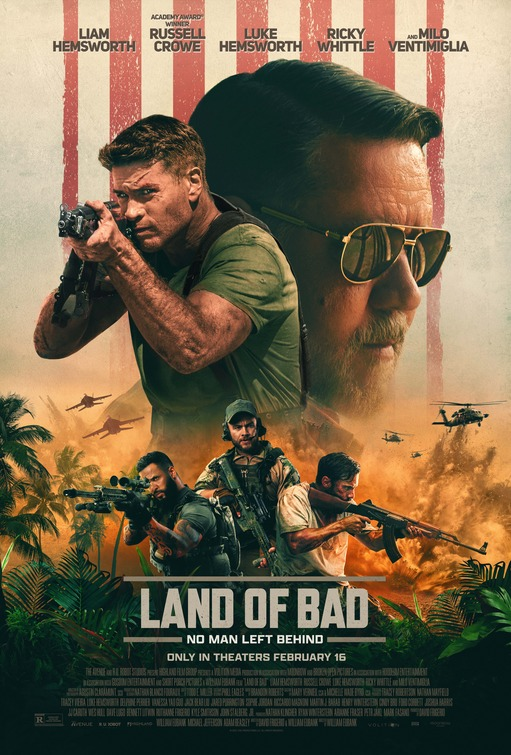
I’m getting to this almost a week after I saw the film, sorry. I’ve been under the weather for a few days and just not in the mood to think much about blogging. There’s nothing particularly special about this film, it’s also getting such a limited release that it will probably be out of theaters after the first week, which was when I saw it. That’s too bad, because this is a pretty successful action film for those who are looking for some combat activity to get them through an afternoon.
The setup for the film is pretty simple: a Commando team is being sent to a remote island in the Philippines, in order to retrieve a human asset for the CIA. The thing that makes this an intriguing film is the detail that is added by the use of high altitude drones that contain not only sophisticated Communications equipment, but also a substantial amount of weaponry. Most of the time the Drone in this particular scenario was being used to assist the team on the ground with surveillance of the site that they are about to engage in. There are however some dramatic uses of the weapon at appropriate times to create diversions or potentially rescue members of the team. The way the Drone communication is integrated into the mission is the thing that was new to me. An operator flying the Drone at a location in the States, is communicating information to the team on the ground about enemy activity and potential locations for the asset. It looks like it’s a pretty sophisticated set up and I don’t doubt that the film is reasonably accurate in presenting how the basics work. Of course for drama purposes, they’re always going to be complications and distractions and anybody who is dependent upon this technology would be frustrated with the behavior of some of the team at the Drone base.
Liam Hemsworth is the odd man out on the team, he is basically the Communications tech and not the warrior that the other people on the team are. He is of course a trained soldier so he has the basic ability to handle himself, but obviously the Special Operations group is used to having their own people there and that throws in a few wrinkles. Hemsworth is perfectly fine in the action hero mode, he performs admirably, makes some basic mistakes, and redeems himself a number of times on the mission. So it’s easy for us to have him as a rooting interest.
I’ll probably get in trouble with some people for the way I’m about to describe the next actor in this film, he’s the biggest movie star in the world, …by weight. Russell Crowe at one time was a lean mean fighting machine, but in the last several years his waist has expanded much like my own, so that now when he appears on screen, it’s much like Marlon Brando in Apocalypse Now, a little bit lumbering. The guy can still act his ass off, and he’s great as the Drone operator, although even sitting in a chair behind a console I would assume the Air Force has some physical fitness requirements that they are going to be imposing on their officers. Russell Crowe still has great screen charisma, and He commands the screen even if it doesn’t require him to do any tumbling, running, or hand to hand combat.
There are really no big themes or messages in the film. At one point the villain wants to suggest that hiding behind a drone is a cowardly way of engaging in combat, but when that comes from a guy who decapitates a helpless woman and wants to do the same for a child, he pretty much loses all credibility. Alan Rickman made a film,not too long before his death, that featured a more nuanced View of drone Warfare called “Eye in the Sky”, if you’re looking for a message, that would be the film to seek out. If you’re looking for shootouts, dramatic firefights, explosions, tense torture scenes, and a few people surviving a lot longer than you might expect, then this is a film that you should probably look for. Good guys taking out the bad guys in modern combat situations is what this whole thing is about. Of course it’s going to be a lot harder to find unless you have your own Drone to assist you.
Throwback Thursday on the KAMAD site will be a regular occurrence in the next year. As a motivational project, to make sure I am working on something, even in a week where I don’t see a new film in a theater, I am going to post on movies from 1975. Along with 1984, this is one of my favorite years for movies and it is full of bittersweet memories as well. 1975 was my Senior Year in High School and my Freshman Year in College. The greatest film of the last 60 years came out in 1975, as well as dozens of great and not so great cinematic endeavors. Most of the films in this weekly series will have been seen in a theater in 1975, but there are several that I only caught up with later. I hope you all enjoy.
The Fortune
As usual, I tried locating a trailer to accompany my film selection, but this does not seem possible with “The Fortune”. I was unable to locate a trailer on YouTube, which is the most likely site that it would be available on. I looked at Google to search for the same thing and also got no results. Maybe this is the reason that this film was a Blind Spot for me, I never remembered seeing anything promoting it, except newspaper ads. The fact that the movie flopped on release probably accounts for it never being available for me to see in 1975. To catch up with it today, I purchased a copy from Umbrella, an Australian Media company, this actually had to clear customs before being delivered to me. Anyway, the above video is a clip from TCM when they showed the film a few years ago.
“The Fortune” stars Jack Nicolson (This is his fourth film in the Throwback Thursday Series) and Warren Beatty (Only his second). They were both big stars at the time and the movie was directed by Mike Nichols. With that pedigree, you would think this was a surefire smash. Unfortunately, like “Lucky Lady”, also in 75, casting cannot make up for all the elements of a movie. Somehow this light comedy farce, just lacks the delicate touch that it takes to pull off this kind of material, and part ofd the problem is the two stars.
Nicolson and Beatty are both laconic actors, who need some pushing to feel like active participants in a movie. Here they seem to be cruising rather than working, and the script and direction are not enough to compensate for a lack of wattage from the stars. There is a scroll at the start of the movie, to explain the complication that the story is trying to deal with. This immediately suggests trouble. When you have to have a history lesson before the story starts, it is never very promising. Basically, the two are small time scam artists, who are trying to get a hold of the wealth of an heiress by marrying her. Unfortunately, the man who wooed her is unable to complete a divorce, so if he takes her with him across the country, he could be violating the Mann Act.
During the 1920s, in the United States, the law known as the Mann Act was much feared. It prohibited transporting a woman across state lines for immoral purposes. Because of the Mann Act, a man who wanted to run off with a woman and was willing, or unable, to marry her, would sometimes go to unusual lengths.
So Beatty wants to marry Stockard Channing, but can’t, so he has her marry his pal Nicholson, as a way of getting around the law. Of course that presents some awkward moments in the story, and those are the only places where the film comes to life. The movie is less than an hour and a half long, but it seems to take forever to get to the real complications. A car ride, train trip and Airplane flight, all use up a lot of screen time, without really building the story or the characters. Once the trio arrives in Los Angeles, and settles into the same courtyard apartment that was used in “The Day of the Locust”, the comedy feels more connected to the goings on. There just isn’t that much of it.
Channing is in her first credited role here, and for the most part she is great, but there are a couple of scenes where bickering is featured and she was given the direction “louder”. It annoys rather than amuses. The final section of the film, is where the slapstick humor comes in, and the hapless con men, having decided to murder the woman they both claim to love, can’t quite pull off the act. There is a scene of a traffic jam on a bridge that showcases what the film could have been, if only that spirit was infused in the rest of the story.
Anyway, it’s not as big a misfire as “Lucky Lady”, it still isn’t something you need to add to your list of essential viewing.



 Kirkham A Movie A Day