Movie Music Magic: The Film Music of Jerry Goldsmith

 I subscribe to a Pop Series at the Austin Symphony Orchestra and the final show in that series this season was a concert featuring music from my favorite film composer, Jerry Goldsmith. I looked forward to this evening all year long and it did not disappoint. 

The opening of the concert was a fanfare, like you might get from one of the Major Studios at the start of their films. I’m not sure, but I think it might have been the fanfare written by Goldsmith for the Oscars. It was not credited in the show notes, but I do have a link for you if you want to hear it.

The Opening piece was from the Science Fiction film “Total Recall”. It uses some non-traditional instruments, which was typical for Goldsmith. It sounds a little like a Basil Poledouris piece.  

It is a powerful and driving theme that fits with an Arnold Schwarzenegger film. Loud and Bombastic with some banging percussion that gets you in the mood for spy games on Mars.

Long before I knew his name, Jerry Goldsmith had scored films that in my youth I saw on television. “The Blue Max” with George Peppard is a WWI flying movie about a German Pilot. seeking to become an Ace while also having a love affair with his commanding officer’s wife. The flying sequences are quite good.

As the program went through each selection, Robert Faries, a writer, actor and dirctor from the Austin Arts community, introduced each piece with a little history and background on the film and how Goldsmith’s work was used. His information was enlightening and enhanced the music selections greatly.

There was a medley of motion picture themes that were strung together in an effortless manner that made the styles that Goldsmith worked in seem incredibly vast. This included pieces from “The Sand Pebbles”, “Chinatown”, “Air Force One”, “A Patch of Blue”, “Poltergeist”, “Papillion”, “Basic Instinct” and my favorite Goldsmith work, “The Wind and the Lion”.

The first half of the evenings program finished with a suite of music from “Gremlins”. I mentioned it in a couple of posts in the past, “Gremlins” was the inspiration for me to write the only fan letter I ever composed. I sent it to him at Warner Brothers. I have no idea if it ever reached it’s target but I am pleased to remember that I did reach out to this music giant when his work moved me. 

After the intermission, we quickly dove back into some great science fiction music from “Capricorn One”.

Goldsmith always tried to find the contrasting themes to the characters and scenes that the movies he wrote for presented. “First Blood” certainly needed action music, but there is a contemplative theme that permeates the movie. The show notes say “Rambo: First Blood II” but the tune is from the first film, this is an instrumental version of the theme song sung by Dan Hill.

Goldsmith and “Alien” director Ridley Scott did not agree on the tome for the theme of the film. Goldsmith reworked it to the satisfaction of Scott, but as Robert Faires explained, there were also old themes from previous Goldsmith compositions that got used as temp tracks and then stayed in the picture. Regardless of the controversy, the end title music is used in several spots in the film, it is a Goldsmith classic. 

Many people will know Jerry Goldsmith because of his connection to “Star Trek”. He composed the music for “Star Trek The Motion Picture” and the theme became the theme for the television series “Star Trek The Next Generation”. He subsequently scored a few more of the Star Trek Films and TV Shows.

The encore consisted of two themes from movies about American Heroes of WWII. I have never seen MacArthur, but “Patton” is the film that made me fall in love with Goldsmith’s music. A Fitting end to the show. 

The Paramount 50th Summer Classic Film Series Phantom of the Paradise (1974) Revisit

Hope Springs Eternal that seeing “Phantom of the Paradise” on the big screen will be an annual event. It has been for me for at least the last 2 years, now let’s keep our fingers crossed and pray that the streak can continue. This particular screening was opening weekend at the 50th Anniversary of the Paramount Theater Classic Summer Film Series. Since I got to Austin in the middle of the pandemic, I’ve discovered that the Paramount Theater in downtown Austin is my true second home. The theater is busy most nights with comedy shows and concerts from a variety of artists. In the summer however, especially during the week, the theater is filled with film fans who get a chance to enjoy some old classics in the way they are meant to be seen, on a big screen in a beautiful Movie Palace.

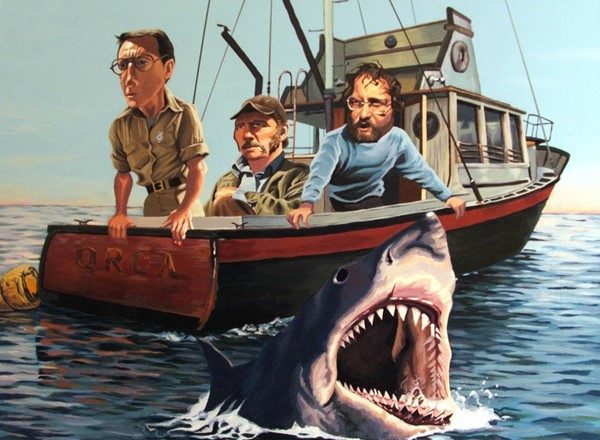
I started coming to the Paramount Theater in 2020 at the end of the summer when the lockdowns and the theater closures were finally dissipating. As it happened, the first two films that I saw at the Paramount were two of my favorite films of all time, Jaws and Lawrence of Arabia. Ever since then I have looked at the schedule for the summer series with anticipation. Last year my daughter and I sprang for the annual Club membership that allowed us to attend almost all of the film screenings in the summer series, as well as the Halloween “Panic at the Paramount” and the Christmas season offerings. This year we had no problem in deciding to renew, because this is how we live, and it’s how I roll.

Last year’s screening of “Phantom of the Paradise” was at an Alamo Drafthouse with an edited edition of the film done according to the specifications of director Brian DePalma. This version is unofficial, and the studio probably doesn’t really approve of it being shared. The version we saw this week was the one that played in theaters in 1974. It includes some of the bad floating matte work that was required to cover the “San Songs” logo, which was a copyright issue with the band Led Zeppelin.  Steven Janice, the programmer at the Paramount, pointed out that the movie only made about $20,000 in its first week of release back in 1974. I’m pretty sure the $3.50 of that came from me, because I saw this film at the UA Theater in Pasadena in the fall that it came out.

It is hard for me to contain my enthusiasm for this movie. Brian DePalma was one of the most reliable directors in my formative years as a movie fan. This was the first of his films that I saw, and I loved it then as I do now. In addition to the outrageous premise the wild costumes and the over the top performances of some of the supporting cast, we have a fantastic score and a dozen songs from The Genius Paul Williams, who also happens to star as Swan, the villain of the movie.

I can never get “Goodbye Eddie” out of my head after hearing it in this movie. It’s the opening song played under the titles, and if you look at the promo that I’ve posted here for the classic summer film series, you’ll hear that it is the soundtrack for this ad. Winslow Leach may not approve of the “Juicy Fruits” but I was perfectly happy with their upbeat parody of a a 50s style lament about a rockstar who takes his life in order to increase his fame. Later on, the same band bastardizes Winslow’s Faust score to present a Beach Boys Style parody song “Upholstery”. This is another one of those Paul Williams tunes that gets hooked in your head and won’t go away. This movie is full of earworms.

I was a little brought down by the opening weekend of the summer classic film series because our annual pass was only good for one of the three screenings. We could have bought tickets separately for Casablanca or for Star Wars, but we did have other films that we were seeing that weekend so we limited ourselves to the Phantom experience. It appeared that a lot of other film fans felt the same way we did because they were out in mass on Sunday for this movie. The reception to the film was enthusiastic, and frankly I was sad that it was over because I wanted to do it all again immediately.

I’ve written about the film in a couple other places here on this blog so I will give you the links for those posts, so if you are interested in knowing more about the movie and the things that make it so special you can visit those musings. For now let me just say at the summer season is off to a rousing start and I have the Paramount Theater, Brian DePalma, and Paul Williams to think for my elevated mood this week. I’ll be seeing you regularly down on Congress Boulevard, if you see me say hi I’ll be the guy with a big smile on his face wallowing in classic movies.

Paul Williams and the Phantom of the Paradise

Phantom of the Paradise Remastered 

Back to the Future Trilogy

why-drew-struzan-deserves-an-honorary-oscar-back-to-the-future

OK, this is a good way to start the New Year on a movie blog. Last night I had the chance to see the three films from Robert Zemekis that cemented his position as the most commercial director of the 1980s outside of Steven Spielberg, who of course was a producer on all three films himself. This was a digital presentation at the Egyptian Theater and the house was packed. I saw several attendees wearing down vests and one guy with Griff’s hat on from the second movie. It is now 2015 and that was the year in the future that Marty and Doc went to to try and straighten out Marty’s kids. Unfortunately we don’t have the Hoverboards, Flying cars and self tying shoes predicted in the film, but we do have skype, flatscreen TVs, Google Glass, and more channel choices that someone could watch at the same time than anyone should find necessary.

Back to the Future 1This will not be a full review on each film but rather just a quick recap and a few comments. These movies are pretty well known and are beloved by millions. The first in the series is one of the great pop entertainment surprises ever. While the follow ups struggle to achieve the same kind of magic as the original, they manage to do the one thing that every consumer of films wants, entertain us.

back_to_the_future_ver2The original film roared out of no where in 1985 to incredible popular success and made Michael J. Fox an entertainment icon rather than simply a good character on a successful TV show. The cleverness of the concept and it’s execution are hard to match. This film is funny, exciting and it manages to raise our awareness of family history and it’s significance along the way. While Fox is clearly the star, the secret weapon in this film is Christopher Lloyd, who got laughs from an intake of breath and a bug eyed scream. He manages to make some of the slapstick work where so often it does not in modern films. I will also mention that Lea Thompson is best used in this film and she does the “good girl with a bad side” 50s character just perfectly. She is also strikingly attractive in the film.

back_to_the_future_part_ii_ver3Four years later, the second film was released at the Thanksgiving holidays. It was a success but came nowhere close to matching the original box office draw of it’s predecessor. Maybe too much time had elapsed or maybe it is the sour tone of the movie. Fox is still great, but the complicated movement between time periods and the inconsistency of some of the rules make it a little sloppy. Having to invent a character fault in Marty, in order to justify the story line is also a bit frustrating. Thomas Wilson as Biff/Griff does a great job in building his malignant character, but because the movie uses him in such cartoony ways and so frequently, the movie feels shrill. Doc Brown gets short shrift in this chapter of the story and Elizabeth Shue, as the new Jennifer, is put to sleep a third of the way into the movie and does not return until the coda of the third film. When I first saw this thirty years ago, it was a bit of a letdown. Last night however, it was pure joy. The future sequences play even more effectively now that we are in 2015 and the suspense bits still work. While I feel as if this is the weakest of the three films, that does not mean it is not a success. There is plenty here to enjoy.

back_to_the_future_part_iiiThe third chapter was awkwardly set up in the second film, but once it gets started it works just fine and it feels seamless rather than forced. The historical context is fun and the western tropes that are lampooned were amusing. Marty adopts the “Man with No Name” persona, and gives him a name, Clint Eastwood. The fact that Clint was a big star at the time but also the only star who tried to keep Westerns alive during the 80s was a big whoop for film fans. Familiar Western character actors are sprinkled through the film and the gulf between the real west and the movie west is explored just a bit. The addition of Mary Steenburgen to the cast was a nice touch and gives Doc a great conclusion to his story. Watch Wilson copy Lee Marvin from “The Man Who Shot Liberty Vallance” in his portrayal of “Mad Dog Tannen”. He gets the walk, swagger and body movement just right, and in case you missed it, he carries a riding crop in his non-shooting hand. This was a simpler version of the time travel story and it effectively wrapped up the story lines they had created in the second movie. The fact that the two sequels were shot simultaneously saved some money and allowed this film to be released just seven months after the second installment.

Back to the Future 2A pleasant evening was had by all and I am much more ready to come back to these films than I have been for a while. They really were terrific entertainment even when there are some issues in the time story sequences.