The Equalizer 3

As long as Keanu Reeves, Liam Neeson and Denzel Washington keep showing up in movies to dispense some violent justice on bad guys, I will be going to watch. This is the third “Equalizer” film, and it carries over some of the background we got in the second film. We always knew Robert McCall was a former C.I.A. wet operative, but his spy connections became the framework for the story in the second movie and they return here with just a slight twist. 

I never watched the original series and I have not seen the reboot with Queen Latifa, so I can’t say there is much overlap in the approach. The basic idea always seems to have been that McCall is assisting someone who has run out of options. In this film, it is a whole town that has run out of options. The evil doers are numerous and incredibly violent, but they discover that they barely know what violent means when they cross paths with McCall.

Denzel is low key in this film. His character has always been even keeled and a bit OCD, and that shows up in a number of ways in the movie. His polite demeanor when first talking with people he is going to kill, suggests a huge degree of confidence. Even when at one point he might be sacrificing himself for the good of others, he never raises his voice, looks at all concerned or hints that he is not ready to handle an unpleasant job. The closest we come to seeing him conflicted over the killings he has committed is a flashback to the events that open the movie. That moment does not feel like remorse however, it only feels like a memory. 

Director Antoine Fuqua has made a bunch of these action films, and he and Denzel know how to build up the anticipation of vengeance. You show how intolerable the bad guys are, and here they are truly insufferable. There are two brothers who head a mafia style family, and they act like untouchable apex predators to everyone, including the police. Their vile acts of violence and the threat they present to the local Southern Italian town that McCall has become invested in, but their actions have bigger ramifications and McCall’s former employers take an interest. The operative they send is played by Dakota Fanning, which is a nice touch since she was the little girl who needed violent rescue by Denzel in “Man on Fire” back in 2004. 

Does the plot get convoluted, yes, but it makes sense in the end. Are there enough action scenes, yes, but no chase scenes like you might usually see in these films. The violence is usually close up and personal, and when Robert has a bottle in his hand or a nearby poker or lanyard, you can be sure he will use it in a gruesome manner. Even an empty revolver becomes a penetrating weapon. This film is R rated for a reason, and it is the reason that we go to these movies. Justice dispensed without mercy in a violent manner on people we know deserve it. Pass the popcorn. 
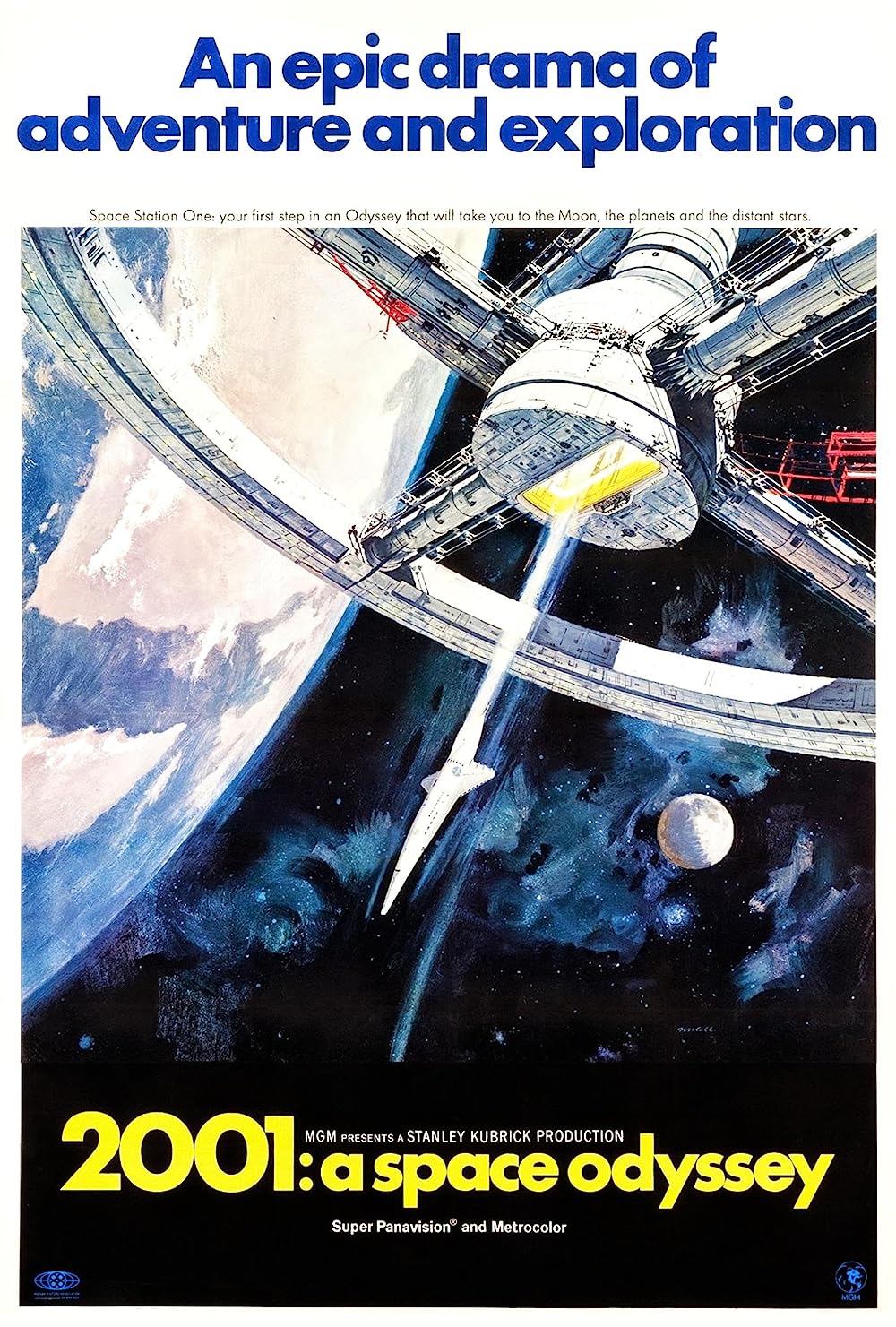
2001: A Space Odyssey-Paramount Summer Classic Film Series

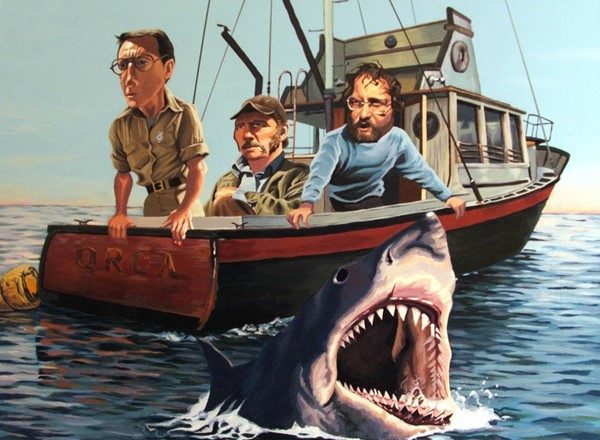
The Paramount Summer Classic Film Series, at the Paramount Theater in Austin Texas, has been one of the great discoveries of my arrival in the area. When I saw the schedule for this summer, I joked with my daughter that I should just get an apartment downtown for the season, since I will be at the theater so often. I will do a more complete wrap up of the Series in a another post, but in commenting on this particular film, it seemed right to take note of a particular fact. Four of my ten favorite films played during the series, Jaws, Lawrence of Arabia, Amadeus, and 2001: A Space Odyssey. Some might find that a sign that my tastes are not particularly daring, I on the other hand, find it proof that these films have merit because they deserved to be included in the series. 

“2001: A Space Odyssey” is the first of the films that make up my list of the ten best, for me to see in a theater as a child. This movie came out when I was ten, and I saw it with my family at one of the movie palaces on Hollywood Blvd. It made a big impression on me and it has continued to stimulate my mind, overwhelm my senses and make me deeply grateful for fifty plus years. As I watched it last night on the Big Screen in another old movie palace, I was in awe immediately by the title sequence of the film. It was a combination of shots of the Earth, Moon, and the Sun lining up and the music cue is fantastic. When the title is listed, I was sooo ready to go on this ultimate trip once again. 

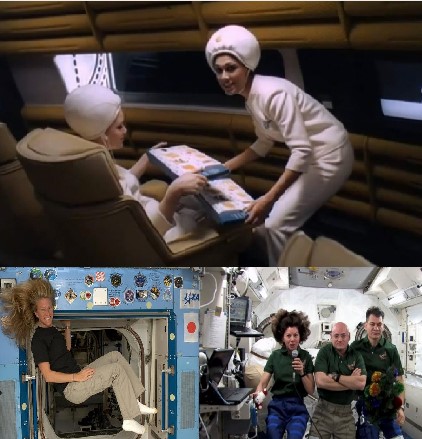
The Dawn of Man Sequence befuddled people early on but the symbolism is not subtle and when you pay attention, you will understand the jump of a million years of evolution immediately. The space sequences in the second act are all about showing our technical advancement, and repeat the flight, landing pattern three times back to back. I have seen this movie dozens of times but it was not until last night that a new piece of information dawned on me. The two sections of the flight to the moon where the crew and passengers are weightless are impressively created with practical effects, but I had not noted before how the costumes were also part of that effect. The Flight attendants wear uniforms that are a little odd. I’m not talking about their grip shoes, I am referring to their headgear. Suddenly it hit me like a thunderbolt why they wear those turban like get ups.

Ok, so it only took me fifty years to figure it out, but that’s because everything Stanley Kubrick did in making this movie was meticulous. 

The screening included the Intermission break, which has almost disappeared from modern films, even the ones that probably need a break. “Gandhi” was the most recent film with an intermission scheduled for all it’s screenings. “The Hateful Eight” had an intermission built into it’s 70mm engagements. This year’s “Asteroid City” has an optional intermission that I have not heard of anyone using. The break in 2001 is at a particularly portentous moment and it makes returning to the last part of the movie so much fun. 

I flew solo last night because my daughter had a social event planned, but to my major disappointment, she would have skipped the movie anyway. We went to a screening a few years ago in Hollywood, and I’m sad to say, she is not a fan. No matter, I am a fan and I got to enjoy this masterpiece one more time on the big screen. The psychedelic trip into the monolith near the end is not nearly as long as you think it is, and it still dazzles in spite of the fact that the optical technology seems quaint in comparison to some of the modern film techniques. 

This film will always have my full endorsement. See it in a theater and be awed. 

Slotherhouse

This is a film that is completely ridiculous and stupid to boot. The idea of a killer sloth is a funny premise from the get go, so it is not too hard to figure out that this is a comedy, disguised as a horror film. If you took all the clever parts of this year’s earlier film “Megan”, with its animatronic doll killer, and replaced them with a stuffed puppet of a sloth that is never convincing, you would get the joke immediately. The film makers here are having a lark and they know that there is nothing remotely legitimate about their film story. So they lean into the stupidity and have some fun, and that ends up working. 

“Slotherhouse” is a pun that gets a groan in the film, and it is the kind of joke you will see repeatedly if you catch this movie. “Alpha” the sloth, becomes an internet sensation at the sorority house where she ends up. There are parodies of all the social media tropes now present in the culture. They even laugh at the idea that an “influencer” gets paid for doing nothing but spouting off. That story line gets mixed with a sorority mean girls plot and thus you have the movie. There are nods to other horror films as well, so maybe you can see it an an homage. 

How this got rated PG-13 is not clear. There is no bad language, no nudity, virtually no blood, and all of the violence happens off screen except for the climax, which is no worse than most Saturday cartoon. It is not at all scary, although the director knows all the shots that need to be copied from a slasher film, but then uses the jump scares for laughs instead. In the end, it succeeded in entertaining me. I laughed a lot during the film. Most of the time I was laughing at how stupid everything happening is. I think the script and director know that and they just let the chips fall where they will. 

In all fairness, I enjoyed this movie much more than “Barbie” or “Cocaine Bear”, although both of those are far superior to it. This is one of those movies you laugh at, not with, but in this case the film makers know that this is going to be the result. How else can you explain a sloth that learns how to use social media to spread the word about it’s own murderous ways? When Alpha makes her way to the hospital, you know at that point that the story is completely designed like a sketch, this is an SNL moment that is better than most of the stuff on SNL itself.

I can’t recommend the film to you, it is not good. I will tell you however that if you do watch it, you will laugh a lot. So, you decide how to take that. It’s entertaining and funny, but at the expense of any story. #killerslth, #housesloth, #whatthehellgoseeit. 

Amadeus-Paramount Summer Classic Film Series

This film came out during one of the greatest years in film history. It won the Academy Award for Best Picture that year, and in my opinion, it is the best film of that decade. I have written about the film before on my retrospective blog “30 Years On“. It is doubtful that any of you reading this will be unfamiliar with the film, but if that is the case let me briefly sum the story up. Antonio Salieri the court composer, develops a degree of envy of Mozart that leads him to plot a complicated revenge. 

F. Murray Abraham was a character actor who was given the keys to a fantastic part, and he floors it all the way to a well deserved Academy Award for Best Actor. Salieri has charm, and guile and anger that he channels at all the right times. Abraham has a great range, and is the most duplicitous friend a great composer could have. Abraham makes us both pity and hate Salieri at the same time. The scenes that I find most effecting however, are not the plot driven moments, but the character points, especially the sequences where he waxes about the music. His own compositions are not worthy, as he discovers when comparing himself to Mozart. When he describes listening to Mozart’s Operas, he is carried away with envy and passion. 

The best moments of the film occur at the climax, fittingly soaking up the talent of his rival and grateful to be a participant in writing it down. The fact that Salieri plans to steal the Requiem that is emotionally draining Mozart, is almost irrelevant to the moments of intense joy he experiences in seeing how Mozart works and participating in just a little bit. Both Abraham and Tom Hulce, who played Mozart, were nominated for the acting honors and this scene earned them both a place in history. This past weekend, CBS Sunday Morning had a little piece on the actor who played Mozart’s alleged assassin. You can watch it here:

My only reservation about last night’s screening is that it was the so called “Director’s Cut”, which is a 2002 revision. I’d seen the material on a a Laserdisc Special Edition from 1995. There, Director Miloš Forman explained why the material was left out, it mostly had to do with time. Figuring with a DVD release, that time was not an issue, they went back to the original script. I don’t think it works as well in a theater. I think the right choice was made when the film originally came out in 1984. While there are a few moments that are enhancements (a longer version of the Opera Don Giovanni for instance), most of the time it feels like padding and the narrative is undermined a little. I’d still say it was better than any other film of the decade, except for the original version. 

What makes the film more memorable and powerful than the play is the way that music can be integrated into the story. We see segments of the Operas, we hear key pieces used for dramatic purpose in the score. The mix of aural and visual is simply superb in this film. The opportunity to see “Amadeus” on the big screen does not come up as frequently as those for “Lawrence of Arabia”, if it did, you would see far more entries on this site.

Blue Beetle

Superhero/comic book fatigue may be a real thing, or it may simply reflect the decline in original and interesting stories in those sources. “Blue Beetle”, regardless of it’s original iteration, feels like a weak version of “Iron Man” with just a little bit of alien technology and a central character of a different ethnicity. Maybe throw in a little “Venom” to boot, and you have a formula film that feels loke a mock-tail concoction. 

Let’s begin with some positive things about the film. The star, Xolo Maridueña, is an appealing actor with a youthful attitude and a friendly smile. The look of the film, heavy on CGI, is solid when it comes to the “Blue Beetle” technology, but a little less convincing and somewhat disappointing when it comes to the environment. This may reflect the fact that the film was originally going to be a streamer from HBO Max and not a theatrical release. The family plot line, a well worn path, is also a plus, at least in the first half of the movie. When the action climax shows up, the family connection becomes preposterous. 

Now, some of the drawbacks. Almost everything that George Lopez does in the film as Uncle Rudy, is off putting. Most of the words from his mouth would make a comic book character blush at having to say them. His bigoted demeanor stands out in comparison to his brother, sister in-law, and Mother. Jaime, who becomes the Blue Beetle, fortunately has been most strongly influenced by his parents and not the xenophobic, culture victim that Rudy is. Unfortunately, his sister aligns more with Rudy and her attack on privilege by taking a dump in the mansion bathroom, is an extension of an ugly victim attitude that permeates the whole film.

Susan Sarandon is the villain of the story, and you can tell it is a comic book movie because her character is a comic book level person. In an “us vs. them” story, she represents the stereotypical “them” like a cartoon. She is privileged, disrespectful, thoughtless and can’t be bothered to see anyone as an individual, including the Hispanic men she is using as part of her plot. She can’t be bothered to learn their names. This attitude is presented as universal when the receptionist at the Office building for her corporation, can’t be bothered to get Jaimie’s name right, even though he corrects her repeatedly. All of this takes place in a location dominated by Latin culture so obviously, the rich and white who have been living there their whole lives, are ignorant and self centered.   

For comic effect, it is fun to have Grandma hoist a weapon that is too large for her, and then pose like the Terminator with the canon, but it sends off a vibe that is not really where the movie was headed. The symbiotic interface needs to have a little more character so that it does not simply become a tool for an on and off switch at plot convenience. Finally, the love story could be fleshed out a little more so that we care about what happens a little more, it felt tacked on.

Overall, the film was fine, but not special. If you see it on Max next month, it will be a reasonable experience, but I can’t say I would spend much to see it before then. 

Jurassic Park 30th Anniversary National Cinema Day

It’s hard to believe that it has been 30 years since “Jurassic Park” opened. It was June of 1993, and I remember were we saw the film, who I was with and there is even a little story about the evening that made it stand out a bit more. My kids were five and seven and I was not going to take them that first night. Grandma and Grandpa babysat and we went to see the movie with out friends Tim and Jamie Martin. We got together two or three times a year for a movie or dinner so it was sort of a special evening, not just another Friday at the movies.

The Edwards Atlantic Palace Theater in Alhambra was just a couple of years old, it was in pristine condition and one of the first really nice multiplex theaters that would come along in the 90s. The audience was packed, we were seated about two thirds back from the screen, in the center section. Three or four teen boys sat in front of us and I was a little concerned because I know kids can be a little full of themselves when they are on their own. Those guys were cutting up for each other and smarting off about the crowd, but I ignored it through the trailers. When the movie starts, the screen is dark and the ominous music and thumping begins the film. One of the kids in front of us shouts out so everyone in the theater of 500 people can hear, “Oooh, Scary!” and he and his buddies laugh out loud. I leaned forward and said to them in a voice menacing and loud, “You haven’t seen scary until you’ve pissed me off. Knock it off!” They looked back at me, with my shaggy long hair and beard and I think they thought they had crossed paths with Charles Manson. They shut up and we did not hear from them for the rest of the film.

This lead to a great evening of entertainment where we could marvel at how well Steven Spielberg could engage us, scare us, ratchet up the tension and then release it with some humor. The screening we went to last night was a 3-D presentation. Unfortunately, the audience was full of restless kids younger than seven, and the AC in our theater was off. It was National Cinema Day, the second year that Theaters have tried to get folks back in front of their screens, and it seems to have worked.  The house was packed. In spite of the deficiencies and distractions, the movie still works.

I’m not sure why it worried me that Nedry loses all the embryos or that Dr. Grant throws away his velociraptor claw, but those things still seem important, even though they are not. The way Tim and Lex bond with Dr. Grant is what gives the movie it’s heart, and everything Jeff Goldblum does gives it a mind and a sense of humor. The movie works on a lot of levels and it still tickles me that the T-Rex ends up being more hero than villain in the story (with the exception of the blood sucking lawyer).

Enjoy some memories or make some new ones. Watch Jurassic Park, go to the movies. Just take the little kids to something more appropriate for them, and be a little bit considerate to your fellow theater companions. 

Psycho-Paramount Summer Classic Film Series

The above is the famous Alfred Hitchcock promo for his film “Psycho”. It is a six and a half minute trailer, it is an amusing tour of the location for the movie with some dry commentary from the master himself.

This was the final film in the Hitchcock week of films and sadly it was the only one I could make it to this summer. “Psycho actually screened once before, earlier in the week, but the demand for the film was such that the Saturday matinee was packed also, and there was plenty to be excited about. 

“Psycho” is the precursor to all the slasher films to come, and they still all have failed to live up to it’s legendary status. That’s because those films focus on the horror of the murders but they have paper thin characters. “Psycho” has a half dozen interesting characters and two leads that are among the finest performances ever in a film, much less a horror film. Janet Leigh exits the film in twenty minutes, but up to Marion Crane’s death she is a terrific character filled with lust, sadness, guile, guilt and regret. Her story arc is interrupted by her murder but we understand in the end that she was a good woman who simply went mad for a moment. Norman Bates on the other hand, has been mad for years, and it is only for a few moments at a time that he seems sane.

The clash between the thief with regret and the mother’s boy with sexual hang-ups is so perfectly played out in the scene in the office parlor of the motel. Marion is thoughtful, sympathetic and friendly with Norman, in spite of his obvious quirks. Norman is outgoing, sad, resentful and shy as he talks with Marion over a cheese sandwich and a glass of milk. The surroundings look comfortable, until you notice all the stuffed birds in the room, and suddenly his quirks are a little more disconcerting. Leigh and Perkins are both brilliant in this scene and it is my favorite in the movie.

Martin Balsam has been in a number of films I have loved over the years. His private detective Arbogast, is surprisingly warm in this film. He is looking for someone who has run away and has a small fortune in her purse, but his relentless search is not malevolent, he seems to want to help Marion as much as find her. His sympathy toward Lila, her sister, and even Sam Loomis, comes across as real rather than just a tool to put them at ease. Even his dogged questioning of Norman is done with velvet gloves. His moment is the opposite of Marion’s. She was a victim of a slow build up that the audience sees coming, his encounter with Mrs. Bates is shockingly quick and almost a jump cut. 

The title sequence and the Bernard Herrmann theme are enough to get most people salivating at the thought of the whole movie. The work of Saul Bass is legendary and his design for the title sequence is simple and exquisite. Combine that with the string saturated violence in Herrmann’s score and you know a treat is coming. 

Here is a post on the film from eight years ago that is more detailed. 

Gran Turismo

Very much like hockey, I am not a fan of car racing in the real world. It seems loud, it deals with machines that are way out of my league or understanding, and I just never got interested in it. Also like hockey however, I seem to have a soft spot for movies about the subject. From “Speed Racer” to “The Fast and Furious” movies, along with “Rush” and “Ford vs. Ferrari”, heck even “Cars”, I have enjoyed a bucketload of car racing movies. I am happy to add “Gran Turismo” to the list. This is a slick, very well made and very familiar story, but as they say, it hits on all cylinders. 

This movie comes from Play Station Productions, so it seems like a video game film, but as is emphasized by several characters in the movie, it is a simulation not a game (in spite of the fact that the lead goes on line and plays against others). It appears that the designers have been meticulous in creating environments and feedback that replicate much that goes on in formula one racing. I looked up the guy who is the basis for the movie and there is a reason this film got made. His emergence as a driver did derive from his sim play and there was success on a level that seems impressive for someone with that background. Frankly, as I read about all of the racing formulas, levels, classes, championship circuits, my eyes glazed over. There is too much for a non-fan to take in, but I was convinced he was legit.

Obviously, the real events have to be fashioned into a story, and the script will contain no surprises at all. Jann, played by  Archie Madekwe, is a gaming phenomena in his local gaming den, and has a reputation across the internet as a formidable driver. He is also alienated from his father played by Djimon Hounsou, a former professional soccer player who does not understand the obsession with a “video-game”. Jann gets recruited through an on line invitation to the “GT Academy” which is designed to hone the skills of sim players into actual race car drivers. Orlando Bloom plays a marketing executive who is trying to sell Nissan Motorsports on the idea of making a sim player a driver for their team. Once he gets that idea approved, he has to find an engineer/mechanic who can teach the gamer kids how to be real drivers. David Harbour is the reluctant former driver who takes up the challenge after being fed up with the snot faced racing team he is currently working for. So antipathy from his family, a mentor with a tragic past, a team of competitors that he has to beat to get his chance, does all of this seem familiar? It feels like a hundred other movies but here is the thing, it is executed precisely. The Academy montages, the setbacks and recoveries, the philosophical talks and lectures have all happened in plenty of movies before. I was expecting Jack Salter, the trainer played by Harbour, to say at one point, ” You’re gonna eat lightnin’ and you’re gonna crap thunder!”.

Meanwhile, director Neill Blomkamp, who made “District 9” so many years ago, creatively puts Jann in sim cars that turn into real cars and real cars that turn into sim cars, so that we can see the relationship between the two experiences. Jann proves himself to his mentor now the two of them have to prove their concept to the world. There are several races where Jann is trying to qualify for his racing license, I’m a little unclear as to how that works, but in the context of the story it is fine. Those races are staged imaginatively, including one spectacular crash that provides the major moment of doubt before the last act. One thing I did notice in the racing scenes is that the shots frequently have the camera facing the opposite direction and running past the cars, not simply matching speed and showing the forward progress. This has the nice effect of making the speeds seem even faster as we are watching.

The emotional journey of Jack and Jann is fairly standard, but there is a reason for that, it works. The goal of our two protagonists are to prove themselves and gain redemption. The excellent car racing scenes show us why the process is complicated and give us enough context to know that the two leads have to have their ducks lined up in a row to achieve the end result. There are plenty of obstacles that have to be overcome, and there are the bonding moments that will emotionally satisfy. David Harbour is especially effective as the guy who knows where it’s at because he could not get there himself. I was surprised to see that Jann’s Mom, who has one scene of anguish while watching a race, was played by former Spice Girl Geri Halliwell. She was a nice match with Hounsou.

The film is not groundbreaking, but it is very entertaining and well worth your investment in time and money. I found plenty of suspense in the right spots, and a little bit of humor in others. Maybe the reconciliations and moments where the a-hole competing drivers get shown up are a little conventional, but that sort of reassurance is what you see a movie like this for. 

KAMAD Throwback Thursdays 1975: The Eiger Sanction

Throwback Thursday #TBT

Throwback Thursday on the KAMAD site will be a regular occurrence in the next year. As a motivational project, to make sure I am working on something, even in a week where I don’t see a new film in a theater, I am going to post on movies from 1975. Along with 1984, this is one of my favorite years for movies and it is full of bittersweet memories as well. 1975 was my Senior Year in High School and my Freshman Year in College. The greatest film of the last 60 years came out in 1975, as well as dozens of great and not so great cinematic endeavors. Most of the films in this weekly series will have been seen in a theater in 1975, but there are several that I only caught up with later. I hope you all enjoy.

The Eiger Sanction

This is the second time I have written about this film for the blog. The first was on my original Movie a Day project that started the whole blog. “The Eiger Sanction” was number 73 on that summer countdown. As one of the few films on the project from Clint Eastwood, that was not a western, it should stand out a little more. I was probably a little underwhelmed when I wrote about it thirteen years ago because it was a slow burn that took ninety minutes to get to the featured premise of the movie, mountain climbing spy action. 

In filling the time before we actually arrive in Switzerland to ascend the Eiger, there first is a series of scenes and plotlines that feel only slightly connected to the plot. The best is Clint going to Europe to execute one of the killers he has been sent to “sanction”. He is Johnathan Hemlock, an executioner for a secret agency known as C-2, that is directed by a mysterious Albino called Dragon. Hemlock wants out and is refusing to continue to work for C-2, but Dragon blackmails him into performing this last sanction by threatening his art collection, which is Hemlock’s main motivation for working in the field in the first place. Like Charles Bronson in “The Mechanic”, Hemlock appreciates art and music and uses his wealth to acquire a fantastic collection that today would be worth hundreds of millions. 

In my original post I warned that this film might be a little tough for modern audiences to accept. The intervening years have made that even more the case. Hemlock passes himself off at one point as an effeminate delivery man to throw off the prey he is after. When he gets a chance to gain revenge against a former friend who is a raging homosexual by 1970s standards, he is particularly cruel. The name the antagonist has for his dog is not only insensitive but nearly as objectionable as if he had named to dog with the “N” word. Like Ethan Hunt or James Bond, Hemlock ends up in bed with another asset of the company and gets trapped into carrying out an even more elaborate “sanction” of an as yet unidentified counter agent. That woman is named Jemima Brown, and there are plenty of jokes about pancakes and ethnicity. There is an extended sequence of Hemlock training for a climbing expedition, and an attractive woman of Native American heritage becomes a sex object with the added bonus of jokes about Cowboys and Indians. 

A few things that I do want to draw attention to. First of all, the opening section of the film is set in Zurich, as a man drinks his beer next to a canal or river, and then strolls through some older traditional parts of the city to his apartment. All the while, there is no dialogue and the music is by the great John Williams. 

I feel like I have seen a dozen movies from the era that repeat the same kind of sequence at the start. It was a trope of the era and if you listen to the music clip above, you will hear a familiar piano style tune that has been enhanced with some jazz and electronic tools to make it sound more mysterious. It’s not a bad thing at all, it just feels overly familiar, although it may not have been so when the film first came out. 

The main reason to see the film is for the suspenseful climbing sequences that take place in the last half hour of the film. The movie was made on location and there are no blue/green screen composite shots in the film. Eastwood did his own climbing in this section as well as some the ascent of the Totem Pole edifice in Monument Valley (although he and George Kennedy were helicoptered to the top and professional climbers did the main ascent). 

On the Eiger, there were dangerous shots that actually lead to some injuries to  a camera operator, and a another climber, helping with camera shots was killed by falling rocks. Eastwood did the ultimate stunt at the end of the film when dangling by a rope several thousand feet above the valley floor. He actually drops when he cuts the rope above him, it is hard to imagine that a movie studio could get insurance for an actor/director in that scenario today (Tom Cruise being the exception maybe). 

The plot gets convoluted as it usually does with a spy film. There are double crosses, mixed motives, and attacks from unanticipated sources around every corner. There is a sense that this is a more serious sort of James Bond film, but then “Dragon” runs the command from his light free subterranean lair, and the other operative we see is an ineffectual lug who has less knowledge of karate than I do. I will say there is one trick I learned from this film. If someone is following to close behind me, instead of tapping the breaks which interferes with my momentum, I sometimes turn on my head lights which activates the rear lights and makes whoever is following, think you are breaking. 

I will recommend the film to those who like a slow burn, a satisfying action climax and don’t mind a little 70s sexism and racism spicing up the film.