KAMAD Throwback Thursdays 1975 “The Rocky Horror Picture Show”

Throwback Thursday #TBT

Throwback Thursday on the KAMAD site will be a regular occurrence in the next year. As a motivational project, to make sure I am working on something, even in a week where I don’t see a new film in a theater, I am going to post on movies from 1975. Along with 1984, this is one of my favorite years for movies and it is full of bittersweet memories as well. 1975 was my Senior Year in High School and my Freshman Year in College. The greatest film of the last 60 years came out in 1975, as well as dozens of great and not so great cinematic endeavors. Most of the films in this weekly series will have been seen in a theater in 1975, but there are several that I only caught up with later. I hope you all enjoy. 

I have been an apologist for this movie since the very first time I saw it, which unfortunately was not during it’s original theatrical run. My friend Dan had recommended it, I have no idea why he had seen it and I had not, but it was not until two years later, when it was becoming a cult phenomena, that I discovered the joys of “Rocky Horror”. I have heard people say that the movie is terrible and stupid, it’s my opinion that those descriptions apply to those critics rather than the film. This is a perfect satire of the culture, science fiction films, and musical theater, all wrapped up as a filmed entertainment. 

I will get to the cult audiences in a little bit, I want to start with the film itself. Brad and Janet are like all young couples in horror movies like “The Blob” from the 50s, they get stranded in a rainstorm and end up asking for help at the nearest house. Hysterically, Brad says “Didn’t we pass a castle a castle back down the road a few miles?”  How can you not be in on the joke at this point? We have already had a corny song about their love, with a deadpan chorus of future characters in the background, and the narrator has pontificated in solemn tones with a melodramatic pause in just the right places. I was laughing at every second glance, cliché, and sly reference to sci/fi horror films. 

The title sequence is famous for the close up of the red lips and mouth, this image was used on much of the promotional material as well. When you listen to the lyrics of the song, you should be doing an inventory of all those old movies from RKO, Universal and others that are being referenced so cleverly. The Dana Andrews line should make you plotz. This film version of the stage play was my chance to see the story that had been a popular live show in Los Angeles in 1973. I remember seeing a billboard sized ad on the Shrine Auditorium, for the show that was playing in Hollywood at the Roxy Theater. In the summer of 1973, I attended a workshop for a month at U.S.C. right across from that ad and I thought it was intriguing, but I was too young to be driving over to Hollywood on my own to see the play. 

I have always been a fan of musicals, and having seen “Jesus Christ Superstar”, I was especially entranced by the Rock musicals of the era. The year before this opened, I’d seen Brian DePalma’s “Phantom of the Paradise”, which has only a little bit of the tongue in cheek attitude of this film. When Riff Raff points out that Brad and Janet are wet, and she says “Yes, it’s raining”, the on the nose sarcasm is amusing as heck. And then “The Time Warp”. Director Jim Sharman, who had done the play, took full advantage of the film formant to shoot this sequence in interesting Dutch angles, over head Busbee Berkley inspired shots and a cast of background dancers that is demented and dressed to suit that dementia. Having the Criminologist describe the dance and lead us through the steps in inserts during the song is additional icing on the humor of this movie. 

When star Tim Curry is slowly revealed as descending in an elevator, the shots are nicely matched with the rhythm transition to his introductory song, and when he throws off his cloak, revealing his get up, if you are not all in at this point, you better just give up, and I pity you. This is a performance that is fully committed, exuberant and just plain old fun. Maybe these days it would not seem shocking, since there seem to be drag performers everywhere, but in 1975, it was audacious. The juxtaposition with the straight laced Barry Bostwick and Susan Sarandon in their square cloths is another way we are being let in on the outrageous joke that everyone is involved with here.  

The creepy old house has the requisite living room for our dance sequence, but there is a delightful shot of the laboratory from the elevator perspective which focuses on a color change nearly as dramatic as when Dorothy arrived in Oz. The pink tile floors and walls assault our sense of what a “lab” should be, and the red instrumentation is flashing out at us as a production design made to draw attention to the color scheme.   As Brad and Janet step into the scene in their charming underclothes, their sense of alienness is exacerbated. Curry’s Colin Clive style delivery of his speech to the conventioneers and the guests, is another salute to the old style of the classic Hollywood horror films. Sarandon and Bostwick are terrific in their uptight, wooden mimicking of the innocent bystanders. 

Almost every number is a showstopper, but it never feels like they are trying to outdo themselves from one song to the next. The progression of songs feels organic to the weird nature of the story. Meat Loaf shows up in a spotlight performance which is maybe the one segment that feels a little inorganic, but who cares “Hot Patootie – Bless My Soul” is a smoking solo number that gives us a motorcycle sequence, an axe murder and a chorus line dance, all in a short order and we get saxophone solos. The fifties sensibility with “Eddie” the greaser biker played by MeatLoaf reinforces the rock and roll roots of the musical and the time period of films that are being saluted here. 

Several sequences feature musical instruments being used in unusual ways. There is an organ pumping out gothic tunes at first in the scene where Riff Raff is teasing Rocky. Then there is a drum machine and an electronic organ to follow up. The guitars and piano in so many of the songs are more reflective of older style rock songs. The guitar plucking during “Touch-a, Touch-a, Touch-a, Touch Me” reminded me of Elton John’s Crocodile Rock. Rock and Roll Porn!The Experience

When I finally caught up with the film, it was in the Midnight Screenings that happened at the Rialto Theater in South Pasadena on Saturday Nights. In the summer 1977, my then girlfriend and future wife, would drive down to Hollywood for “Star Wars” at the Chinese Theater, and then on Saturday Night, go up to the Rialto for Rocky Horror. The audience participation there was full of the call outs and props that were probably found in other venues around the country. The Janet Umbrella was accompanied by showers provided by squirt guns. Cards and Toast were tossed at the right moments, and the swaying matches during “Over at the Frankenstein Place” probably violated a hundred local codes, but we did not care.  When we ventured to the Tiffany Theater in West Hollywood, we were surprised that there was cosplay and that the people dressing up acted out the movie in front of the screen. There was a guy who sold supplies to people in line. He would walk up and down the line with the refrain “Rocky Rice 25, Rocky Matches 10”, and he had little bags with the logo filled with rice and matchbooks with the title on them. So for 35 cents you could participate too. 

This was a soundtrack that we played in Dolores’s dorm room and in the car on a cassette player. The first MeatLoaf album also came out that year and we paired those two together on a regular basis. Oh to be young and in love with the movies.

All Quiet on the Western Front (2022)

Once upon a time, I saw all the nominees for Best Picture before the Oscar ceremonies. As time as gone by in the last few years, I have become less and less interested in the Awards. The expansion of the Best Picture Category was done to include more popular films and keep audiences coming to the theaters and the TV ceremony, but the effort has largely resulted in the inclusion of more independent, specialized films. Sure this year a couple of big movies have been included, but there are at least three films on the list that would not be there if the category had not been expanded, that very few people know or care about. This film would not be one of those. This is a large scale historical epic that is compelling and deserving of attention, however, in the past it would have stayed contained in the “International/Foreign Film” category. Even beyond that classification, it might have been excluded because it was not a theatrical release. This is a Netflix film that probably got a token theatrical exhibition in order to qualify for awards, in spite of the fact that Netflix’s model is almost exclusively streaming.

By waiting to see this, I was lucky enough to find a theater that would play the movie on a big screen because of it’s award nominations. People who experience this at home are missing out on a very immersive experience, and probably the whole reason that the story is being told in the first place. The film makers want you to share the horror of war, especially the meat grinder that the European Conflict was in WWI. In the past couple of years, there have been a number on movies that featured the horrors of the trench warfare of WWI: “1917“, “They Shall Not Grow Old“, even “Wonder Woman“, “The King’s Man” and “Death on the Nile“. All war is horrible, but the environment and conditions in this first of the modern wars was particularly brutal.

It has been almost a hundred years since the first version of this story was brought to the screen. It is not as visually brutal as the new film is, but it was emotionally powerful nonetheless because of our ability to empathize with the young men who had excitedly volunteered for the war. Their disillusionment  does not take long, and in this modern version it is accompanied by extreme fear, violent dismemberment, and the gruesome duty of collecting the bottom part of the dead soldiers dog tags, as a way of inventorying the casualties. One element I did not remember from the 1930 film, is the negotiations for a ceasefire and the insistent resistance of some of the German general staff to making such an arrangement. Neither side was able to achieve a military victory, but the war of attrition took a toll on the homefront, which is largely ignored in this story. 

The structure of the film is roughly the same, as we follow the schoolfriends from enlistment to battlefield. The local politics from the first film, where a postman becomes an authority and abuses his power, is missing from this version. The relationship between the veteran Katczinsky and the newbie Paul is developed substantially, and there is a well told moment when the two men share a latrine, where we see that each of them has something that is being lost by the continuation of the war. The final resolution of their friendship occurs not in combat but in the sort of savaging that is typical of a war and with an unlikely antagonist being responsible for the end. I’m not sure if this expansion of the dangers of war improves the film’s message or dilutes it.

Production design on the film feels authentic, with the trenches being a miserable puddle for most of the time the soldiers occupy them, and the bunkers being a claustrophobic nightmare, especially with the arrival of tanks on the front, One of the memorable segments from each film is the period when Paul is trapped in an artillery crater, with a French soldier he has brutally overcome, but who takes so long to die that Paul apologizes, attempts to rectify and then suffers from guilt by the experience.  The one famous moment from the 1930 film, which ends the story, is not present in this film. Instead we get an end card that totals up the dead, measures it by the territory gained and losses, and makes a final case for the futility of war through the text rather than the visual. 

“All Quiet on the Western Front” may be a more difficult film for American audiences because of the use of German and French. The authenticity is meritorious, but the need to read the words does add a layer to the experience that can distance the emotional investment we make with the soldiers. It is not the sude of the war that they are on, or their cultural differences that might impede us, it is simply the fact that we may not be as in synch with each moment as we might be if it were in our own language. Still, I mourn for Kat, Tjaden, Franz, Albert and Paul, for the humanity that they lost and the needless sacrifice that they made. 

Living

The film that this is based on what is thought of as a classic. “Ikiru” was once listed on “Sight and Sounds” poll of critics as the 12th greatest film of all time. The controversial 2022 version of the poll does not even have it in the top 100, which sounds like another reason to see the new poll as highly suspect. I doubt that an English language remake, 70 years after the original, will gain the same sort of respect, but as a film from the last year, “Living” would certainly qualify for a number of top ten lists and it also addresses one of the grave injustices of the Academy Awards, by finally acknowledging the great Bill Nighy. 

I have yet to see “Ikiru”, but if it is better than this film, then it must be pretty darned great. “Living” is another film set at the tail end of a man’s life, asking some of those questions all of us face when we get close to whatever is next. Like “A Man Called Otto” from earlier this month, “Living” has a protagonist who is facing death, but his situation is somewhat different, and the issues the film speaks to are maybe more universal. Rodney Williams is an imperial supervisor of a group of bureaucrats, working in the public works offices of the British government in postwar London. The formality of his dress and manner of speaking, ring of an old world style that is still entrenched in the class system of Britain. He wears a suit, and a Bowler hat, which mark him as a member of the professional class. We quickly learn that he is feared and revered by the coterie of government men working under him. A new employee, rapidly begins to absorb the forms of communication and work ethics that the office employs. 

If your image of dystopia is the bureaucratic nightmare found in Terry Gilliam’s “Brazil”, then you will find it’s origins in this set of offices. Mr. Williams however, discovers on the one day he changes his routine in order to see his doctor, that his life has a rapidly approaching expiration date.  The story follows Mr. Williams as he has a crisis of identity and questions the life he has lead. Many people would probably do as he first attempts to do, by discovering fun under the tutelage of a confirmed hedonist. These two come together and there is some  pleasure to be had, but ultimately, is cavorting a satisfactory pursuit for Williams? The answer appears to be no. This interlude in the film, makes up the first of three phases that Williams goes through at the end of his life. There is a strongly implied moment where suicide might have been considered, but Mr. Williams has always been too proper a man to actually do such a thing. Bill Nighy interacts with a man he meets in a diner, and while they do take pleasure from an evening of frivolity, it is easy to see from the performance, that Williams is not quite made out for this lifestyle. 

The second phase is where Nighy really gets to shine. He is attracted like a moth to a flame, by a young co-worker who is leaving the bureaucracy, for a job in the service industry. She seems to enjoy the idea of working in a different environment, and Williams, who has not gone back to work for days, indulges in the simple pleasures that she enjoys. A walk through the park, a visit to a museum, a drink at the pub. His interest is not romantic, but the neighbors are scandalized by his involvement with a young woman, and he always looks like he is trying to fit in without ever quite accomplishing it. His formality in speaking with her, the posture he holds when sitting at a table that she is waiting on, and her discomfiture at his occupying so much of her time, also indicates that he has not really found the meaning he is looking for.

Ultimately, the film is about making the life you have chosen, rather than choosing another life. At one point after he has returned to work, and then after his funeral, his colleagues begin to question whether he had changed. It turns out that neither his manner or way of speaking has altered, but rather he has changed his perception of the job. Mortality has confronted him with an opportunity to stop being merely a cog in an ever grinding wheel, but rather to act as a facilitator to the objectives that his position really expects of him. The fact that everyone else in the government has become a zombie of bureaucracy,  does not change, but Williams has. 

I thought that it was an interesting choice to change the perspective in the last phase of the story from first person to second person. Mr. Wakeling, the new functionary,  becomes almost a narrator of the story. He is potentially the one person who will be influenced by Williams progress, but even that is in doubt at the end. Anyone who has dealt with a government agency, knows the despair of trying to get something done, and being faced by polite but indifferent minions of the system. Mr. Williams finds a small redemption for a life of monolithic intransigence, by fulfilling a purpose that should be obvious to all of us. Do something, don’t simply be something. There is dignity in life and work, not just from showing up, but from also considering why you are showing up. It is a lesson that was true 70 years ago in Kurosawa’s Japan, and it should still be true whether it is 1950s England, 2020s America, or any other place in the world. 

Infinity Pool

A ridiculous premise for a film about the consequences of our actions , transforms into an incoherent mess becoming more inconsequential as it goes along. “Infinity Pool” is a horror film with a science fiction conceit that gets completed wasted and turns the story into an examination of unpleasantness for no reason whatsoever. This could have been something interesting and important, and it gets less and less of each of those things the longer it goes on. 

Alexander Skarsgård is  failed novelist James Foster, on holiday at a resort, in a country trapped in poverty and full of the kinds of cultural improprieties that we are supposed to overlook to avoid ethnocentrism. The tribalism and cultural imperative of family honor requires immediate retribution for offenses committed in the nation. So go ahead and trust the people you just met, and venture outside of the resort enclave, meet people from the place you are visiting, and learn their quaint form of justice, except there is a get out of jail card. Maybe the wilder the idea, the more fun we can have with it, after all “Face Off” ,was a blast in spite of being completely bonkers. The problem here is that no one is having fun with the premise, instead there are pretentions of insight into human behavior. That might have also made for a good story, but writer/director Brandon Cronenberg leaves that on the table to wallow in excess revulsion. 

The idea of buying your way out of the consequences of your actions is an interesting one. What does that process do to a persons sense of self. Does guilt linger or vanish? Will your morality disappear entirely? These are great questions that the film asks, but it’s answers are muddled by a series of indulgent episodes that become increasingly boring and irritating. Mia Goth, who gave what I thought was a fantastic performance last year in “Pearl”, at risk of being trapped in the same kind of roles in the future if she keeps getting parts like this. She is great here, but her character is just a slightly different twist on the sick mind that cropped up in that earlier film. Her character Gabi, at first is mysterious, but quickly becomes tritely cruel and less and less interesting. 

A few examples of the pointless excess that Cronenberg has created here might help you understand why this movie is infuriating. Gabi gives James a reach around after a few hours of picnicking with James and his wife? We get to see his seed spilled on the ground. Why? The sense of unearned intimacy is probably what the writer is seeking here, but that is physical rather than emotional, and the emotional is where this movie needs to be working. The best character in the film when it comes to dealing with the questions being raised by the premise, is James’s wife Em,  played by Cleopatra Coleman. Unfortunately, she is removed from the film and the only characters that James has to measure his behavior against, are the ones who are indulging in the reckless excess that will turn off most of the viewers. There is an extended orgy sequence shot as if it is the “stars” sequence from “2001”. It goes on interminably,  the lights flash in different colors, and we see hazy images of people entangled in some sort of sexual behavior, but what it is will never become clear. Obtuse abstractness is supposed to be artistic in these moments, rather, it is pretentious diddling. One last thing to irritate you, there are grotesque masks worn by the characters during many of the scenes of violence and lasciviousness. They were introduced early on, without a clear explanation and the cultural symbolism is completely baffling. The art house sensibility can’t be masked by the fact that this is a horror film, it simply makes the film less frightening and more vaguely symbolic. I call bullshit.

There was another potential direction the film could have gone in, one that the director set up and then completely ignored. How do we know that the doppelganger is the one being executed? Maybe the accused has been replaced by the clone. If that is the case, is there in fact a redemption of guilt because the surviving “person” is in fact, blameless? That is an intriguing thought. Unfortunately, it is not the thought Cronenberg wanted to dwell on. Instead, we get violent and emotional cruelty. Trippy visual interludes don’t make the film deep, they simply fill in the time between unpleasant characters doing more unpleasant things. None of it makes any sense, and the symbolism is too trite to be taken seriously, much less understood. Somewhere some cineaste will write about this and make it sound like an artistic breakthrough, I’m sorry, they will be as full of it as this movie was. 

KAMAD Throwback Thursdays 1975 “Lucky Lady”

Throwback Thursday #TBT

Throwback Thursday on the KAMAD site will be a regular occurrence in the next year. As a motivational project, to make sure I am working on something, even in a week where I don’t see a new film in a theater, I am going to post on movies from 1975. Along with 1984, this is one of my favorite years for movies and it is full of bittersweet memories as well. 1975 was my Senior Year in High School and my Freshman Year in College. The greatest film of the last 60 years came out in 1975, as well as dozens of great and not so great cinematic endeavors. Most of the films in this weekly series will have been seen in a theater in 1975, but there are several that I only caught up with later. I hope you all enjoy. 

Lucky Lady

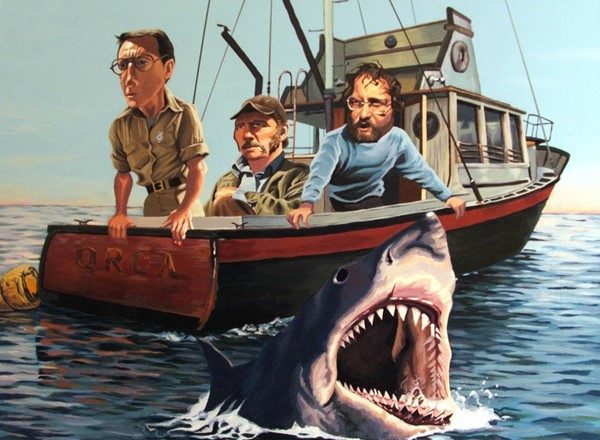
Three big stars, on a boat, in 1975, that’s a hit right?, Only if you add a shark, otherwise you have the misbegotten and mostly forgotten “Lucky Lady”, an action romantic comedy adventure starring Academy Award winning actor Gene Hackman, Academy Award winning Actress Liza Minelli and soon to be Number One Box Office star in the world Burt Reynolds. You wonder how it could wrong, well let me count the ways.

To begin with, the director Stanley Donen was probably wrong for this kind of picture, although at first blush it seemed like he would be perfect for it. Donen had directed some of the greatest movie musicals of the 1950s, including “Singin’ in the Rain” and “Seven Brides for Seven Brothers”. Liza Minelli had recently won her Academy Award for a musical drama set in the 1930’s, “Cabaret” and she was a friend of Donen’s so it seemed like a good fit. There is a musical number at the start of this film. This part is right up his alley. Unfortunately, that sequence is only 2 minutes of a movie that ran a hundred and twenty-five minutes. Most of the film takes place on boats and you know, that ain’t easy to get right.

The second problem is that the film can’t quite balance the tone. Is this a slapstick nostalgia piece, is it an action film with gangsters shooting it out, or is it a romantic comedy with a ménages à trois as it’s centerpiece? It tries to be all of those things and never hits the right amount of any one element. There were several films in the 1970s that were set in the depression era, gangster films and some others, but there were two that seemed most likely to have inspired Twentieth Century Fox to back this project: “Paper Moon” and “The Sting”. Both of those films managed to get the hardscrabble era right, with a good amount of humor, but not turning it into a cartoon. This script by the married duo Willard Huyck and Gloria Katz, is all over the place and Donen compounds the problem by having the lead actors playing it for laughs, in the face of machine guns mowing down people left and right. Burt Reynolds mugging, Gene Hackman aw shucking, and Liza sometimes sincere and sometimes shrill.  

In “The Sting” and “Paper Moon”, everyone is playing it straight. Sure there are a couple of double take looks by Redford when shooting takes place in the story, but you feel the stakes are real. Ryan O’Neal is in serious danger from John Hillerman and his thugs in “Paper Moon”. Hillerman is one of the bad guys in this film, but you never feel  like the main characters are at risk. Reynolds is taking pratfalls during the action and Hackman is aiding and abetting in all of that jocularity in the face of killers. Maybe you can get away with that in “Some Like It Hot” but the premise there is comedic to begin with as the leads are cross dressing to escape the gangsters. It simply doesn’t work here. Especially, when the young companion of the three, gets shot to pieces and we see it with squibs and everything. The joke won’t work in these circumstances.

Both Gene Hackman and Burt Reynolds had four movies that they starred in during 1975. They were clearly very busy. I will be covering at least four of those other seven films during the yearlong project here. One of the co-stars in this picture was also in four movies in 1975. Geoffrey Lewis plays the captain of a Coast Guard ship that tries to stop the rum running scheme of the three main characters. This part was all bluster and buffoonery, even when he is pointing machine guns and shotguns on the two men and ordering his crew to basically murder them. This feckless character might work is the violence in the film was all cartoon like, but in the big climax, dozens of people are getting killed. 

The film was given at least three different endings, one of which involved the demise of the two male leads. But having tried to make this a light hearted romp thru bootlegging, that downer of an ending was dropped for something more in keeping with 80% of the film we have been watching. The big sea battle that is the finale of the picture would have made more sense if the eastern syndicate had been pitied against some of these other independent groups earlier in the film. Otherwise, as it seems in the film, they come out of nowhere at the end. In “The Sting” we get a sense of the community of con artists who have come together to take down the bad guy. No such connection was established in this script. 

I can’t quite criticize the cinematography, it seems like it should be a good looking movie, and 

Geoffrey Unsworth, a two time Academy Award winning Director of Photography, had just done “Cabaret” and “Murder on the Orient Express” , two terrific looking period pieces. The problem is, the print I viewed this movie on was from a out of print DVD, that seemed to be badly in need of a remaster. This film is not available to stream anywhere, I had to go to ebay to find a DVD. It looks like it never had a home video release until the 2011 Shout Factory DVD. So though the whole VHS era, this movie was missing. That will tell you how forgotten it must have been.

This was a blind spot for me from 1975. I never saw this film before today, in spite of the fact that it features my favorite actor and it came out in my favorite film year. This was a Christmas release and Christmas 1975 was a tough time for us that year. I was in my first year at college and my schedule with the debate team kept me busy. It slipped by because it bombed and I never caught up with it until now.

Plane

Gerard Butler has become as reliable an action star as Liam Neeson in my book. He may not have the range that some other actors have, but I have never thought he was not up to the task. His film series about Secret Service Agent Mike Banning may be over the top, but they are exceptionally entertaining. The first one is so solid it trumps the doppelganger version done with Channing Tatum and Jamie Fox by a mile. The high concept, low budget “CopShop” was a surprising little piece that I enjoyed the heck out of two years ago. “Plane” is going to go in the same box. This is exactly what it sets out to be, a high tension thriller that will keep you on the edge of your seat for a couple of hours and make you glad you spent the time and the money. Maybe it’s not great drama, but it is great entertainment.

Not a great poster, but you get the idea

You might be lead to believe that the film is all about the hostage drama that involves the passengers of a downed plane and criminal separatists on a Philippine island.  That plotline does play out and it is the focus of the second half of the movie, but a lot happens before the passengers become captives. You will hope never to encounter turbulence again when you see how the weather in the sky influences the plane and causes the initial trouble.  When that seatbelt sign is on, after seeing this movie, you will want to double strap yourself in. The flight dangers are shot well and the tension mounts like it should in a thriller thanks to the efficient direction of  Jean-François Richet, who did the remake of “Precinct 13” back in 2005. He has made some French thrillers that I would now be interested in seeing because this movie worked so well.

Once we are back on the ground, there are some great action set pieces. Butler has a brutal one on one fight in an abandoned building where he is trying to communicate with the airline and his family. This is not a ballet of kicks and splits with pirouette mid-air gun transfers. This is two men, bluntly wrestling, punching, kicking, gouging and simply tiring to outlast the other guy. Captain Brodie Torrance is an airline pilot, who had military flying experience, 20 years earlier but does not have a “certain set of skills”. He is a bright guy  who makes choices as he goes along, and simply does the best he can with those choices. There is one “movie moment” interjection of savior activity that rescues him, but otherwise the action seems pretty straightforward. 

I have not seen the Luke Cage series but based on Mike Colter in this film, I’d be willing to bet it is pretty good. Colter plays a reluctant ally of the Captain, as a convict who survives the landing and has some of the Neeson style skills that Torrance lacks. It does not quite become a buddy picture, but there are some elements of the odd couple style tropes that show up in a lot of these action films. Colter starts the scenes with mass combat and follows through for the remainder of the picture, but there is more to come. This is an island full of criminal bullies who control the population through force and intimidation, to create an army of reprobates that is just waiting to be taken down. Like most revenge pictures, you are happy watching the bad guys get eviscerated. When the sniper with the .50 caliber starts shooting, the on screen mess is significant.

There is nothing in this that is earthshaking, it simply builds a credible story, ratchets up the tension, and makes you Saturday Matinee Happy that you are watching it. It is shot well, cut tightly and full of the kind of stuff that you want in a movie where the popcorn is hot. This used to be why people went to the movies instead of sitting at home streaming. Get to a theater and live, while watching some bad guys die. Don’t sit at home, go out and have some fun, like watching this. 

KAMAD Throwback Thursdays 1975 “Smile”

Throwback Thursday #TBT

Throwback Thursday on the KAMAD site will be a regular occurrence in the next year. As a motivational project, to make sure I am working on something, even in a week where I don’t see a new film in a theater, I am going to post on movies from 1975. Along with 1984, this is one of my favorite years for movies and it is full of bittersweet memories as well. 1975 was my Senior Year in High School and my Freshman Year in College. The greatest film of the last 60 years came out in 1975, as well as dozens of great and not so great cinematic endeavors. Most of the films in this weekly series will have been seen in a theater in 1975, but there are several that I only caught up with later. I hope you all enjoy. 

I did not intend to do this film as soon as this week, but it worked out that it was practical for us to watch it last night so I went ahead and took the plunge. “Smile” is not the horror film from last year, but the social comedy from Michael Ritchie  and Jerry Belson in 1975. Ritchie had just directed two Robert Redford films and would soon be responsible for the “Bad News Bears”, a beloved classic of the 70s, and “Fletch” a beloved classic of the 80s. Belson was a TV writer who had done “Love American Style” and “The Odd Couple”, two very successful comedies of the 1970s.  

This is a slice of life picture that hints at social commentary but is barely about anything in particular. The subject of local beauty pageants will be lampooned in a dozen other films over the following fifty years, but “Smile” got there first. The “Young American Miss” contest is a fictionalized version of other contests and it targets the sponsors, participants and communities in a mostly good hearted way. There are some biting moments in the film, but there isn’t an evil force operating, it is mostly a collection of clueless citizens, some who want to do good and others who are motivated by the inherent sexuality of a beauty pageant. 

Making perhaps his most sympathetic and comedic character, the center of the film, is actor Bruce Dern.  I have been a fan of his since the early 70s, despite the fact that he shot John Wayne in the back. He will be the subject of another of these Throwback Thursday posts, later this year. In this film, he plays “Big Bob” Freelander, an RV salesman who manages to be a success in the era of energy crisis depressed RV sales, because he is an authentic, optimistic personality. The car salesman has been negatively portrayed in the culture forever. “Big Bob” however, is not pressuring anyone, he is not acting in an underhanded way, he simply finds the things that might convince a buyer and he points them out with passion. As a community booster, he has the role of chief judge and he is honored to be in that position. He sincerely believes in the girls and the ideals of the contest, and wants it to succeed. His buoyant attitude will be challenged by his friend, his son and the other members of his Jaycee organization, who are not all so aligned. 

Some of the most amusing scenes require “Big Bob” to confront some uncomfortable truths about his son “Little Bob” and the relationship he has with his family. His perspective is altered a bit in a couple of moments of self awareness, that really are laugh out loud insights. His optimism seems undiminished though, when he still attempts to keep his best friend in town and cheered up, in spite of the problems his friend faces. He is confronted with many moments that cause him to become somewhat disillusioned with the pageant and the process. 

The girls in the pageant are variously mocked, admired and appreciated in different ways. There is a slight subtext of male domination and sense of proprietary power over women. The girls however seem to be in a lot more control than one might suspect. The two main contestants that we follow are Joan Prather’s Robin and Annette O’Toole’s Daria. Robin changes the most in the story, as she becomes more sophisticated and aware of the impact her choices can have on the judging of the contest. Daria is a knowing veteran of beauty pageants and becomes a confidant and advisor to Robin, often with amusing insights. Collen Camp and Melanie Griffith are also well known actresses who have parts as contestants in the film. Griffith in particular has this film, and another coming up on this project, where she has nude scenes at the age of eighteen. Early on, Griffith seemed destined for roles as sexy provocateurs in the stories she gets roles in. 

Choreographer Michael Kidd, who worked out the dances for “The Band Wagon” and the glorious “Seven Brides for Seven Brothers”, gets an acting part in this film, playing a prickly version of himself, taking on the job of choreographing the girls show routines.   Geoffrey Lewis, a terrific character actor who will be in four of this year’s Throwback Thursday posts, plays the Jaycee’s pageant organizer, who is the closest we come to a villain in the piece because his budget needs and attitude are not particularly supportive of the girls. Titos Vandis, a ubiquitous presence in 1970s film and television projects, plays an alcoholic custodian with a better attitude toward the girls than many of the pageant sponsors, but who still resents the plumbing problems they create. Also in the cast is Barbara Feldon who was best known as agent “99” in the series “Get Smart”. She is great here as a former pageant champion, struggling to keep an identity as a woman with a purpose, but perhaps losing her relationship with her husband in the process. This is a fairly even handed look at how women’s empowerment might impact the traditional roles of family. Navigating the changing social rules is difficult for both sexes, regardless of whether one had dominance over the other. 

A memory note on this film. I saw it at the same theater I mentioned in last week’s post, the Avco in Westwood. Coming out of the previous screening, were my parent’s friends John and Anne Moon. He was an aerospace guy who was also a magician and they were friends with Jerry Belson. I was seventeen and seeing my folks friends out on the other side of town was a little unusual, but we spoke for a moment and they told us we would certainly enjoy the film which we did. 

William Shatner Star Trek II The Wrath of Khan

It was just last September when I saw “The Wrath of Khan” in a theater again. This second visit within such a short time reflects my love of the film, but more importantly, it was a special event that gave me an opportunity to encounter Captain Kirk IRL. William Shatner is making the rounds this year in an experience for fans that has slim production values but great emotional depth. 

Let me say, that whatever it is that William Shatner and Mel Brooks are eating in their lives, order me a plate. Brooks is 97 and Shatner turns 92 this year. If you have ever been to a live event with either of these gentlemen, you will know why I am impressed with their diet or exercise regime. These guys are as sharp as a tack and have boundless amounts of energy. I’ve seen Brooks a couple of times at the TCM FF and a presentation of “Blazing Saddles“. He has a boundless energy, like a kid with ADHD. This was my first time seeing Shatner live, but it was close to having lightning strike twice in the same place. He takes the stage, walks through the opening segment with commanding authority, and is never less than enthusiastic while talking to us.

The host who was interviewing him was in the same situation that I saw the hosts in the Brooks presentations found themselves, hardly able to focus the subject of the interview as he was overwhelmed with content, stories, stream of consciousness meanderings and quick quips. Yes the Captain spoke a bit about Wrath of Khan, but he also talked about the Original Series, The Robert Wise Star Trek The Motion Picture, and a bucket load of philosophical thought that seemed to overflow his brain. 

I’m sure he has told some of these stories before, but nothing that happened at this event sounded like it was pre-planned or anything less than spontaneous. A couple of things that he mentioned about “Wrath of Khan” are worth noting. He said that the scene with he and Leonard Nimoy, in the engine room at Spock’s death, was shot with the glass separating them and unable to do more than press their hands against the glass, was his suggestion. He also mentioned that his “favored nations” contract allowed him the same treatment as his friend Leonard Nimoy, and that after Star Trek III, he was supposed to direct Star Trek IV, but his TV contract with T.J. Hooker, prevented him from taking that opportunity. He was very complimentary of Nicholas Meyer, the director, who wrote and directed another Trek film, and dated Shatner’s daughter at one point. 

Shatner also confessed that he had not seen the other Star Trek films, so he was unfamiliar with the cast, and he shared an anecdote about accidentally stealing lines from a young actress (we think it was Zoe Saldana) at an event where they both appeared at the podium and he simply read everything on the teleprompter. He mocked himself a couple of times about the strange takes his career has followed, but he is quite proud that he has a song and music video coming that reflects an artistic level that he was once mocked for. His story about the Carson show was pretty amusing, he had to cut down a song routine that he did where he mixed his words and ideas in a mash up with contemporary songs. He ended up singing “Lucy in the Sky with Diamonds” without his contextual material and Johnny Carson was mouthing “WTF” in the background at his desk. 

When the host started asking the questions that the audience had submitted, Shatner gave answers, but they were not always direct. He joked that the host could ask anything he wanted, but that the answer might not always go in the direction that was expected. For example, he was asked why he continues to work, and make an effort like he was doing last night, when he is probably well off enough and old enough to skip it. While Shatner did say it was about boredom, he said it in a way that was anything but boring. The question about his reaction to traveling to space last year, was elaborate, enthusiastic and went in some strange but fascinating directions. It was not ultimately tied to the Star Trek question contained in the initial query, but it was close enough and interesting enough that no one seemed to care.

William Shatner spoke for an hour after the screening. The film itself sounded great in the concert hall that is the Long Center here in Austin. It is a beautiful venue, but could maybe use a slightly bigger screen for film presentations. I did see people come in late, and while the show was not sold out, the house looked above 75% and everyone there seemed pleased with the event. 

KAMAD Throwback Thursdays 1975 “The Other Side of the Mountain”

Throwback Thursday #TBT

Throwback Thursday on the KAMAD site will be a regular occurrence in the next year. As a motivational project, to make sure I am working on something, even in a week where I don’t see a new film in a theater, I am going to post on movies from 1975. Along with 1984, this is one of my favorite years for movies and it is full of bittersweet memories as well. 1975 was my Senior Year in High School and my Freshman Year in College. The greatest film of the last 60 years came out in 1975, as well as dozens of great and not so great cinematic endeavors. Most of the films in this weekly series will have been seen in a theater in 1975, but there are several that I only caught up with later. I hope you all enjoy. 

The Other Side of the Mountain

This one is a real deep dive, I saw it once in 1975 and a remembered very little of it. I think this film was a slow roll out across the country and had built up some word of mouth as a romance. My memory may be playing tricks on me but I am pretty sure I saw this with my friend Dan Hasegawa and Diane Heitchew, a girl on the Speech team with us back in High School. We were all friends and Dan was always bringing her to activities that Fall when we were both freshmen at USC and Diane was still in High School. I know that the screening I went to was at the Avco Cinema Center in Westwood, right on Wilshire Blvd. That theater has been replaced with a very different movie complex, but it was a very popular location in the 1970s, with basically no parking and you risked being towed if you parked in the neighborhoods. 

The film is a true story (billed that way in the opening credits, not “inspired by”) about skiing champion Jill Kinmont, who as an Olympic hopeful, was paralyzed  the week she appeared on the cover of Sports Illustrated, in an event that would have qualified her for the U.S. Olympic team. She was in a romantic relationship with U.S. Skier Buddy Werner at the time of the accident, but that relationship did not survive the tragedy. She was also connected with Champion skier and flying daredevil Dick Buek, and that is the romantic angle that this film takes. 

“The Other Side of the Mountain” could be the template for a thousand inspirational TV movies over the next twenty years.  It follows a very straight narrative, showing us the promising young woman in her prime, and the playful connections she has with others in the skiing community. She has a best friend who was also a skier who contracted polio and lost the ability to ski. The true life events in the film all take place in the mid-fifties and there are a lot of things that evoke nostalgia, but also make us glad that we don’t live in that era. The tragedy occurs on the cusp of her greatest accomplishment and is emotionally hard hitting as a result.

Anyone who has seen one of these kinds of movies will recognize the style, or lack thereof in the film. The camera is not very dynamic but there are a few scenes of skiing that are mildly satisfying. There are several montages in the film, some of romance blossoming in the snow, some of the difficult rehabilitation that Jill goes through and all of them are accompanied by schmaltzy romantic music which is incredibly generic. Charles Fox the composer of the score was a prolific writer of music, primarily for television, which is why this may sound so cliché. The end song, was performed by Oliva Newton John, at the height of her musical career pre-“Grease”. That may account for the fact that the song got an Academy Award Nomination.

Beau Bridges, playing a part that could also have been done by his brother, is Dick Buek, the romantic partner who will not give up on Jill. There is a sequence of him coming to the hospital and taking her out of her bed that is funny and could convince you that romance was indeed possible for these two. The rehab scenes and the visit that Jill makes before her accident, to see her friend with polio, will make you happy that you don’t live in that period. Sincere medical providers were limited in the resources and tools they had access to, and it makes Jill’s struggle even more compelling. 

If there is a moment of injustice in the film, it comes when Jill, struggling to be productive after her paralysis, discovers that academic institutions will not hire a teacher in a wheelchair. Can you imagine the outcry today if someone took that attitude? There would be protests and twitter bombs and outraged tiktok videos everywhere. There was a sequel to the film that featured the same actress, Marilyn Hassett, playing Jill Kinmont, in later periods of time. I never saw the sequel but it would not surprise me that part of it would  feature her pushing back on the barriers that she faced trying to become an educator. 

Larry Peerce was the director of this film and he seems to have missed out on a major career. After some dramatic successes in the 1960s, he was relegated to TV movies in the 70s and 80s, and frankly, based on this film, it seems that he was best suited for those. His film “The Incident” did come up in our Lambcast Discussion this week (Thanks to Howard Casner).