The Secret Life of Walter Mitty

The story idea of “The Secret Life of Walter Mitty” is a natural for movies. A quiet man leads a rich internal life compared to the mundane existence he eeks out every day. Back in 1947, the great Danny Kaye starred in a Goldwyn musical feature based on the story. There is two hours of entertainment that is fairly conventional and has a nostalgic charm to it that seems light and airy. This new take on the story is a lot more serious, it has a great contemporary song score (but it is not a musical), and despite having some darker themes, it is even more ephemeral than the Danny Kaye film.

Ben Stiller stars in and directed this mediation on loneliness and  fantasy. In this story, Walter is not really unfulfilled in his job, but he is wistful over lost opportunities and the absence of love in his life. It is his longing for romantic contact that drives him to live out a series of imaginary adventures that are then followed up with more real experiences. His interest of affection is not a glamorous music star or model, but rather a pretty co-worker, near his age with a pre-teen child. Walter’s main fantasy is not unreachable but all of the scenerios in which he sees himself or later actually experience, are far out of his ability to achieve. My daughter used the phrase “magical realism”, which is often associated with  the literary works of Gabriel Garcia Marquez. I know the concept has been used to describe films as well. “Chocolt”, “Amelie” and even “Groundhog Day” are examples. The most recent example of a film of this type would be “The Curious Case of Benjamin Button”. That film is deliberately referenced in this film, probably as a way of easing us into accepting that which is not logical but which makes the story more interesting and memorable.

The film moves quietly for the most part. It is punctuated with the kind of soft lyrical music you would find on an independent radio station or on NPR at night. The music sets the tone for the film, it is sometimes contemplative, sometimes exuberant but it is always controlled and tasteful. The movie story is the same way. there are bursts of visual craziness but they are simple passages in a longer,calmer plot line. As Walter moves from imagined adventures to real one, we begin to allow the outrageous concept of an everyday man doing the incredible, repeatedly, to be the norm. I think the music score has as much to do with this as the “magical realism” motif that the film adopts. 

If it were not for the presence of some spectacular visual sequences, which combine location work with CGI fx, this is a movie that could have been done on a shoestring budget. As it is, this is a big time studio picture directed at a holiday audience with an intention to have very broad appeal. From a story and performance point of view I think they largely succeed. Walter Mitty is an identifiable character and the woman he longs for, played by Kristen Wiig, seems a nice normal match for a romantic comedy. The fact that this is not a traditional romcom is what makes it appealing but it may also make it a target. I can imagine a world full of cynics, sharpening their knives to go after this lightweight entertainment. If you listen to them, believing the film is tired or not challenging, you will miss a nice experience at the movies. Not every film needs to achieve histrionic heights to be worthwhile.

This is a pleasant fantasy that has a few humorous moments and some beautiful imagery. The central performers are appealing and the story is told effectively. I think it might be a little long for such a souffle. Adults will be able to indulge the leisurely pace of the film, but younger audiences used to instant gratification and comic book action will probably notice the running time a little more than they should. The film has a few things to say but for the most part it just tries to show us how much life we can experience, if we just find sufficient motivation.

Die Hard/ Die Hard 2

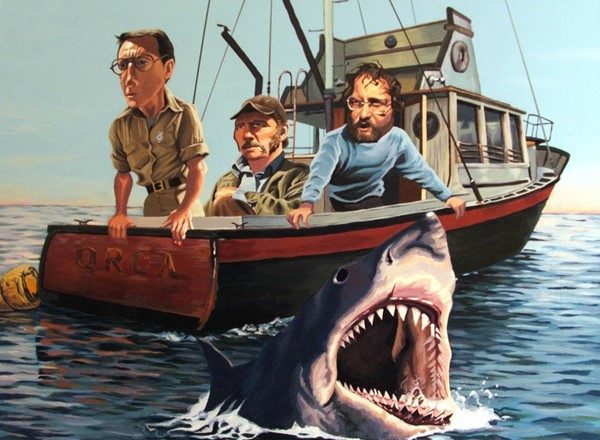
Last night I saw “Die Hard” for easily the 50th time at least, but it was only the second time that I saw it on the big screen. It was part of a double feature (along with Die Hard 2) at the Egyptian Theater in Hollywood sponsored by the American Cinematheque. I don’t know that there needs to be much explanation here, “Die Hard” has been a family favorite since it came out. It is the same exact age as my youngest daughter who was also released on the world that week in 1988. It is second only to “Jaws” in her mind (although “Lawrence of Arabia” is rapidly climbing). We had a great time and it is on our annual Christmas viewing list. Some have challenged the right of “Die Hard” to be seen as a Christmas movie.Clearly the Cinematheque agrees with me.  Last year there was a Great Debate posting on Fogs Movie Reviews over that issue. I have included my comment below as the post for last nights film. (Die Hard 2 does not deserve the same defense as a Christmas movie)

Fogs my man, a valiant effort but in the long run futile. You have measured the indicators of Christmas in the film, but you have left untouched the themes of Christmas that make this a Christmas Movie. Let me get to those in just a moment. I would like to start with a sweeping refutation of the material you have presented. The evidence is excellent and I commend you on your attention to detail. My admiration for your willingness to take the time and count all the references, measure them and put them in a proportional context is very high. (The Commando Screen Shots are still your own personal gold standard but this comes close).
The fault is not in the evidence but in the reasoning. You never give us a standard by which we can measure the “Christmasness” of a movie. Does it have to have a fifty percent component? That would eliminate almost all Christmas films from consideration. Maybe it is the presence of key icons such as Santa, Rudolf, or God that make a movie a Christmas film. If that is the standard than Die Hard meets two of those requirements, the Santa Hat and Ho-Ho-Ho reference takes care of the secular element.

God appears in multiple sentences where the name Jesus or God are invoked, although not in a very Christmas like manner (Oh Christ, you know what I mean). If a percentage is significant enough to spice the movie, it may very well become a Christmas film much as the addition of a small amount of cinnamon or peppermint makes a latte a Christmas drink at Starbucks or a Christmas cookie in a stocking. 11.7% would be more than sufficient to render “Die Hard” a Christmas film.
The true reason that Die Hard is a Christmas film is the theme of the characters. The main characters have the same thread of redemption in them that “A Christmas Carol” has. The setting of the story at Christmas encourages the deep questioning of our selves much like the Christmas spirit encourages us all to ask why we are not as charitable and kind all the year long. The Christmas season provokes a contemplative thought process that might otherwise be dismissed during the rest of the year.
We have three characters that represent redemption, the kind that is life affirming and important especially during the holiday season. While redemption is certainly a theme in other films, it is the Christmas season that provokes the redemption of our characters here. Primary among these characters is our lead, John McClane himself. He is using the holiday as a justification to reach out to his wife by traveling all the way across the country to see his family in L.A.. The coke sniffing by Ellis and the casual workplace sex going on in the offices are a reminder that people in the work place take advantage of others during the holiday season. For many at that party it will be the only holiday spirit that they get. You know Ellis is not going home to cookies and carols with his family after the party. It is clear he’d like to be going home with some Holly wrapped around his tree. John sees this and gets angry, which drives a wedge between he and his wife just when his very actions of coming out to the coast started to bridge their gaps. Later, he does the best he can to save Ellis from himself, despite having plenty of motivation to be happy that he will be out of the picture. That is one of many redemptive acts. He gives Hans a chance on the roof, even though he doesn’t give him a loaded gun. Patience with a stranger is another act of redemption. His devotion to his wife is incredibly strong despite their estrangement, this is another. He consoles a fellow police officer that he has never seen, and takes him to his heart because Powell needs the support just as much as he needs Powell’s. That is an act of mutual redemption. All of this takes place during the Christmas season but more than that is influenced by the spirit of the season. No such redemption is being offered in the first sequel which is also set at Christmas, but for which you will not find many if any adherents of the premise that it is a Christmas movie.
Powell and Holly are the other characters who seek redemption and gain it because of the Holiday. Powell, gets involved in the whole set up because he was willing to work Christmas Eve. A sacrifice in part that is certainly brought on by his guilt over being a “desk jockey”. His reason for being behind a desk most of the time is tragic, the kind of tragedy that Christmas story themes are designed to help us confront. (It’s a Wonderful Life, A Christmas Carol, One Magic Christmas as illustrations). His holiday redemption is completed with his restoration to real cop by helping McClane in the tower, and rescuing them with the same act that had condemned him in the first place. Holly has let her home life suffer for her vanity at work and her pride in disagreeing with her husband. She stands up to Hans, that is an act of courage, she is given hope by the frustration of the terrorist/criminals, that is a restoration of her faith. Finally, she reclaims her married name at the end when she is being introduced to Powell, that is the sign of redemption in her marriage, much like Jimmy Stewart crying “Merry Christmas” after seeing what life would be like if he had never been born.
Hans and Thornburg are the Marley and Potter equivalents in this story. Each is selfish and indifferent to the suffering of others. Each is given opportunities to act in a manner that is consistent with the spirit of the holiday, and each rejects those chances. As a result, they each get a comeuppance that is commensurate with their acts. Hans gets shot and dropped off a building, and Thornburg is publicly humiliated. The spirit of Christmas in the form of a naughty or nice list is kept by the outcome of the story.
We are all on the nice list because this movie was left in our Christmas stocking for us. I know that we would not be discussing it here and now, if the Christmas theme were not an essential part of the plot. The very fact that we are having this discussion at Christmas time, 24 years after the movie came out is also proof of it’s lineage as a Christmas film.
You may still disagree if you like but to do so may put you on Santa’s naughty list. Merry Christmas.

The Hobbit: The Desolation of Smaug

I keep promising myself that I am going to stop going to midnight screenings and spare myself the pain of the following day. I also keep breaking that promise and justifying it to myself with all kinds of excuses. Last nights excuse was simple, both of my daughters wanted to go to the double feature of The two Hobbit films and the second premiered at midnight. At 27 and 25, they still have their Dad wrapped around their fingers. When they were small kids and we lived in an apartment in Alhambra, I would read them a chapter of the Hobbit as a bedtime story every night. We must have read the whole book three or four times and it remains one of those proud achievements of fatherhood that I introduced them to that form of literature  when they were only four or five years old. Even though they were not as enthusiastic about the first movie “An Unexpected Journey” as they had been about the Lord of the Rings trilogy, they still want the movies to work and there are still scenes in our heads that we want to see depicted on screen, forty feet high and seventy feet wide. We also craved hearing a voice that we had nightmares over when they were young; the dragon Smaug. This new chapter in the Hobbit series suffers from the same bloat that it’s predecessor did, it takes a long time for some events to happen, some events that are not needed intrude on the story and sequences of action often go on longer than needed. That having been said, we all had a marvelous time and I at least enjoyed the film immensely in spite of the story excesses. I was happy to be in a theater, and I was there for over six hours with two of my favorite three people in the world. The film kept me awake and involved, even though I had been up since 4:30 in the morning on Thursday. If it can keep me awake when all my senses would normally be screaming to shut down, the film must do some things right.

To start on a positive note, let’s focus on the key scene in the movie. The one piece that everyone is anticipating and needs to work for the film to have any chance. Last year, the riddle game with Gollum was the scene that everyone loved and allowed them to embrace the film even though it has flaws. This year the conversation is more dangerous and erudite. Bilbo Baggins, novice burglar, confronts “Smaug”, the dragon responsible for wiping out the dwarf kingdom of Erebor as well as Dale, the nearby town of men that now lays in ruin at the foot of The Lonely Mountain.  Many of us remember the Rankin/Bass animated version of The Hobbit from the 1970s. The dragon was voiced by one of the great pieces of voice casting ever, Richard Boone. His sonorous and gravelly voice fit the serpent like qualities of the character perfectly. His self aggrandizing tone matched the ego of the beast and revealed his weakness. Boone is long gone and when the films were finally announced we played a game; name the actor who would best voice Smaug. At our house we were three for three, all of us picked one voice that we thought would be perfect, and it is not the one that was cast. Imagine our disappointment when we saw that Benedict Cumberbatch would voice the dragon and not our unanimously agreed upon Peter O’Toole. Of course at that point we were not familiar with Mr. Cumberbatch and his vocal talents. I still have not seen his Holmes, but he was excellent in “Star Trek: Into Darkness” and so I had high hopes. He manages to live up to those hopes very well. He brings menace and temperment to the right boil to make Smaug more than a monster but a real character as well. Check out the last thiry seconds of the trailer below to get a preview.

In addition to being well played vocally, the dragon is vividly realized in a visual medium. He moves convincingly and looks very realistic. In one of the many departures from the book, there is a long confrontation sequence and chace between Smaug and the troop of dwarfs seeking his destruction. Like several  other sequences in the film, it goes on a little long and is not entirely needed but it is cleverly put together and entertaining to watch.

A second example of the weakness of the film is the long chase of the dwarfs as they escape from imprisonment in a elf kingdom by riding in barrels. What was whimsical and somewhat comic in the children’s book that I read to my kids, becomes an elaborate set piece featuring a violent battle scene at a water gate and then an extended hunt and chase battle along the path of the river by which the barrels are returned to Laketown. The sequence is well staged and has some amazing stunts and visual tricks to show us but it goes on much too long and it could easily be taken out of the film since it does nothing to advance the narrative and only exits to make this an action film on the same level as the movies from ten years ago. Conversely, the interlude at the beginning of this chapter of the trilogy, features the character “Beorn” and it goes by much too quickly. It was a good change of pace moment in the book but it does not get a chance to allow us to reacquaint with the band of adventurers before they are quickly pursued into Mirkwood. The pace of the film is constantly moving quickly, which is surprising since the story is so padded. For a nearly three hour film, it never seems to slow down enough to take in the events or personalities that we encounter. They are interludes between the long fight sequnces that have been interjected in a half dozen places in the story.

If your favorite parts of the “Lord of the Rings” films were the battle at Helms Deep or the War at the gates of Gondor, than this film will be perfect for you. Orcs and Goblins crawl through forests and towns and attack at nearly every opportunity. There are flashback sequences and parallel story lines and there is even a romantic subplot thrust into this film. I can say that even though the tie in to the later stories is not needed here, it was actually assembled very well. Strings of connection have been forged where none existed before but they are not so much grafted on as weaved into the story. The scale of the movie is much larger than the original book required, and it dilutes the product even though it is prepared well and cooked expertly. Gandalf is a much more central figure in this version of “The Hobbit” and sometimes that means that Bilbo gets a little lost. The actors are all playing their parts with great fervor and some of the dwarfs are finally stepping out of the crowd and establishing a little more personality distinction. The scenes in the Kingdom of the Mirkwood elves do feel like the drama is being ratcheted up rather than building naturally. On the other hand, the sequence in Laketown, except for the orc attack, feels much more like a story that is telling itself rather than being forced on us.  Bard as a character is perfectly cast and his somber demeanor fits with the story. I did think his imprisonment made very little sense and there are a couple of similar glitches in other places as well.

This time I splurged and we saw this in 3D IMAX with the 48fps speed film. I understand the criticism that it got last year and there were several spots in which the high speed shooting makes the picture less cinematic and more obviously set based. Some elements look much better with the high speed film but others look almost videotaped rather than filmed. There did not seem to be any consistent reason that this was true. It was not as if all of the action scenes worked but the exposition scenes looked off. Both types of sequences worked and failed at different points and I am hard pressed to say why although I can say I noticed it. For a story that has been building to a confrontation with a dragon, it ends a bit abruptly. This will certainly make the start of the next and final chapter more memorable but it left the audience a little short this morning. The critical praise from the Lord of the Rings films was deserved, it was an intricate story that was massively complex and stitched together in an effective way. The reason the Hobbit films have not had the same kind of support is not a lack of talent, vision or skill. The reason these movies are not as revered as the other series comes down to the fact that this simple story is being reverse engineered. As Peter Drucker said:

“There is nothing quite so useless, as doing with great efficiency, something that should not be done at all.” 

Frozen

Twenty years ago, I would have taken my small daughters to see this movie on a chilly day after Thanksgiving and they would have loved it. It has music and funny characters and two princesses. They would probably fight for the rest of the year over which princess they got to be when they played together.  I have no doubt that there will be 1000s of little girls and their parents enjoying the same kind of enchantment I might have enjoyed then. The problem however is my kids are grown, and while I did take my youngest with me (she is 25 now) we have grown more critical in our willingness to embrace a movie on mere concept. Execution matters. There is a lot to appreciate in this Walt Disney Pictures Release, but it falls far short of being a classic that you will want to return to time after time.

I love musicals, so when I say this film falls a little flat on the musical side, know that it is not because I object to the format. I have noticed that many musical films, especially children’s films, start heavy in the first half and then as the narrative gets denser and more convoluted, abandons the musical sequences. Except for the Umpa Loompa song in Willie Wonka, once they go through the tunnel, the only distinct song is the “I Want it Now” Veruca Salt number. In “The Wizard of Oz”, after they meet the Wizard the first time, there is only the guard song and it hardly counts as a song at all. This film has a dozen musical sequences in the first half and none in the second. When all those songs are stacked on top of one another in the first part of the movie, none of them gets to stand out. They are also pretty much the same style and sung by women’s voices that are strong but not particularly distinct from one another. The Disney films of the early nineties knew that you needed a show stopper, not just a character piece. All the songs in this film feel like showcases for the singers but not for the story or the song. None of them advances the story or reveals anything surprising about the characters. They sound very “Broadway” with a little bit of contemporary teen pop to make them radio friendly. We need a “Prince Ali” or a “Be Our Guest” to make the show distinctive.

The set up of the dilemma with the two little princesses is nicely done but the reason for Ilsa having special powers is not explained and is taken as a given before we know it. There is a crisis that immediately follows our discovery of this gift and it is resolved by another unexplained phenomena, a village of rock trolls. The magic seems arbitrary and the explanations are rapidly zipped through. The loving parents are made to vanish for no particular reason and in a manner that seems to belie the circumstances in which they live. The whole first part of the movie skips over the relationship between the sisters after the opening incident. Since that relationship seemed so intense in the start of the story, it feels sadly underdone after that. The appearance of a love interest and the ease with which he is accepted by all but the new queen is another oddly undeveloped point. I also felt that the animation style, computer generated images, sometimes seemed to be used for display of ideas rather than telling the story. The best part of the artwork is not the magic of the frost covering the land, but the characters faces and the charm of the non-human characters.

As in most Disney films, the hero has a horse (or in this case a Reindeer) who has personality plus and steals the scene from under the lead. The nice touch in this story is that the hero provides a conversational voice for the animal and then carries on dialogue with himself as if the Reindeer were answering. Most of you with pets know what I am talking about. I liked the fact that this forces the hero Kristoff, to make decisions for himself but blame it on his reindeer Sven. The relationship between Kristoff and Princess Anna develops nicely through the adventure they travel through together. The introduction of the Snowman Olaf is a little less effective. As a character he provides comic relief and a narrator perspective on things, but he also seems to be obviously shoehorned into the story for just that purpose. There is also a villainous Duke from a neighboring kingdom who meddles in the affairs of Arendelle, the kingdom of the new queen and her princess sister. There is a sudden turn in the way the story plays out that is a bit of a mean cheat for the kids following along. It also feels like a convenient plot device rather than an organic twist in the narrative.

OK, enough with the grousing, the movie is perfectly fine family fare. I don’t think it stand up next to “Tangled” or “Bolt”, two other recent Disney brand films that have more going for them, but is is servicable for the holidays. I wanted to like the film more than i did, and I was inclined to because I was surrounded by parents with their small children who did seem to love it. The film was packed and there were lines for the next showing, so it will clearly be a hit with the audience it is made for. It just won’t be as big a hit with those who have reached a different stage in their life. Enjoy it but don’t expect to feel a need to revisit it. It is a clockwork piece of entertainment that has too many rough edges.
 

Thor: The Dark World

The God of Thunder returns in a film that features his own world for most of the story. Everyone will discuss how much the movie needs more Loki, and they will be right but it has a variety of other surprises as well. I am a couple of weeks late in getting here but it is an entertaining film and I don’t think there are big secrets out in the webs that would spoil it for anyone.
Four films in one day and I’m too tired and it is too late to complete all the reviews. I will fill in all of them this week.

Now I am finally catching up with the films from last weekend. I am planning on seeing some new things today and I don’t want to be behind.  This is the simplest of the four films to review. If you liked “Thor”, you should like this film. It keeps all the original elements in place and  lets the actors carry on with the parts that they have established. The only exception being Stellan Skarsgård, who’s Erik Selvig gets turned into a figure for comic relief and as a consequence, is undermined when the weapon he has devised is brought into play. 

There was more Anthony Hopkins and Renee Russo in this film and that is an improvement from my point of view. Russo as Thor and Loki’s mother gets a good dramatic story line and appears to fuel the temporary alliance of our two demi-god brothers.  It is not clear what the resolution for Odin’s character means, it was not very clearly explained but that will probably be the basis of the next stand alone Thor movie. It looks for all intents and purposes as if Marvel has managed to succeed in making the films work as part of a collective universe but also maintain their stand alone story lines. I did not feel impressed with the “Dark Elf” antagonists in the film. They were satisfactory but largely cardboard cutouts. Loki remains the key ingredient in making this story of conflicted Prince of Asgard Thor work. 

The movie is much grander than the original film. It features more action in Asgard and other spots in the Universe, as well as more interesting locations on Earth than the desert town found in the first movie. I actually found Natalie Portman to be less annoying in this film as well. She seems to have lightened up a bit about working in a comic book story and that makes the film feel less like it is reaching for grandness and more like it is trying to entertain us.  Tom Hiddleston steals the movie as everybody expected to happen. He plays Loki just right, so at times we can believe him and then at just the right moment, his voice changes, his eyes gleem and we know that we have been suckered in by a trickster. There is a fleeting cameo that got a big laugh in the film and it worked completely for me because it features a character that I like better than almost all the other characters in this Universe. 

So, the movie is big and loud. It has some spectacular set pieces and there are a number of good laughs. None of the material will surprise you or elevate the movie above it’s comic book roots but it will please fans and entertain those who have enough patience with some simplistic story telling. There is plenty of eye candy for the female fans, both Chris Helmsworth and his chiseled look and Tom Hiddleston and his dark eyes will make many fans want a return to the land of the gods in the nine realms. Go and have fun, there will be a new comic book movie in the spring, this one will tide you over until then.  

The Hunger Games: Catching Fire

This generation now has the equivalent of an “Empire Strikes Back” moment. The second film in a series, matches and in many ways exceeds the original and it ends in a cliffhanger that will leave the audience breathless in waiting for the next episode. Jennifer Lawrence is a rising star with an Academy Award in her back pocket and a hugely successful movie franchise to back it up. The movie is as creatively successful as it will be financially.

I’m still trying to catch up with the tsunami of movies that we saw last Sunday. The third film we saw was the biggest hit of the weekend and may turn out to be the biggest film of the year. It helps immensely that the movie is actually very good. It is far superior to the “Iron Man” sequels that it will be competing with for top box office honors. This is a young adult series that has not been afraid to tackle some serious issues. From my point of view there is a dangerous parallel between the fascist government in the story and the times we live in. People inside “the Capitol” (read “the Beltway”) see the hinterlands as a source of resources for their own power and status. This is so much like the relationship of the current government to the rest of the country it should come with a political disclaimer. “The Hunger Games” are designed to remind the rebellious that there is a cost to challenging government authority. All the pomp and circumstance is made to be a distraction from the lack of jobs, freedom and hope that everyone is saddled with.

The second film in the series has clearly had an upgrade in budget and scale. The vision of the Capitol city and of the surrounding Districts is much clearer in this film. There is a strong sense of the technology and how it is integrated into the power structures. When the storm troopers arrive in District 12, the whole country gets a brief look at the clash that Katniss has provoked among the proles that have had their necks stood on for 75 years.This is a world ripe for revolt and the snakelike President Snow, recognizes it. His open animosity toward the winners of the games, makes it easier for the rebels to maneuver the star of the games into a position as a figurehead. The politics of the film are as important as the pyrotechnics of the games. Then, you add the games on top of this and the movie becomes entertaining as well as thoughtful. The ability to visualize the challenges of the new games, with their new rules and manner of selecting the tributes, is very praiseworthy. We get a little more insight into the motives of all the districts and we meet the contestants in more detail this time. The fact that many of them are old, middle aged, and still able to find a reason or a way to fight is pretty encouraging. It is another thing that moves this from being a one note love story for tweens into a full fledged science fiction epic.

Katniss is more conflicted in this story. She knows that the games are a death sentence meant for her and the only thing she wants to assure is that her counterpart Peeta survives. One big difference in these games is that the arena is much more focused on eliminating the competitors than they are interested in eliminating each other.  The alliances feel different this time and it turns out there is a reason why. It is not clear how all of the twists are managed but they seem to be leading to a very serious story conclusion that is not light hearted at all. There are a few moments of humor and some moments that provoke sadness but when the end comes, it will arrive with a sharp intake of air from viewers who have not read the books. This is another comparable element to the second “Star Wars” film, things take a turn and they don’t always turn out well.

In reading the books, they declined in my opinion, starting with the strongest and devolving to a climax that felt unsatisfying. I get the feeling that the films are reversing that trend. There is hope that the weak finale of the story can be turned into a more admirable outcome in the films. I don’t expect the story will change but it feels like the story telling is much more controlled and thoughtful. I expect, based on what I have seen in this film, that the plot will be more meaningful and the characters more interesting than they were in the book. I guess I will have to save that pronouncement until we get those last films, but “The Hunger Games: Catching Fire”, has me hoping that the film makers can pull it off.